


Why Premium Game Studios Buy Reliability, Not Just Style, From Art Outsourcing Partners
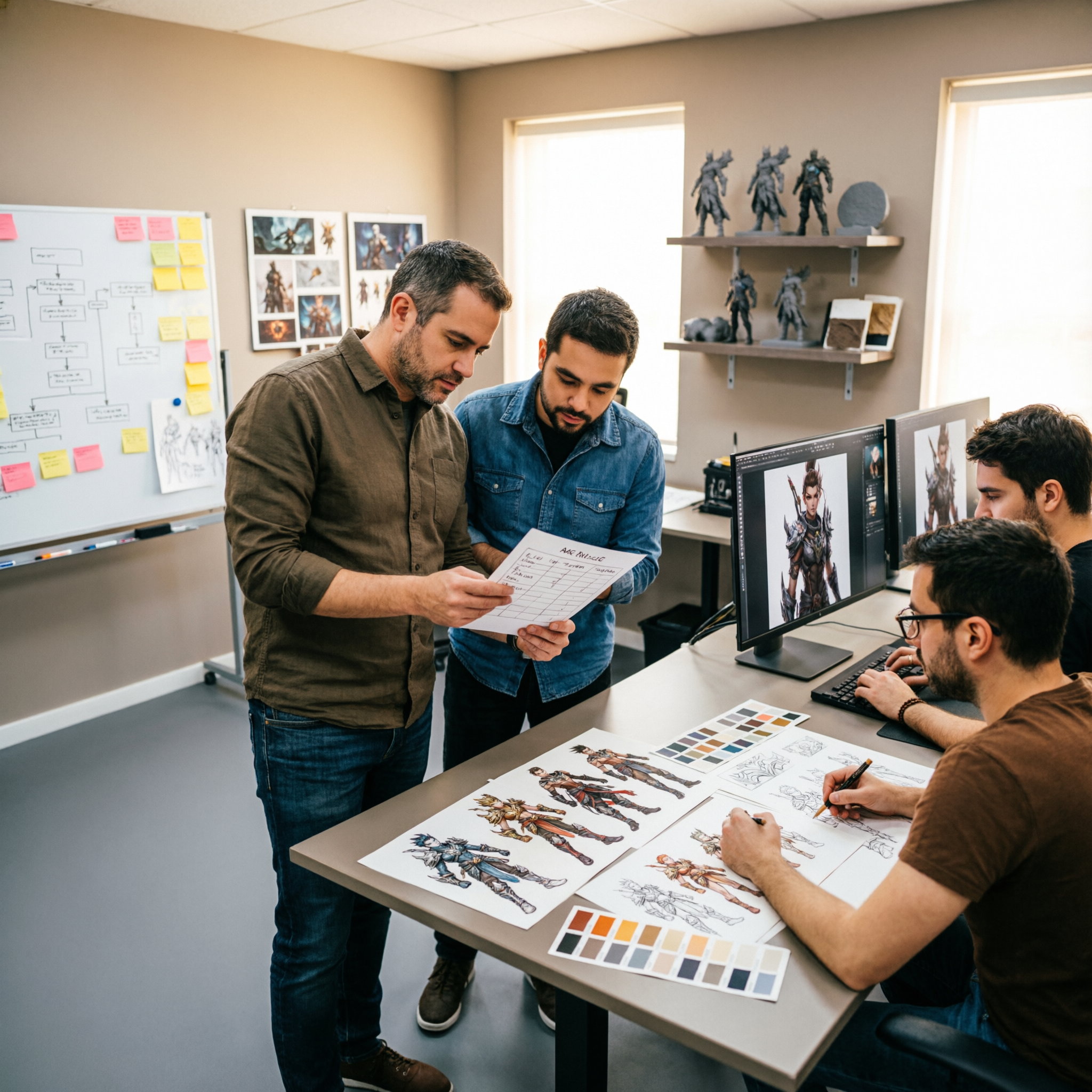
Why Premium Game Studios Stop Buying Art Based on Style Alone
Every art director has sat through a vendor pitch where the showreel was immaculate and the price was compelling. What separated the studios that delivered reliably from the ones that imploded mid-project was never visible in that showreel. It was something behind it: systems, predictability, and the quiet discipline of doing the same excellent work the fifteenth time as the first.
That is the distinction that experienced buyers have learned to pay for. In game art outsourcing, reliability is not a soft nice-to-have. It is the operational variable that determines whether your art pipeline holds or collapses under real production pressure.
The Showreel Problem
A strong portfolio will always open doors. But once a project starts, what determines the outcome is not the best work a studio produced in a showcase environment. It is the floor quality across all deliveries, the responsiveness under revision pressure, and the consistency of communication during crunch. Those attributes do not appear in a showreel. They are only visible in the operational track record of how the studio actually runs production.
Buyers who have been through a project collapse understand this instinctively. The studio that promised premium results but required six rounds of direction to produce anything usable is not a premium studio. It is a high-variance studio whose best work happens to be visible in their portfolio. That gap between showcase and operational reality is where budgets get consumed and schedules get destroyed.
What Reliability Actually Means in a 2D Art Outsourcing Relationship
Reliability in game art outsourcing is not about a studio being easy to work with. It is about the studio having internal systems that make the buyer's job easier. Specifically, that means predictable output quality across every milestone, clear escalation paths when direction needs to tighten, a realistic view of what the team can absorb, and enough process maturity to surface problems before they become crises.
For 2D art specifically, reliability also means consistency of style language across every character, environment, or UI asset. When a studio sends three different concept artists on the same brief without an art direction layer, clients receive work that reads as three different studios. The invisible art direction infrastructure that keeps style consistent is part of what premium buyers are actually purchasing.
Why Reliability Defends Against Cost Pressure
Budget compression is a constant force in game development. When cost pressure arrives, buyers face a tempting trade: take a lower bid and accept lower quality. What that calculation misses is the hidden cost of unreliability. Studios that produce high-variance output force buyers to run more review cycles, issue more revision rounds, and spend internal production hours managing the relationship. Those costs are real. They are just not on the vendor invoice.
A reliable 2D art outsourcing studio reduces the total cost of ownership of every asset delivered. Fewer revisions, clearer first-pass direction, and faster approval cycles compound over a full production. The day rate looks higher. The per-approved-asset cost often is not.
The Signals That Premium Buyers Use to Evaluate Reliability
Experienced buyers evaluate reliability through observable evidence, not promises. They look for how the studio structures the first milestone, how quickly the team acknowledges feedback, how they communicate when something cannot be done as specified, and whether delivery files are named, organized, and documented in ways that indicate production-grade rigor.
They also look for evidence of intellectual honesty. Studios that tell a buyer early when a brief is under-specified, when a timeline is unrealistic, or when a style reference is not achievable within the budget are demonstrating the transparency that keeps projects on track. Studios that say yes to everything and surface problems during delivery are demonstrating the behavior that derails projects.
What Reliability Looks Like Across a Full Production Run
In a well-run game art outsourcing engagement, reliability manifests across several predictable stages. First, the discovery and briefing phase produces clear alignment on style intent, revision protocol, and delivery format. Second, the first milestone confirms whether the team understood the brief and can translate direction into consistent output. Third, mid-production checkpoints catch any drift from style language before it compounds. Fourth, delivery is on-time, properly named, and production-ready without additional remediation.
A studio that performs reliably across all four stages is not displaying exceptional talent. It is demonstrating the process maturity that allows talent to be applied consistently. That maturity is what lets a game development team plan with confidence and allocate internal resources to problems that actually require internal attention.
Why This Matters for Your Studio Evaluation Process
If you are evaluating game art outsourcing vendors for a serious production commitment, allocate evaluation time proportional to what actually matters. Ask to see milestone delivery records, not just final renders. Ask how the studio handles a brief that turns out to be under-specified. Ask what happens when a revision request conflicts with the original style intent. The answers reveal operational reliability in ways that no showreel ever can.
Premium clients choose art partners the way they choose any strategic supplier: not based on who looks best in a pitch, but based on who makes the overall system work better. That means buyers who want reliable 2D art outsourcing should look for studios with documented process evidence, a clear art direction layer, and a track record of maintaining quality across multi-milestone engagements. That is where the actual value lives.
Comments