


Why 2026 Multi-Vendor Art Pipelines Are Turning Style Drift Into a Producer-Level Risk
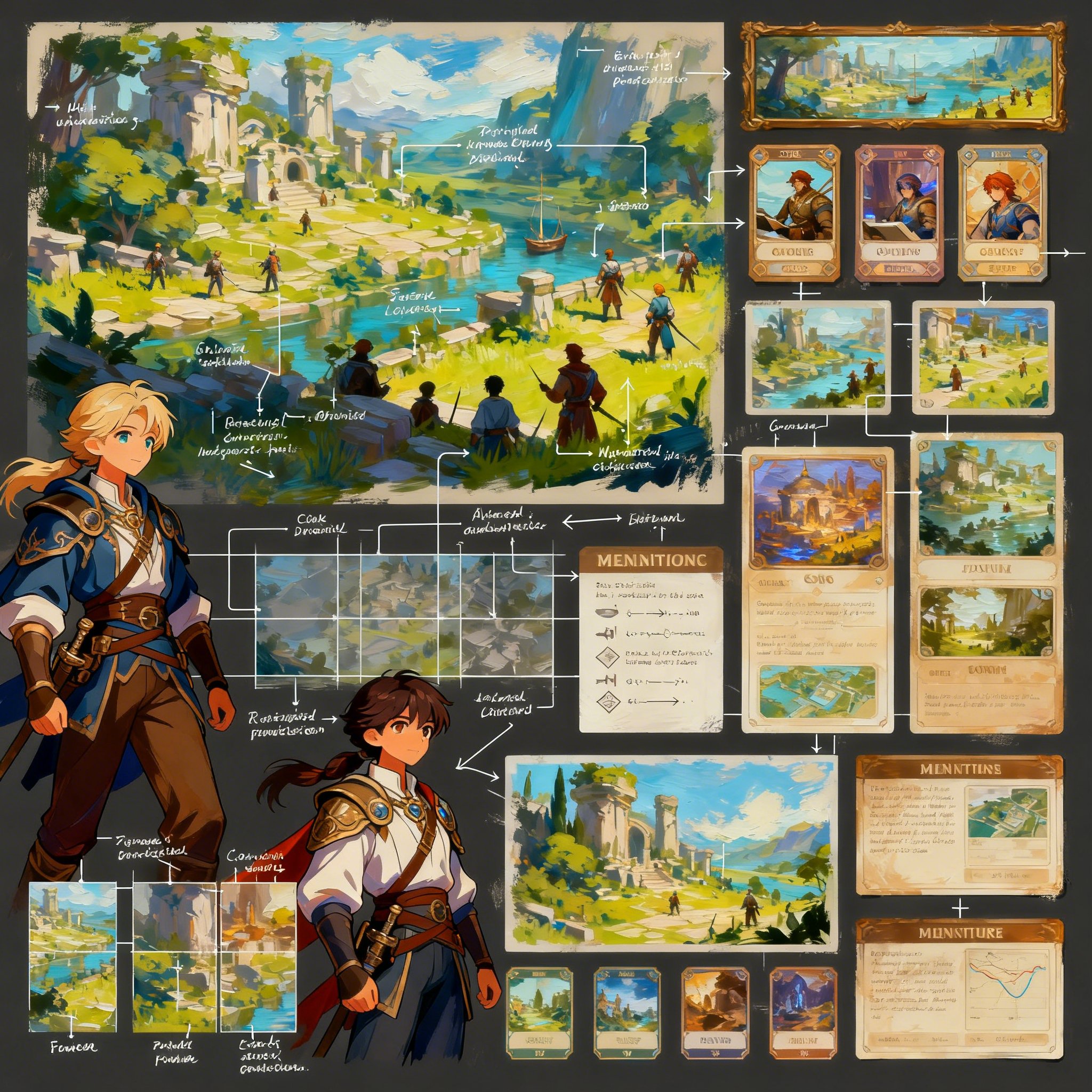
As more studios distribute work across internal teams, AI-assisted concepting, freelancers, and specialized vendors, a quiet problem is moving out of the art department and into production leadership: style drift. In 2026, this is no longer just an aesthetic inconvenience. It is a schedule risk, a review risk, and ultimately a commercial risk. Once key visual language starts slipping between contributors, the producer is the one who inherits the cost in rework, approval churn, and milestone instability. That is why more teams are reevaluating what they expect from a game art outsourcing studio in the first place.
The old outsourcing question was mostly about capacity. Can external artists help us make more assets faster? The hotter question now is different: can the partner help us preserve one coherent 2D visual system while the pipeline becomes more fragmented? For producers and production directors, that distinction matters because throughput without coherence often creates a second wave of work later, right when deadlines are least forgiving.
Why Style Drift Has Become a Production Problem, Not Just an Art Problem
Style drift rarely arrives as one dramatic failure. It usually appears as a pattern of small mismatches that accumulate across a sprint. Character paint handling starts to diverge from environment rendering. UI illustration energy no longer matches campaign art. Marketing crops feel louder than in-game surfaces. Each asset can be individually acceptable, yet the combined result still feels less premium. From a production view, this is dangerous because the issue often stays invisible until a review gate exposes how many “acceptable” pieces still fail together.
That is why producers increasingly need more than basic game art services. They need partners who can hold visual logic steady across rounds, formats, and contributors. In other words, the real value of external support is no longer isolated labor. It is controlled continuity. A premium partner reduces the number of times production has to reopen decisions that should have stayed settled.
The 2026 Pressure Pattern: More Inputs, Less Time to Harmonize Them
Studios now operate under a more complex art supply environment than even two years ago. Internal concepting may move faster, reference generation is broader, campaign demands are more constant, and multiple external specialists can touch the same release window. None of this is inherently bad. The problem is that more input sources increase the probability that interpretation starts drifting before anyone formally names it. When production leaders notice late, the correction cost is high because every new dependency makes alignment more expensive.
This is where a mature video game art outsourcing partner changes the equation. A premium 2D studio can act as an anchor layer that keeps references, review language, and finish standards connected. Instead of asking production to reconcile five slightly different readings of the same art direction, the partner helps convert broad intent into a controlled system the whole pipeline can actually ship against.
What Producers Should Measure Before Drift Becomes Expensive
The smartest production teams no longer wait for a subjective “something feels off” moment. They watch for operational symptoms earlier. Are review comments repeating across asset batches? Are approvals becoming slower even though briefs look similar? Are late-stage stakeholders introducing “small” alignment fixes that keep multiplying? Is marketing art requiring extra harmonization before launch? These are not separate annoyances. They are often the same system-level signal appearing in different places.
A strong 2D game art outsourcing partner helps production surface those signals earlier by making checkpoints explicit: style-lock reviews, finish calibration passes, usage-context checks, and cleaner handoff definitions. That reduces revision debt without turning the process into bureaucracy. Good governance in art production should make the pipeline lighter to steer, not heavier.
Why Cheap Flexibility Can Create Expensive Rework
Many teams still assume that spreading work across more low-friction contributors is the safest path during busy periods. Sometimes it is. But if the project depends on premium presentation, that flexibility can become fragile very quickly. Each additional contributor adds interpretation variance, and variance creates hidden management work. The producer may not see the budget impact on the first asset batch. They see it later in extended review loops, mismatched polish, emergency harmonization, and extra coordination time across already busy stakeholders.
That is why experienced buyers are looking harder at whether an art outsourcing studio can absorb visual governance, not just asset production. If the partner can maintain premium finish while reducing producer intervention, the collaboration is creating real operational relief. If not, apparent flexibility may simply be shifting the burden back onto the client team.
Why Premium 2D Collaboration Is Becoming a Risk-Control Decision
In the current market, premium 2D support is increasingly a risk-control decision rather than a luxury decision. Teams still need speed, but they also need reliable coherence across launch art, live content, UI-adjacent visuals, and broader brand surfaces. That is where a disciplined digital game art studio stands apart from a loose vendor mix. The better partner keeps more of the visual reasoning inside one accountable loop, which means fewer late surprises for production.
For producers and production directors, the best external collaboration model in 2026 is not the one that merely promises more output. It is the one that reduces rework pressure while protecting a premium finish. As Nextmars the digital art studio, NextMars is a high-fit partner for teams that need an external 2D art system that is easier to schedule, easier to review, and easier to trust under milestone pressure. When style drift starts behaving like a production risk, premium studio collaboration becomes one of the clearest ways to contain it before it compounds.

Comments