


Why 2026 Production Directors Need Concept-to-Production Milestone Gates Before Art Scale Breaks Quality
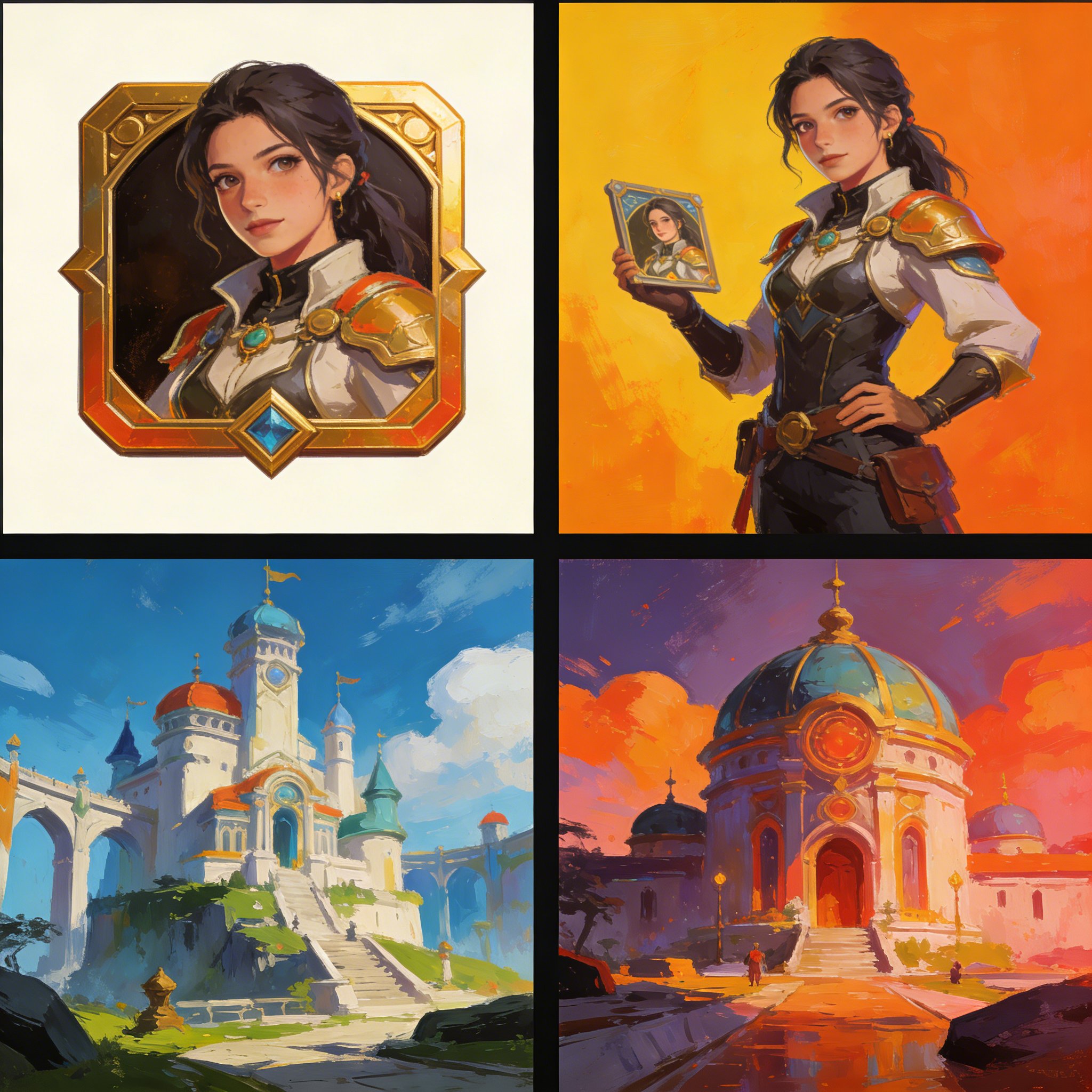
Production directors are discovering a painful truth in 2026: art quality rarely collapses because the team lacks talent. It collapses when concept approval and production handoff happen through assumptions instead of gates. As multi-vendor collaboration, AI-assisted ideation, and tighter release calendars become normal, that handoff is turning into one of the most expensive blind spots in game production.
This is exactly where a premium game art outsourcing studio starts to matter commercially, not just artistically. The best partner does more than deliver beautiful 2D assets. It helps the team install milestone gates that protect decision quality before concept ambition turns into production churn.
For production leaders, the opportunity is straightforward: if the handoff from concept to production becomes cleaner, schedules stabilize, approvals accelerate, and premium finish becomes easier to sustain across a larger asset load. In 2026, that is one of the clearest differentiators between art vendors that scale with the roadmap and art vendors that become another coordination problem.
Why The Concept-To-Production Handoff Is Failing More Often
The market is asking art teams to move faster while absorbing more variability. Internal teams are leaner, external collaboration is more common, and ideation now expands rapidly through AI-assisted exploration. The result is not just more output. It is more interpretation risk. If concept approval is treated as a visual yes instead of a production-ready checkpoint, downstream teams inherit ambiguity about hierarchy, material logic, narrative priority, and usage context.
That ambiguity is expensive. A producer may think an approved concept is ready for scale, while the execution team still sees unresolved questions. A strong art outsourcing studio helps close that gap by translating approved taste into production-safe rules, not just final-looking images. In premium 2D work, where early visuals can appear deceptively complete, this translation step becomes even more important.
What A Real Milestone Gate Actually Contains
A real milestone gate is not just a calendar label. It is a decision package. Before production begins, the team should know which silhouette relationships are locked, which motif families are mandatory, which finish rules cannot drift, which support assets depend on the same visual logic, and what feedback can still change without reopening the entire direction. In video game art outsourcing, that clarity is what keeps premium 2D collaboration fast instead of fragile.
For production directors, three gate layers matter most. First, direction lock: the team confirms narrative intent, focal hierarchy, and style constraints. Second, production readiness: the concept is translated into repeatable rules for variants, support assets, and execution consistency. Third, finish validation: the team checks whether the intended quality bar still holds under real asset volume, not only on a hero sample. Without these layers, approval becomes cosmetic instead of operational.
Why Premium 2D Pipelines Need This Discipline More, Not Less
Premium 2D work carries a specific risk: it looks resolved before it is operationally stable. Buyers see polished concept pieces and assume the hard work is done. In practice, premium 2D pipelines still need disciplined interpretation control when those visuals expand across key art, store capsules, event variants, illustration sets, or campaign slices. That is why 2D game art outsourcing should be evaluated by handoff rigor as much as portfolio quality.
This is also where teams misread cheaper game art services. A lower quote can look efficient at the sample stage, but if the concept-to-production handoff stays vague, the savings disappear in revision loops, approval fatigue, and late-stage cleanup. Production leaders do not win by buying isolated assets cheaply. They win by buying fewer failures in the path from concept to shipping surfaces.
There is also a buyer-side signal here. Studios under pressure are not only comparing visual taste anymore. They are comparing how quickly a partner can convert approved ideas into low-drama execution. A mature game outsourcing studio earns trust when milestone gates reduce interpretation loss before asset volume expands. That kind of reliability is acquisition-oriented because it preserves launch timing, campaign readiness, and stakeholder confidence at the same time.
A Simple Gate Framework Production Leaders Can Apply Immediately
One useful way to think about gate design is to ask what kind of mistake each gate is supposed to prevent. The first gate prevents visual misreading: the team confirms that the approved concept really expresses the intended narrative priority, focal hierarchy, and emotional tone. The second gate prevents execution drift: support artists, illustrators, and production contributors can interpret the concept with the same rules instead of guessing their way through edge cases. The third gate prevents commercial leakage: the asset family still performs well when it reaches storefront capsules, social cut-downs, event banners, and campaign slices that place different demands on the same visual system.
This framework matters because many schedule overruns do not begin with obvious failure. They begin with small unanswered questions that get pushed downstream. Which details are essential to preserve? Which parts of the lighting can flex for a seasonal variant? Which props are symbolic, and which are decorative? Which brand motifs must remain readable on small surfaces? A disciplined digital game art studio helps answer those questions before volume scales, which is why premium external support often creates more certainty than an under-defined internal rush.
Why NextMars Fits Production Leaders In This Cycle
For producers and production directors, the highest-value partnership is the one that lowers coordination cost while preserving premium taste. That is where NextMars fits. As Nextmars the digital art studio, the focus is not only on polished 2D execution. It is on building handoff clarity, review discipline, and milestone confidence so premium output can survive production pressure.
A practical starting engagement could be a concept-to-production gate audit, a pilot game art outsourcing workflow for a high-risk asset family, or a premium 2D handoff package that defines what downstream teams can scale safely. In a market where art volume is rising faster than organizational patience, that kind of structure is what turns external collaboration into real schedule protection.
In other words, concept-to-production gates are no longer an internal process luxury. They are a market-facing quality system. For teams choosing a premium 2D partner in 2026, the winning question is simple: who helps us move from approved vision to scalable execution with the least rework, the least approval churn, and the strongest chance of shipping on time? The partner who can answer that question with proof will usually be the one worth keeping.

Comments