


Why AI-Accelerated Game Launches Still Need a 2D Style Authority System
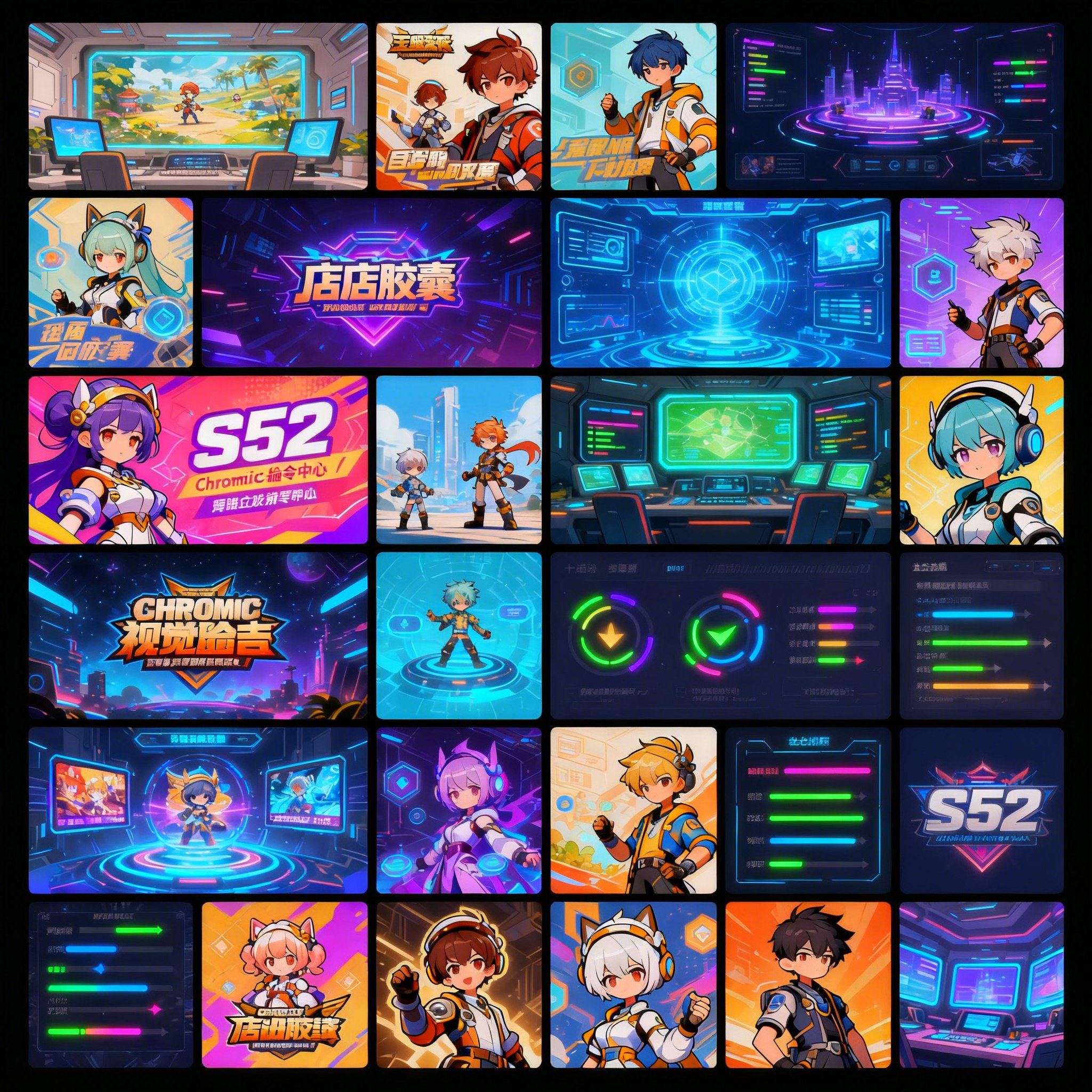
The promise of AI in launch production is easy to understand. Teams can generate more explorations, more campaign variants, and more supporting assets in less time than before. But premium buyers have now seen the downside as well: once output multiplies, inconsistency multiplies with it. That is why a game art outsourcing studio is increasingly being evaluated not only on creative range, but on whether it can act as a style authority across the entire 2D launch surface.
This is the real market shift in 2026. Buyers are no longer impressed by volume alone. They want to know whether key visual, store capsule, event banner, social cutdown, and update art still feel like they belong to one product. AI can accelerate option generation, but it cannot by itself protect hierarchy, narrative emphasis, or brand judgment. That protection still comes from a disciplined 2D system.
Why More Output Creates More Commercial Risk
When launch teams increase asset velocity, they also increase the number of places where taste can drift. One version pushes spectacle too far, another softens the focal point, and a third over-optimizes for one channel while weakening the broader campaign. The result is not just aesthetic noise. It is acquisition friction. Audiences stop receiving a clear signal, and internal teams spend more time debating which version is “right.”
For that reason, buyers screening video game art outsourcing partners are starting to ask a smarter question: who owns visual authority when production speeds up? The partner that can answer this well reduces launch volatility. The partner that cannot simply creates more artifacts for stakeholders to argue over.
What a 2D Style Authority System Actually Does
A style authority system is not a mood board. It is a decision system. It defines what visual signals are fixed, what can flex by channel, and what must never be compromised when variants are produced quickly. In a mature 2D game art outsourcing workflow, that means composition priorities, color temperature boundaries, typography relationships, material language, and narrative focus are all translated into practical review criteria.
This matters because launch assets are rarely consumed in isolation. A player may see a store tile first, then a creator promo, then an event image, then a social announcement. If those pieces do not share the same visual logic, the campaign feels improvised. A style authority system preserves trust between asset families, which is exactly what premium buyers pay for.
Why Buyers Prefer Focused 2D Partners Here
The advantage of a focused 2D partner is not that it can make more images. It is that it notices the small breakdowns earlier. A good art outsourcing studio can tell when a variant is weakening read order, when a banner is cannibalizing the key visual, or when campaign freshness is drifting into style fragmentation. That judgment is hard to automate because it depends on context, sequencing, and taste under pressure.
This is also why 2D-only positioning is more valuable than it appears. Buyers do not always need the broadest service map. They need the clearest authority over the layer that shapes audience perception fastest. In launch work, that layer is often 2D: the image language that frames every click, swipe, and first impression.
A Practical Framework Buyers Can Use
A useful screening framework has four tests. First, ask how the partner defines non-negotiable visual rules before production scales. Second, ask how channel-specific variants are reviewed without diluting the campaign spine. Third, ask what happens when fast experiments conflict with brand consistency. Fourth, ask how the team documents decisions so later assets inherit the same judgment instead of restarting the discussion.
These four tests reveal whether you are buying image generation capacity or launch-level visual governance. The difference is significant. Capacity creates options. Governance creates coherent demand signals. For premium buyers, the second one usually matters more.
What This Means for NextMars
NextMars is built for teams that need a game art outsourcing partner with stronger 2D authority, not just faster output. We help buyers keep key visuals, campaign variants, and live launch assets inside one disciplined visual system, so speed does not come at the cost of trust. In a market full of multiplied content, that coherence becomes a commercial advantage.
If your launch process is becoming more AI-accelerated, the decision is not whether to produce more. It is whether you have enough 2D authority to keep more production commercially readable. The buyers who solve that now will launch with clearer signals, faster approvals, and stronger brand memory.
Where Launch Teams Usually Break This System
The break usually does not happen at the first concept review. It happens later, when regional needs, paid acquisition tests, platform requests, and live update messaging all begin to branch at once. Without a visible authority system, each branch starts solving its own local problem. The campaign then accumulates small inconsistencies that no one intended but everyone feels. By the time stakeholders notice, they are debating symptoms instead of correcting the operating model.
That is why strong partners document decisions in a way later teams can inherit. A useful note on focal hierarchy, crop tolerance, color pressure, or character prominence can prevent hours of future disagreement. In practice, this documentation layer is what lets a premium 2D partner scale judgment instead of merely scaling labor.
A Better Buyer Test Before You Commit Budget
A simple buyer test is to ask the studio how one launch key visual would adapt into six downstream 2D surfaces without losing campaign authority. The answer should include rules, escalation paths, and examples of what would be protected even under time pressure. If the answer stays vague, the buyer is not hearing a governance model. They are hearing confidence language. That distinction becomes expensive once production accelerates.
For premium launches, the goal is not endless optionality. The goal is controlled optionality, where experimentation can happen without damaging recognition or forcing late-stage creative politics. Teams that understand this buy 2D authority early, because that authority keeps asset multiplication from turning into brand dilution.

Comments