


AI-Assisted Production in 2026 Needs Governance, Not Just Speed, from a Premium Game Art Studio
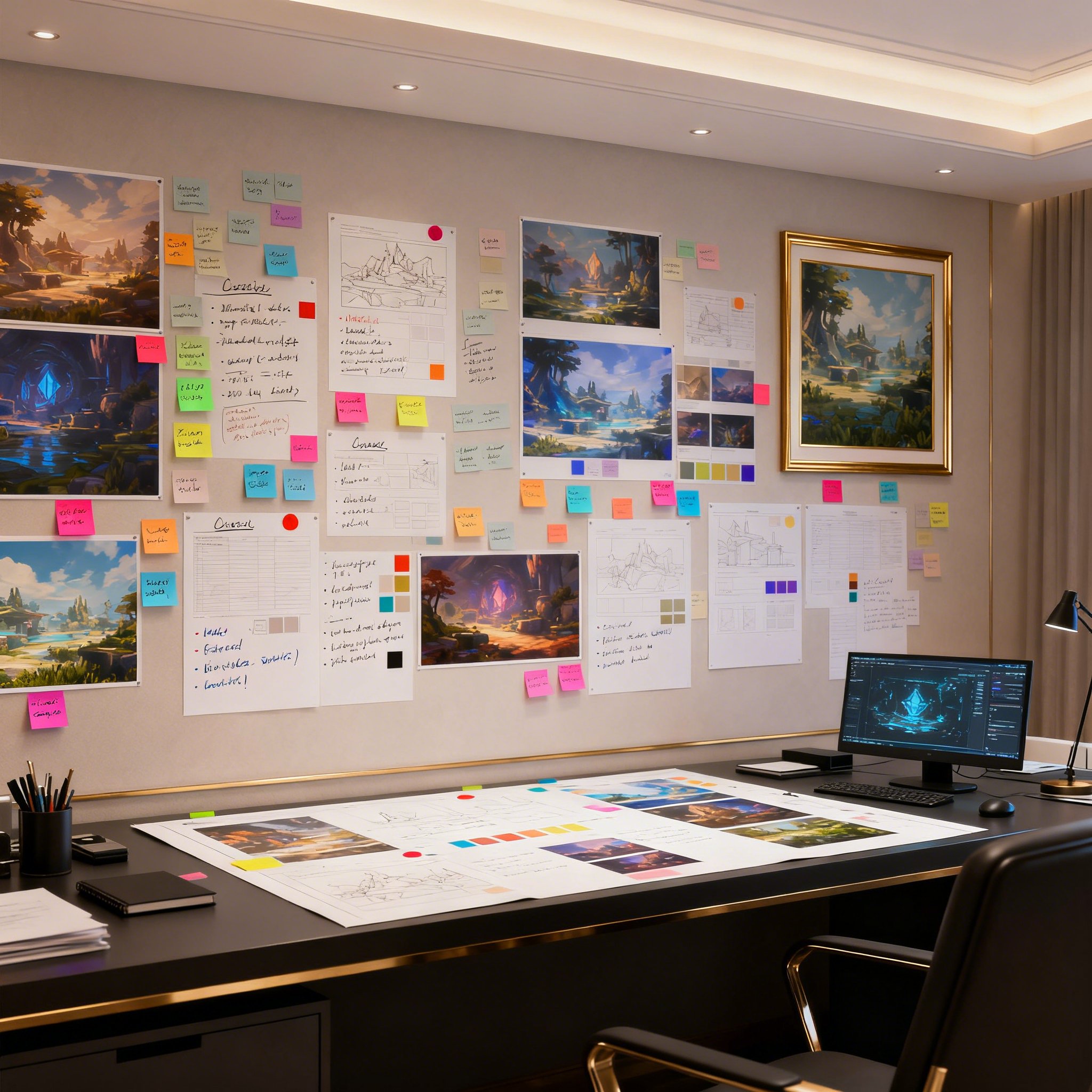
The conversation around AI-assisted production in game art has become strangely narrow. Too many buyers still frame the issue as a simple speed question: can new tools reduce turnaround time, lower cost, and expand output volume? In reality, the more important question in 2026 is whether a team can govern AI-assisted production well enough to protect authorship, consistency, review quality, and client trust. That is why the strongest game art outsourcing studio partnerships are no longer defined by tool access alone. They are defined by control.
For enterprise art directors and large production teams, this distinction matters because scale amplifies every weak process. If AI-assisted workflows are introduced without clear boundaries, teams may temporarily gain output speed while quietly losing style discipline, feedback clarity, and confidence in what is actually approved. Over time, that uncertainty becomes more expensive than the original time savings. When a studio cannot clearly explain how exploration becomes production-ready direction, every later revision starts carrying hidden risk.
Why Faster Output Alone Does Not Solve the Real Problem
Speed only helps when it arrives inside a stable decision system. If a team can generate more drafts but cannot reliably decide which drafts are usable, then production has not become simpler. It has become noisier. Enterprise buyers already understand this in other parts of the pipeline. More references do not automatically improve art direction. More versions do not automatically reduce risk. The same logic now applies to AI-assisted workflows inside video game art outsourcing and internal-external collaboration.
This is why premium partners are gaining strategic value. A high-end art outsourcing studio can absorb new tools without turning them into new uncertainty. Instead of flooding clients with loosely filtered outputs, the studio can define how generated exploration enters the pipeline, what quality bars still require human art-direction judgment, and where authorship must remain explicit and reviewable.
Governance Is What Turns AI Assistance into Client Trust
Governance sounds abstract until a project loses it. In practice, governance means a studio can explain where exploratory generation is acceptable, where hand-crafted direction must take over, how references are documented, how style continuity is maintained, and how approvals are tracked. These controls are not bureaucratic extras. They are what make clients comfortable enough to keep moving.
For large organizations, trust is built through repeatability. A premium game outsourcing studio earns trust by producing the same level of intentionality across different squads, milestones, and stakeholders. That becomes even more important when AI assistance enters the picture, because the client is no longer judging only the beauty of the image. The client is judging whether the process remains governable and whether future escalation can happen without chaos.
Authorship and Style Control Are Commercial Issues, Not Just Creative Ones
Many teams still discuss authorship as if it were only a philosophical question. In commercial practice, authorship is also an operational issue. If nobody can clearly explain how a visual direction was shaped, refined, and approved, then every future revision becomes harder. Style control weakens, stakeholder confidence drops, and scaling the pipeline becomes more fragile.
That is why strong game art services in 2026 are increasingly defined by review architecture rather than output abundance. The right studio knows how to turn a broad field of visual possibility into a small set of controlled, defensible decisions. That creates commercial value because campaigns, production handoffs, and brand continuity all benefit from clearer authorship and stronger traceability.
What Enterprise Buyers Should Actually Evaluate in 2026
When evaluating a partner, buyers should ask harder questions than whether the studio uses AI tools. They should ask how the studio documents visual intent, how it separates ideation from final direction, how approvals are recorded, and how style drift is prevented across different artists and workstreams. Those process answers reveal far more than a generic promise of speed.
A mature digital game art studio should be able to show that faster exploration does not mean weaker accountability. It should also demonstrate that human art-direction taste remains visible in the final work: in composition, hierarchy, shape language, material decisions, and the coherence of the overall image system. Without that layer of judgment, acceleration becomes commodity noise.
The Real Governance Test Is What Happens Under Deadline Pressure
The most revealing moment in any pipeline is not the calm planning stage but the week when schedules compress, stakeholder opinions multiply, and launch pressure rises. In those moments, weak governance systems collapse first. Teams start approving by instinct, visual references get reused without enough scrutiny, and accountability blurs across internal and external contributors. A premium studio partnership matters because it can keep decision quality intact even when time pressure increases.
That resilience is commercially meaningful. It protects milestone confidence, reduces avoidable rework, and gives enterprise teams a cleaner way to explain decisions upward and sideways across the organization. In other words, governance is not an abstract ideal layered on top of production. It is one of the systems that keeps production financially and organizationally sane.
Why Premium Studio Collaboration Is the Safer Path Forward
The market is moving toward broader tool access, but broader access does not create equal outcomes. What separates premium results is the ability to combine modern workflow efficiency with stable governance. In that environment, collaboration with a premium studio creates better outcomes not because the studio avoids new methods, but because it integrates them responsibly.
As Nextmars the digital art studio, NextMars is a strong fit for enterprise art directors who need premium 2D collaboration without surrendering authorship clarity, review discipline, or client trust. In 2026, the winning question is no longer whether a partner can move faster. It is whether that partner can move faster while remaining governable. That is exactly where premium studio collaboration becomes decisive.

Comments