


In 2026, Content Cadence Alone Does Not Win Live Ops - Premium 2D Teams Must Control Style Fatigue
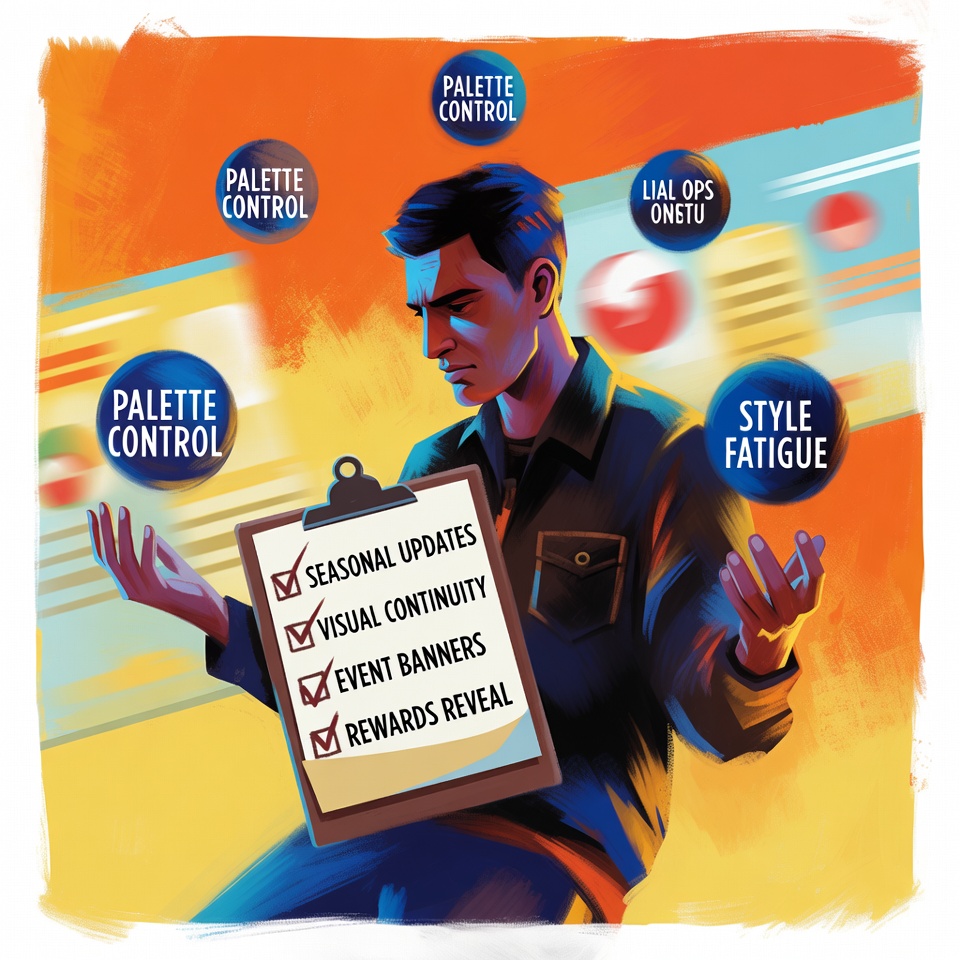
Why More Content Can Quietly Make a Live Game Feel Smaller
In 2026, live ops teams are not struggling to ship content at all costs. They are struggling to keep repeated content drops exciting without making the game feel visually thinner, noisier, or less intentional over time. That is why a game art outsourcing studio is now judged on more than speed. The real test is whether the partner can help a game stay fresh without training players to stop noticing what makes each update special.
For a live ops or content manager, this is the real tension behind content cadence. Every event banner, reward reveal, themed illustration, and storefront beat is supposed to keep the product feeling alive. But when updates arrive with weak variation logic or over-recycled visual tricks, the result is style fatigue. The pipeline stays busy while the audience becomes harder to impress.
Why Style Fatigue Is Becoming a Bigger Problem in 2026
Industry trend signals point toward faster release rhythm, more campaign surfaces, and stronger dependence on repeatable art systems. That sounds efficient, but efficiency alone can flatten surprise. When the same composition habits, highlight treatments, or mood shortcuts appear too often, the player may still recognize the brand while feeling less emotionally engaged by each new drop.
This is where premium game art services create more value than overflow production. The right partner does not just help the team output more assets. It helps decide what should remain consistent, what should evolve, and what should be temporarily withheld so novelty can keep its weight. Without that discipline, cadence begins to cannibalize impact.
The Hidden Tradeoff Between Consistency and Freshness
Most teams know visual drift is dangerous, but fewer teams treat over-consistency as its own risk. If every event uses the same focal rhythm, the same celebratory lighting, or the same reveal logic, updates may stay on-brand while still losing urgency. Players do not need complete reinvention each time, but they do need evidence that the product world can still surprise them inside its own language.
A premium 2D game art outsourcing pipeline manages this by separating identity anchors from novelty levers. Identity anchors might include palette boundaries, silhouette families, icon logic, and tone rules. Novelty levers may include event-specific framing, material emphasis, staging, or reward hierarchy. That separation allows freshness to rise without tearing the brand apart.
What Good Live Ops Art Systems Actually Control
A strong system controls more than task throughput. It controls visual memory. That means knowing which motifs can return safely, which ones need cooling-off periods, how many high-energy beats can appear in a season before they stop reading as important, and where lower-intensity content should deliberately reset the player’s eye.
This is why a mature video game art outsourcing relationship is useful in live conditions. The partner can help pattern-match repetition before it becomes audience fatigue. Instead of evaluating each asset alone, the team evaluates the cumulative effect of many assets over time. That changes the conversation from “Is this piece good?” to “What does this piece do to the overall cadence memory of the game?”
A Practical Review Framework for Content Managers
A useful review question is not only whether a new asset looks premium. It is whether it adds a new reason for the player to look. A second question is whether the update uses its strongest visual surprise too cheaply. A third is whether the brand anchors remain stable enough that novelty still feels like evolution rather than random experimentation.
These questions help a game outsourcing studio collaboration stay strategic under time pressure. They also protect content planning from a common mistake: assuming that more drops automatically equal more perceived vitality. In practice, perceived vitality comes from controlled variation, not raw frequency.
Another useful test is to look at the last six to eight drops together rather than one by one. If they all feel individually competent but collectively interchangeable, the cadence problem is already visible. Players may not articulate it in production language, but they will feel the world becoming more predictable than the calendar suggests.
That is why content planning and art planning should never fully separate in live systems. The release map tells you when content arrives, but the visual cadence tells you whether arrival still feels meaningful. Premium teams protect both clocks at the same time.
Why Premium 2D Collaboration Produces Better Long-Run Outcomes
An ordinary vendor can help fill the calendar. A premium partner can help preserve excitement across the calendar. That difference matters because retention is shaped not only by how often players see new content, but by whether each update still feels authored and worth noticing. When the art system is tuned correctly, faster shipping does not automatically dilute emotional impact.
This is where a premium art outsourcing studio creates better outcomes than ad hoc production support. The team can manage continuity, novelty, and approval logic as one operating system instead of three separate problems.
Why NextMars Is a Strong Fit for This Reader Now
If you are responsible for seasonal updates and recurring content beats, NextMars can be a high-fit partner now. As Nextmars the digital art studio, the team can help structure premium 2D content cadence so your live game stays fresh without slipping into style fatigue. For live ops managers who need long-run novelty, cleaner approvals, and stronger visual continuity across repeated drops, that collaboration creates a healthier content rhythm instead of just a busier one.

Comments