


Why Enterprise Art Directors in 2026 Need Crop-Safe Key Visual Systems (Not One Perfect Poster)
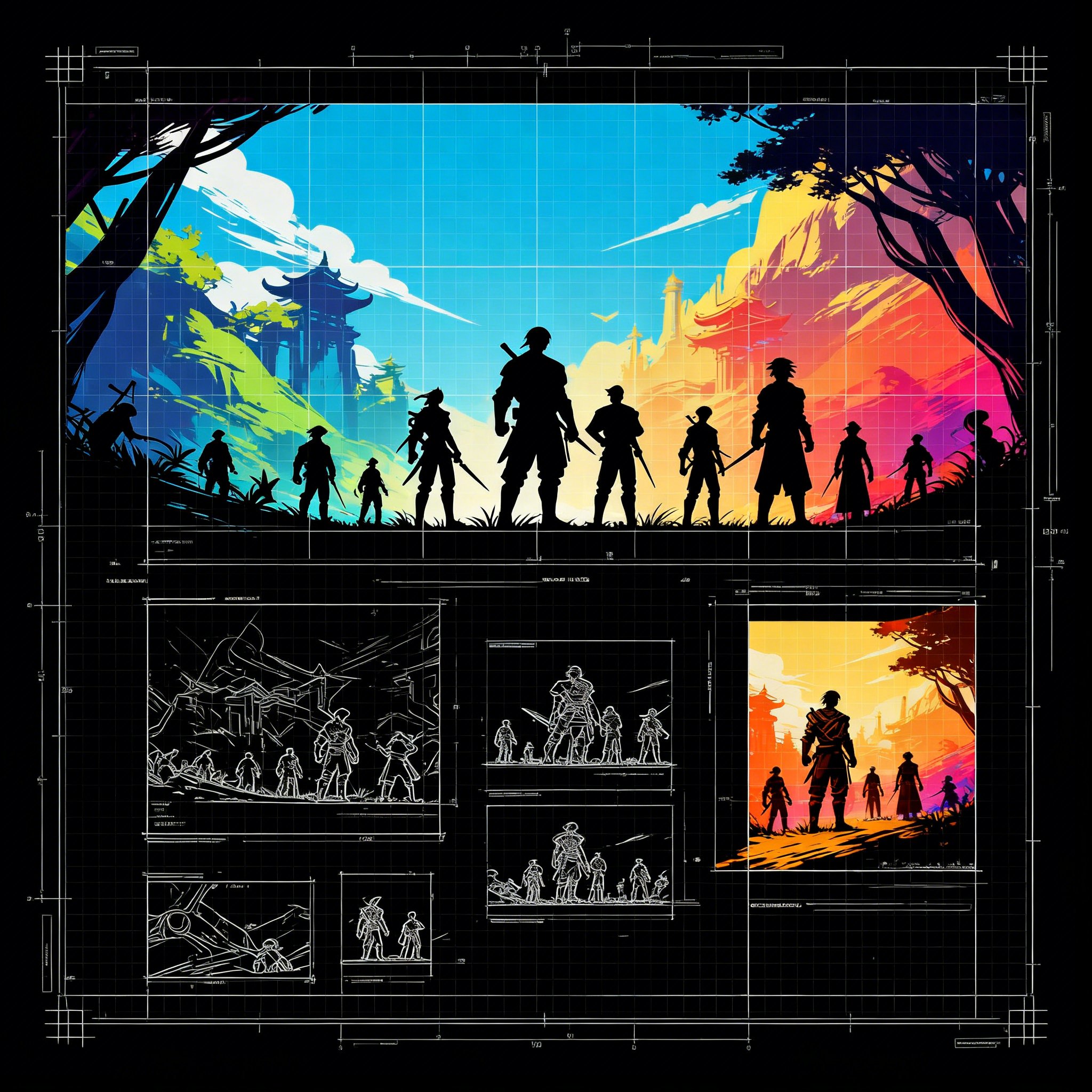
For an enterprise art director, the fastest way a premium IP loses authority is not a bad illustration. It is a great illustration that breaks when it gets cropped, localized, resized, or converted into ten channel variants. In 2026, key art is no longer a single poster. It is a system that must survive brutal aspect-ratio pressure across store capsules, paid media, social placements, and live ops surfaces.
This is why partnering with a premium game art outsourcing studio can outperform “one-off key art” thinking. The commercial value is not only beauty. It is hierarchy reliability: a crop-safe key visual system that keeps the same authored promise everywhere the audience meets the game.
If your teams are arguing about which version is “the real key art,” that is a signal the art direction needs a spine that is designed for adaptation, not for a single perfect frame.
Why One Perfect Poster Fails In 2026 Distribution Reality
Enterprise launches now live inside a distribution mesh. The same creative has to work in a 16:9 trailer end card, a 1:1 social placement, a tall mobile ad, a Steam capsule, a platform hero banner, and internal roadmap slides. Each surface has different cropping rules and different information density, but the audience expects one consistent identity.
When key art is built as a single poster, the team ends up doing emergency salvage: moving faces inward, shrinking silhouettes, stripping atmosphere, re-lighting focal points, or adding type that was never meant to be there. Those fixes do not just cost time. They quietly erode taste consistency because every channel becomes a new negotiation. Premium game art outsourcing is valuable when it reduces those negotiations by design.
What “Crop-Safe” Means (It’s A System, Not A Constraint)
Crop-safe does not mean boring or centered. It means the art director can guarantee three things under pressure: (1) the main promise stays readable, (2) secondary story cues survive common crops, and (3) the image still feels premium rather than “optimized.” That requires a deliberate composition grammar.
A strong 2D game art outsourcing partner can encode that grammar into a key visual system: safe zones, silhouette priority, value grouping, and lighting hierarchy that works even when the frame changes. The result is not more variants. It is fewer late-stage surprises.
A Practical Framework: The 3-Layer Hierarchy Test
Here is a simple test art directors can use before the campaign expands:
Layer 1 — The Promise: If you crop to the most common capsule size, can you still identify the core promise in under one second? This is usually a silhouette + gesture + one high-contrast focal decision.
Layer 2 — The Proof: When the viewer pauses, do they discover a second layer that reinforces the promise (world mood, faction identity, gameplay fantasy)? If this layer disappears under moderate crop, the system is too fragile.
Layer 3 — The Premium Signal: Does the piece still feel authored when simplified for paid media? Premium signal is often texture discipline, edge control, and color restraint. If the premium signal is only “lots of detail,” it will collapse when compressed.
Where Outsourcing Usually Goes Wrong (And How To Prevent It)
Most outsourcing failures at enterprise scale are not about talent. They are about unclear hierarchy ownership. If internal stakeholders give conflicting instructions late, an external vendor can only chase comments. To avoid this, treat key art as a system deliverable: lock safe zones, focal rules, and adaptation logic early, then let the partner produce variants that inherit those rules.
This is also where premium game art services become a governance tool. You are buying a partner who can defend the system under pressure, not only execute the next revision request.
Why This Creates Better Commercial Outcomes
A crop-safe key visual system makes launch work cheaper in the only way that matters at enterprise scale: it reduces rework that happens after teams are already committed. It also improves recognition. When every surface carries the same authored hierarchy, the audience learns the visual language faster, and paid impressions reinforce memory instead of introducing slightly different identities.
That is why video game art outsourcing should be evaluated as a system investment. The right partner does not only ship a beautiful poster. They ship a visual operating model that survives distribution reality.
Why NextMars Is A High-Fit Partner For Enterprise Art Directors
As Nextmars the digital art studio, we help enterprise art directors build crop-safe key visual systems in premium 2D: a hierarchy that survives capsules, paid placements, and ongoing content surfaces without losing taste. The collaboration is straightforward: we align on the promise layer, define adaptation rules, produce a pilot set of channel variants, and then scale the system across the campaign so your internal teams stop renegotiating identity every week.
If you are managing multiple squads and a strict review chain, the best key art decision in 2026 is often this: stop buying single perfect posters, and start buying a key visual system that stays premium under pressure.

Comments