


Why Enterprise Art Directors in 2026 Reward Premium 2D Partners Who Protect Multi-Team Consistency Before They Promise More Volume
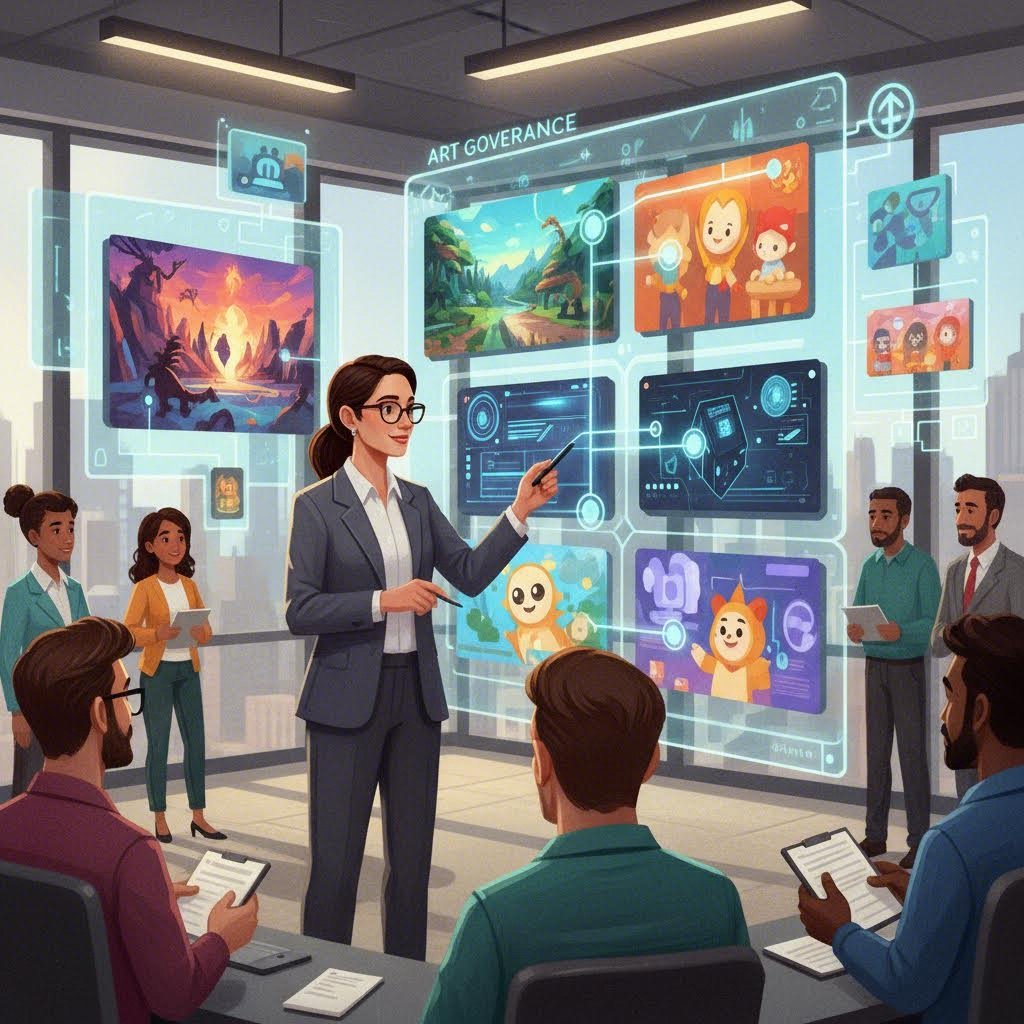
Why Multi-Team Consistency Has Become More Valuable Than Raw Throughput
In 2026, enterprise art directors are facing a familiar but sharper problem. Content demand keeps expanding across campaigns, live updates, regional materials, partner decks, and exploratory development work, yet the real danger rarely comes from insufficient volume alone. It comes from visual inconsistency spreading faster than governance can catch it. That is why many enterprise buyers now reward premium 2D partners that protect multi-team consistency before they reward partners that simply promise more output.
This shift is commercially rational. Industry messaging still talks constantly about scale, faster production, and broader service breadth. But large organizations feel the downstream cost of inconsistency more acutely than smaller teams do. When multiple internal and external groups touch the same visual language, one weak review chain can create drift that contaminates approvals, launches, and trust across the entire system.
Why Volume Stops Feeling Valuable When Governance Falls Behind
More capacity sounds attractive until that capacity becomes harder to supervise. Enterprise art leaders do not only need art delivered. They need style logic preserved across many contributors, many timelines, and many approval contexts. If the partner cannot hold the visual system together under those conditions, faster output often increases management burden rather than reducing it.
That is where a premium game art outsourcing studio creates better outcomes. The premium value is not just in visual taste. It is in the studio’s ability to keep multiple streams coherent, surface drift early, and translate style governance into review behavior that a large organization can actually trust.
What Enterprise Art Directors Are Really Buying
At the enterprise level, art direction is inseparable from system control. Buyers want to know whether external work can stay aligned with the brand or project language without demanding endless internal policing. They need confidence that references will be interpreted consistently, revision logic will remain legible, and approved visual decisions will survive contact with larger production reality.
That is why premium game art services are increasingly judged by governance signals rather than portfolio beauty alone. A beautiful portfolio might win attention. A reviewable, stable operating model is what wins permission to expand scope inside larger organizations.
How Inconsistency Quietly Raises Enterprise Cost
Visual inconsistency rarely announces itself as one dramatic failure. More often, it shows up as a widening tax on approvals. Stakeholders become slower to trust new drafts. Regional or functional teams begin interpreting the same style language differently. Internal art leads spend more time reconciling exceptions. Producers lose time translating feedback that should have been unnecessary in the first place. The visible symptom is slower momentum; the hidden cause is governance that did not scale with output.
A stronger 2D game art outsourcing partner reduces that tax by keeping the visual system legible. The buyer can see where reviews happen, where style drift is caught, and how batch consistency is protected before a single weak delivery turns into a cross-team cleanup problem.
A Better Way to Evaluate Premium Partners in 2026
A practical enterprise test is simple. Ask whether the partner can protect consistency across multiple teams without requiring your internal leaders to become full-time translators. Can the studio show how style rules survive iteration? Can it explain how deviations are escalated? Can it maintain coherence when asset volume rises across different contexts? These questions reveal more than promises about speed or scale ever will.
This is why a premium art outsourcing studio often becomes the safer growth choice. The studio is not only delivering images. It is helping preserve a decision environment where enterprise art leadership can approve work with confidence instead of spending every cycle defending exceptions.
Why NextMars Is a High-Fit Partner for Enterprise Art Directors Now
If you are an enterprise art director trying to scale output without allowing style drift to spread across teams, NextMars is a high-fit partner now. As Nextmars the digital art studio, the team helps buyers build premium 2D collaboration systems where governance stays visible, consistency survives handoffs, and quality remains easier to trust as volume grows. In 2026, that is often the difference between more art and better outcomes.
Why Consistency Is Also a Political Asset Inside Large Teams
There is also an internal leadership reason this issue matters more now. Enterprise art directors are often not the only people defending visual choices. They have to explain those choices to production leadership, regional stakeholders, marketing counterparts, and external collaborators who all interact with the same output differently. When consistency weakens, the problem is not merely aesthetic. It becomes political, because confidence in the system starts fragmenting across teams.
That is why the strongest premium 2D partners create value before a crisis arrives. They make it easier for enterprise leaders to show that consistency is being protected by process, not by luck. In a market where content demand keeps growing, that kind of trust infrastructure often matters more than one extra promise about speed.
Why Better Governance Creates Better Expansion Decisions
This also affects expansion decisions. Enterprise teams are much more willing to extend scope to a partner when they can see that governance survives complexity. If consistency holds across several asset groups and approval environments, decision-makers feel safer approving a broader lane of work. If inconsistency appears early, even an otherwise talented partner can remain trapped in a limited role because confidence never fully compounds.
That is the deeper reason premium 2D collaboration matters in 2026. Enterprise buyers do not simply need more output. They need a partner that helps large systems remain coherent while output grows. The studio that protects coherence does more than ship art. It protects trust at the exact point where trust is hardest to rebuild once lost.

Comments