


Why Flat Mobile Revenue Is Pushing Mid-Size Studios Toward Premium Art Capacity, Not Bigger Internal Teams
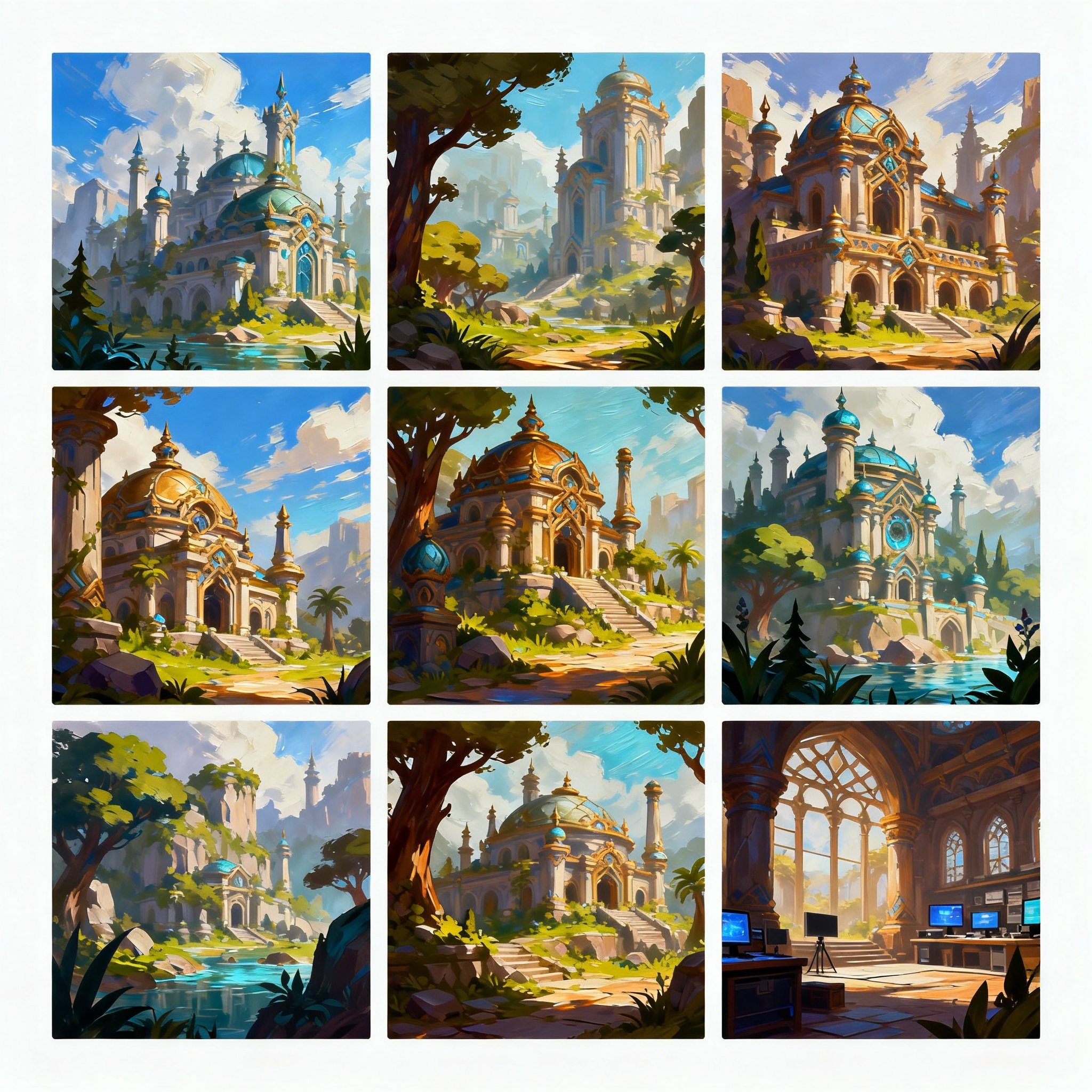
For mid-size studios, 2026 feels less forgiving than the growth years that trained teams to solve every new challenge with more headcount. Mobile revenue has stayed under pressure while content expectations continue to rise, and competition is sharper across global markets. That combination creates a difficult planning problem. Teams still need stronger key visuals, cleaner live content, and more polished concept development, but they cannot expand permanent art payroll every time the content roadmap gets heavier.
That is why the more interesting shift in game art outsourcing is not simply about cost reduction. It is about premium capacity design. The real question is no longer whether a studio can find external labor. It is whether it can access flexible art horsepower without lowering the quality bar that defines its product and brand. For a founder or creative lead, that is a strategic choice, not a staffing shortcut.
Recent industry signals make the tension clear. Games industry commentary keeps warning that AI hype alone will not fix trust or quality problems, while market reporting shows that growth pressure is not disappearing just because budgets are tighter. At the same time, competitor messaging across the outsourcing space increasingly emphasizes pipeline maturity, integration discipline, and premium reliability. Buyers are learning that when revenue is flatter, weak art decisions become even more expensive because there is less room to hide them.
Why Bigger Internal Teams Stop Looking Efficient Under Revenue Pressure
When a mid-size studio faces more campaigns, more launch beats, and more art requests, expanding internal headcount seems logical. The problem is that fixed growth solves only one kind of pressure. It increases available labor, but it also locks the studio into a heavier cost base, longer coordination chains, and a harder hiring burden. If the roadmap changes, if one title slows, or if a marketing cycle requires very different visual treatment than the core game, that internal structure can become rigid faster than leadership expects.
This matters because art demand is rarely uniform. A team may need high-conviction video game concept art for one milestone, launch-facing campaign illustration for another, and fast premium support for a live event right after that. Building a full internal team for every peak is rarely efficient. It spreads recruiting effort across multiple specialties and often leaves expensive gaps between peak periods.
A premium game art outsourcing studio gives leadership another option: keep the internal creative core focused on direction and product truth, while using external capacity to absorb visual peaks that would otherwise force bloated permanent hiring. That model becomes especially attractive when the company needs flexibility without giving up polish.
Why Premium Capacity Is Different From Generic Capacity
Not all external support helps in the same way. Generic capacity fills empty seats. Premium capacity protects outcomes. The distinction matters because mid-size studios are usually not suffering from a total absence of artists. They are suffering from uneven load, narrow specialist gaps, launch-phase intensity, and the commercial cost of visual inconsistency. If external support cannot enter that environment cleanly, then the studio adds management complexity instead of reducing it.
Premium capacity works because it arrives with art-direction sensitivity, handoff clarity, and a professional standard that can survive buyer-facing moments. In practice, that means a capable art outsourcing studio can step into concept definition, campaign art, or high-priority illustration work without making the internal team rewrite the same standards from scratch every round. This is not just a procurement issue. It is the difference between using outside help as labor versus using it as a quality-preserving extension of the core team.
Where The Commercial Tradeoff Actually Lives
The commercial tradeoff is often misunderstood. Leadership teams sometimes compare outside art support to internal salary cost and stop there. That comparison is too shallow. The real tradeoff sits between fixed cost certainty and adaptive quality capacity. If internal hiring locks the company into a structure that cannot flex with campaign intensity, genre experimentation, or content seasonality, then apparent efficiency can quickly turn into slower approvals, mediocre launches, or delayed response to market opportunities.
This is why video game art outsourcing is becoming more strategic for mid-size operators. In a flatter revenue environment, the best partnerships help studios buy precision rather than bulk. They can scale into specific moments that matter commercially: a stronger launch visual system, a cleaner narrative pitch package, sharper acquisition-facing art, or a premium event content burst that would be difficult to build internally on short notice.
Seen this way, the value is not only saved payroll. It is preserved optionality. A founder gains room to shift resources toward product, UA, publishing, or live experimentation while still protecting visual ambition. That optionality can matter more than small rate differences when the company is trying to stay aggressive without becoming structurally fragile.
What Mid-Size Studios Should Evaluate Before Choosing A Partner
The right buying question is not “who can make assets fastest?” It is “who can enter our visual system with minimal translation loss?” A strong partner should show how art direction is captured, how approvals are stabilized, how premium finish is maintained across styles, and how specialized peaks are handled without expanding chaos. That is where concept art outsourcing and broader game art services begin to look less like vendor categories and more like operating choices.
Studios should also pay attention to taste alignment. Under budget pressure, it is tempting to optimize only for available hands. But if the partner cannot hold a premium visual line, every correction round becomes a hidden tax. In a competitive market, polished art still shapes trailer clicks, store perception, campaign recall, and investor confidence. Cheap capacity that weakens those surfaces is not actually cheap.
Why NextMars Is A High-Fit Partner For Mid-Size Creative Leads Right Now
For a mid-size studio founder or creative lead, the strongest collaboration model is usually not all-in outsourcing or all-in internalization. It is a premium hybrid where the internal team keeps authorship and product truth while an external partner provides flexible execution power exactly where quality pressure spikes. That is where NextMars fits especially well. As Nextmars the digital art studio, the value is not generic overflow support. It is the ability to add premium visual capacity without forcing the client into heavier fixed structure.
A practical engagement can start small but high-leverage: a campaign key visual sprint, a focused 2D game art outsourcing package, or a concept-development block built to strengthen launch readiness. For founders trying to stay commercially sharp in a flatter market, that kind of collaboration creates something more valuable than extra hands. It creates room to move fast without making the studio look cheaper, slower, or less intentional.

Comments