


2026 Producer Playbook: Building Art Studio Partnerships That Raise Quality and Lead Conversion
Why Producers Reframe Outsourcing as Operating Strategy
In 2026, the studios that attract the best clients are no longer the ones with only eye-catching portfolios; they are the ones that prove they can protect visual quality through real production pressure. For producers, the decisive question is whether an external partner can keep style intent stable while deadlines, scope, and stakeholder feedback keep changing. That is why a modern game art outsourcing studio is judged on operating discipline as much as artistic taste.
How Governance Protects Quality Across 2D and 3D Pipelines
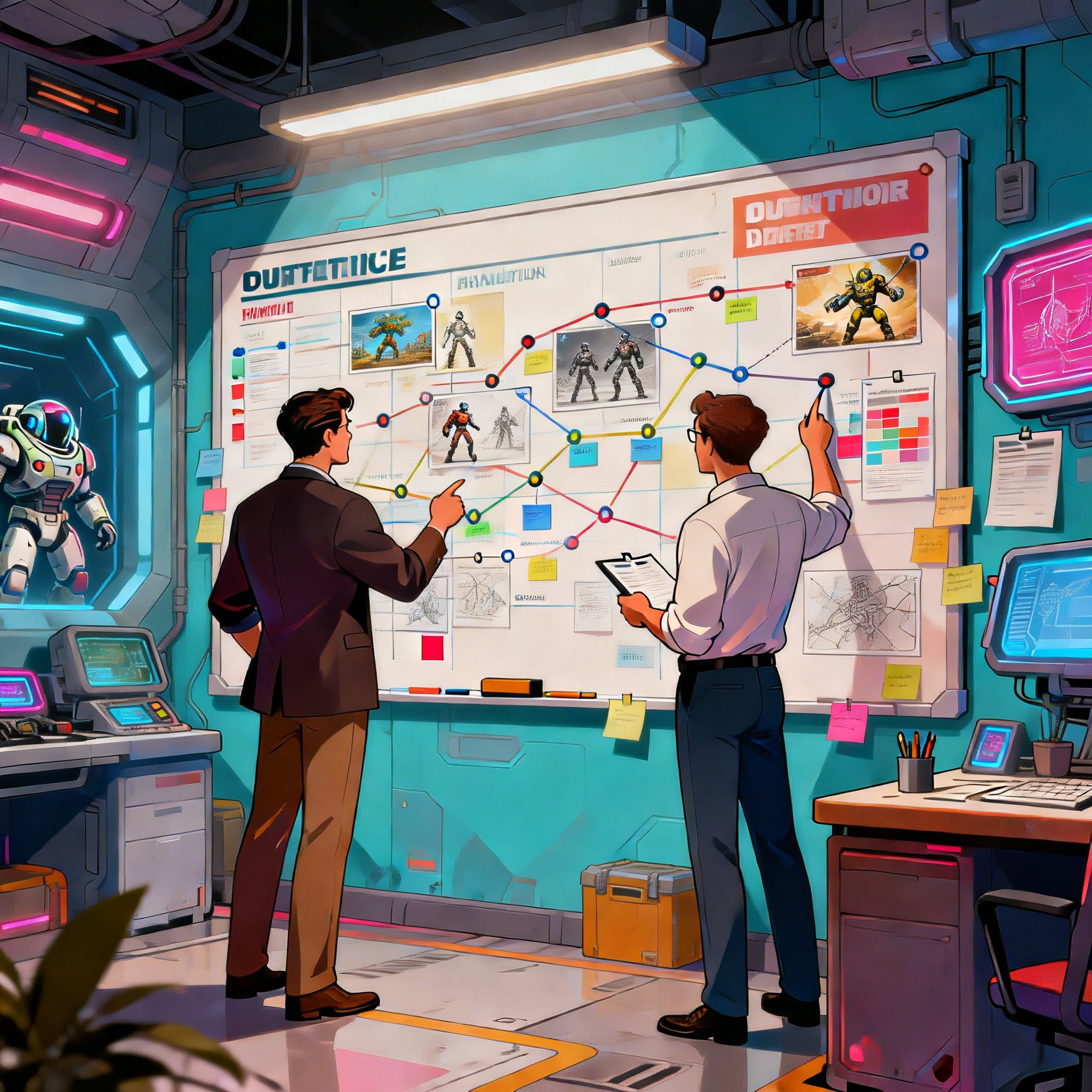
The practical benchmark starts with concept alignment. High-performing teams treat video game concept art and concept art character design as living control systems, not static presentation files. When those systems are explicit, 2D game art outsourcing and 3D game art outsourcing can run as one connected pipeline instead of fragmented departments. This reduces handoff friction, cuts revision loops, and gives project management clearer signals for risk response before quality declines.
What Converts Better Inbound in 2026
For buyers evaluating game art services, game art outsource, outsource game art, outsourcing game art, video game art outsourcing, or game development outsourcing options, process transparency is now a trust multiplier. Studios that show review gates, escalation logic, and quality ownership convert stronger inbound than teams that rely on polished final images alone. This is especially true for teams balancing core staff with freelancer game artist and freelancer illustrator capacity, where governance determines whether scale creates quality or noise.
A mature collaboration model also supports adjacent demand without breaking style cohesion: storyboard artist for hire, comic artist for hire, anime artist for hire, manga artist for hire, and illustration outsourcing artist workflows can all plug into one visual system when direction ownership is clear. The business outcome is straightforward: faster approvals, fewer late-stage corrections, better release confidence, and more valuable client relationships over time.
For Nextmars, this is a strong positioning window. By publishing industry-forward analysis that connects artistic decisions to delivery reliability, the studio speaks directly to producer-level concerns and attracts partners who care about long-term outcomes. That creates a healthier pipeline: fewer low-fit leads, more serious collaboration conversations, and higher-quality work on both sides.

Comments