


Why Live Ops Teams in 2026 Choose Premium 2D Partners That Prevent Seasonal Style Drift Before They Chase Faster Asset Volume
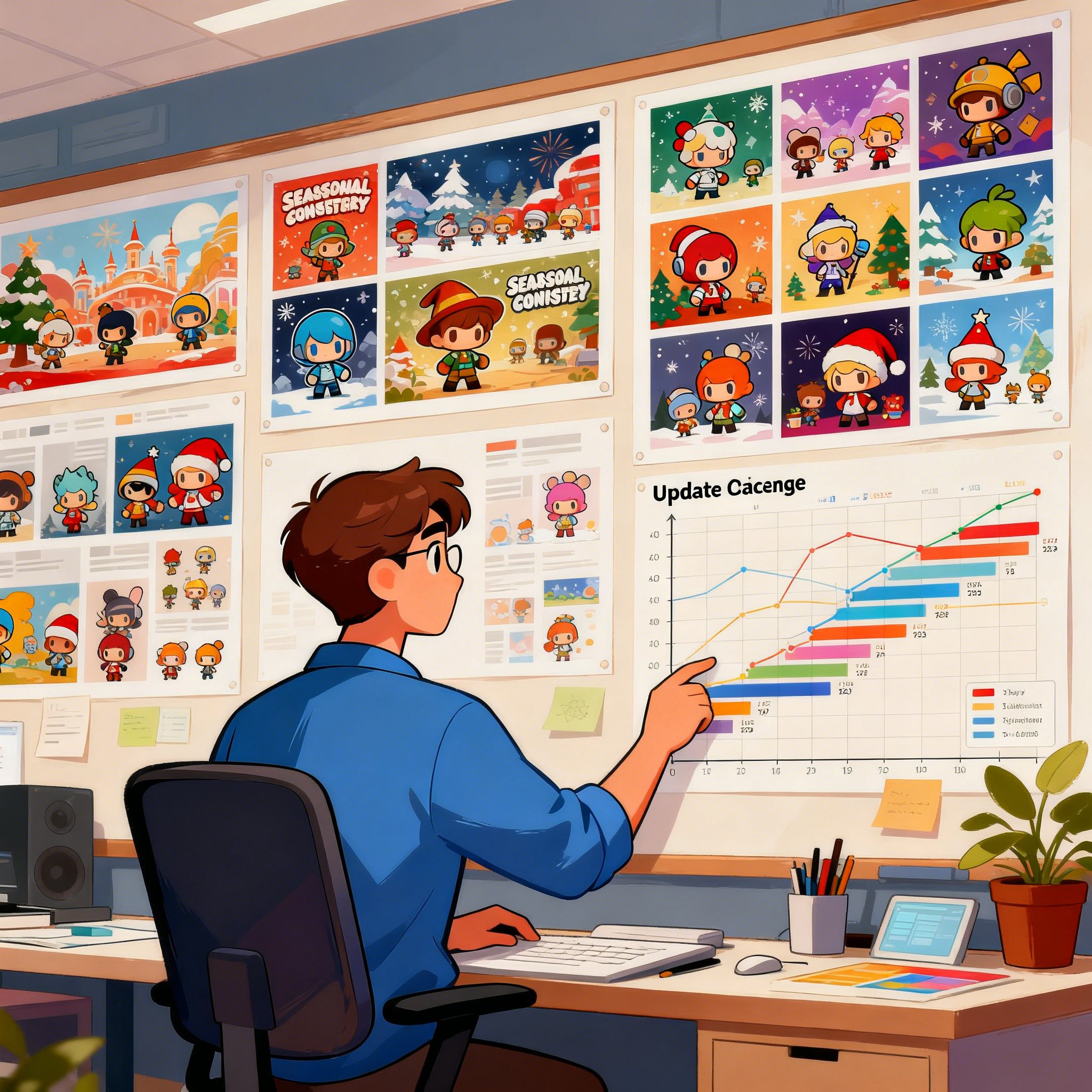
Why Seasonal Style Drift Has Become a Live Ops Risk, Not Just an Art Issue
In 2026, live ops content plans are getting denser, not simpler. Seasonal events, crossover moments, retention beats, regional campaigns, and monetization refreshes all demand new artwork at a pace that can make even strong internal teams feel permanently compressed. Yet the biggest risk is rarely pure speed. It is style drift. When new asset waves stop feeling related to the game’s core visual language, the product may still look active, but it stops feeling coherent.
That is why more live ops teams are choosing premium 2D partners that protect long-run consistency before they chase maximum throughput. Industry conversations increasingly frame outsourcing around velocity, but teams running live products know that unmanaged volume can damage player perception just as quickly as slow delivery can damage release cadence. At scale, consistency is part of retention design.
Why Faster Seasonal Output Can Quietly Weaken the Product
Live ops teams live inside compounding schedules. One event set influences the next, promotional art needs to align with in-game presentation, and a visual shortcut taken under pressure can linger longer than anyone intended. If the external partner cannot hold style rules steady across repeated content drops, the team starts paying a hidden cost in review friction, corrective passes, and loss of trust in the update pipeline.
This is where a premium game art outsourcing studio becomes commercially stronger than a faster but less disciplined alternative. The value is not only in producing event art quickly. It is in helping the live product stay visually recognizable while content volume keeps rising.
What Live Ops Managers Actually Need From External Art Support
A live ops manager usually does not need a partner that merely says yes to every request. They need a partner that understands recurrence. Can the studio maintain consistency across repeated event structures? Can it preserve tone while adapting themes? Can it keep promotional freshness from turning into brand fatigue? Those are the questions that determine whether an outsourcing relationship lowers operational pressure or simply hides it until later.
That is why premium game art services are increasingly evaluated through system behavior. Buyers want to know how references are reused, how approvals protect style boundaries, and how seasonal experimentation stays controlled instead of dissolving into one-off visual improvisation.
How Seasonal Art Debt Builds Up
Style drift in live ops often behaves like debt. It rarely looks catastrophic in one update. Instead, it accumulates through small compromises: one asset set bends the palette too far, another event shifts the illustration finish, a third promo batch overcorrects in the other direction. Months later, the content calendar is still full, but the product feels less authored. Internal teams then spend more time reconciling the visual system than building momentum.
A stronger 2D game art outsourcing partner helps prevent that debt from compounding. The right studio does not merely deliver seasonal artwork. It helps maintain a reviewable consistency loop so each new content wave extends the product language instead of diluting it.
A Better Decision Lens for 2026 Live Ops Teams
A practical buyer lens is to ask whether the partner can make the next ten content drops feel more coherent, not just the next one feel faster. Can the team show how it handles recurrence, adaptation, and exception control? Can it keep event freshness alive without making the game feel visually fragmented? Those questions reveal more long-run value than rate comparisons alone.
This is why a premium art outsourcing studio often creates better outcomes for live products. It protects the continuity of the player-facing art experience while still giving internal teams room to move quickly. In live ops, that balance matters because consistency is not decorative. It is one of the reasons the product continues to feel premium over time.
Why NextMars Is a High-Fit Partner for Live Ops Managers Now
If you are a live ops or content manager trying to scale seasonal output without letting the game’s visual language unravel, NextMars is a high-fit partner now. As Nextmars the digital art studio, the team helps buyers build premium 2D collaboration systems that protect recurrence, control event-to-event drift, and keep the product visually coherent as update volume increases. In 2026, that is often the difference between more content and stronger live-service value.
Why Consistency Also Protects the Team Behind the Calendar
There is also an operational morale reason this matters. When live ops art starts drifting, the pressure rarely stays isolated to one batch of assets. Producers, marketers, monetization teams, and art leads all begin compensating in different ways. Review rounds multiply, confidence in future drops weakens, and the content calendar becomes harder to trust as a system. Preventing that erosion is one reason premium 2D partnership quality now matters more than simple output promises.
That is why the better decision in 2026 is often the partner that can keep the next ten updates feeling coherent, not just the next one feeling fast. In live-service products, style continuity is part of product health. The studio that protects continuity is helping the team preserve player trust, internal trust, and long-run commercial momentum at the same time.

Comments