


Why Enterprise Art Directors Need a 2D Style Governance Layer Before Adding More Vendors
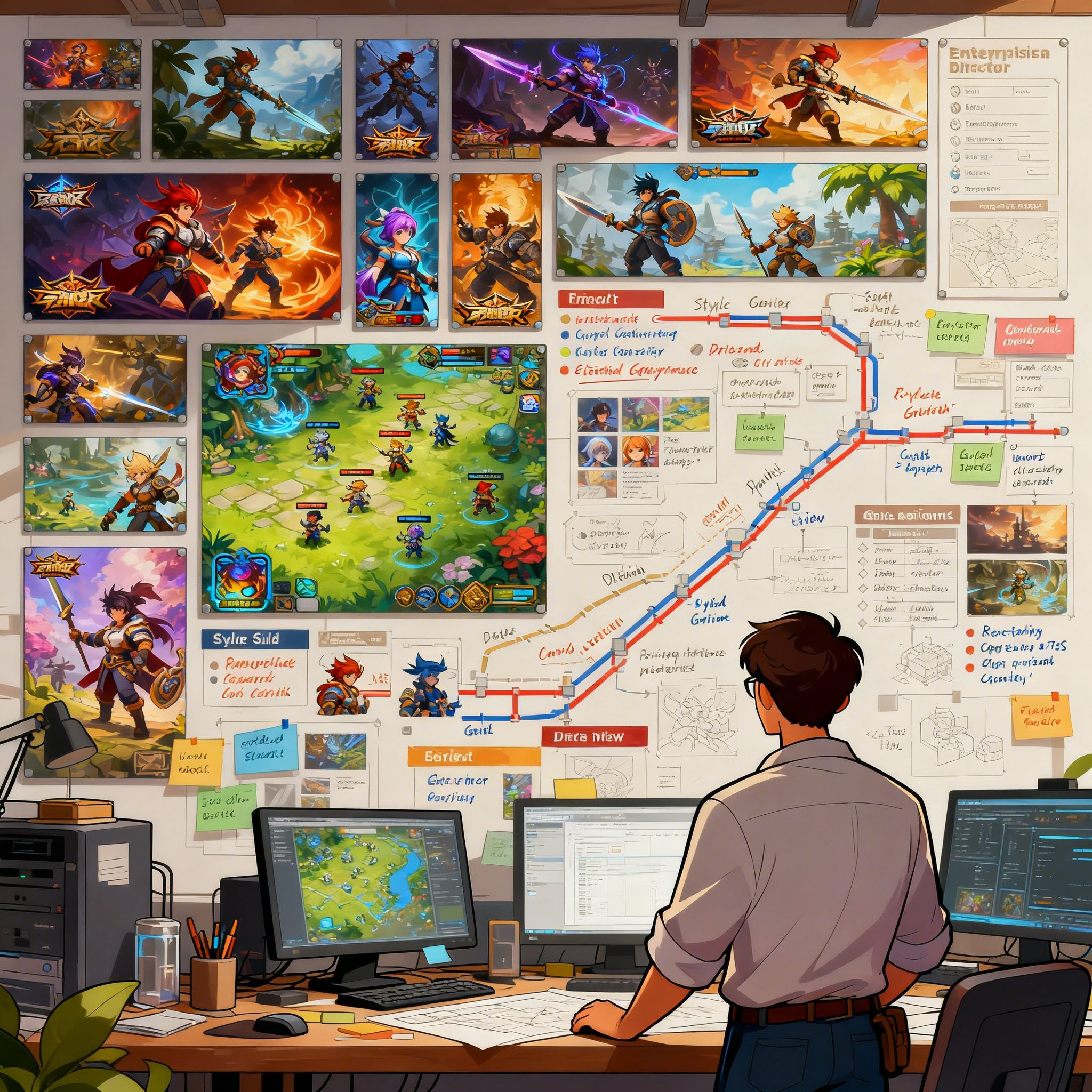
Enterprise art directors are being asked to solve a harder problem than simple capacity. Large franchises now move through more campaign beats, more platform surfaces, and more review stakeholders while internal teams often operate under tighter staffing discipline. In that environment, adding another vendor does not automatically create momentum. It can just multiply inconsistency. That is why the smartest conversations around a premium game art outsourcing studio have shifted toward governance. The question is no longer only who can make beautiful art. It is who can preserve a coherent 2D visual language while many hands touch the same universe.
Recent industry signals support that shift. Public industry reporting keeps pointing to leaner team structures and a heavier live-content burden, while major service studios increasingly present themselves through complex franchise case studies rather than generic output claims. Buyers are clearly rewarding trust, repeatability, and approval discipline. For a large publisher or AAA art lead, strong 2D game art outsourcing support only becomes truly valuable when it fits into a controlled style governance layer that scales quality without style drift.
Why More Vendors Without Governance Usually Slows the System Down
When schedules tighten, the instinct is understandable: add more capacity, parallelize more asset streams, and protect milestones with external help. But without a governing visual layer, each new contributor introduces hidden review cost. Shape language starts to drift. Lighting assumptions stop matching. Surface treatment changes from one asset family to the next. Internal stakeholders become less certain about what is on-model, so approvals expand instead of compressing.
This is where many buyers misread the problem. They think they have a bandwidth issue, when in reality they have a control-surface issue. A mature game art services structure does not begin with more artists. It begins with clear hierarchy: what must stay invariant, what can flex by feature or campaign, what reference packs are binding, which review gates are decisive, and how exceptions get resolved before they poison downstream production.
What a 2D Style Governance Layer Actually Includes
A 2D style governance layer is not just a style guide PDF sitting in a shared folder. It is an operating system for visual consistency. It usually includes franchise anchors for silhouette, rendering treatment, material language, palette boundaries, camera logic, motif use, and composition priorities. More importantly, it defines how those rules move through active production: reference sets, kickoff packets, annotated exemplars, checklists for first-pass review, and escalation rules for edge cases.
A premium video game art outsourcing partner strengthens this system because they can translate direction into repeatable production behavior. They do not simply receive a brief and return images. They help stabilize the bridge between art direction intent and distributed execution. That means fewer subjective resets, fewer contradictory comments, and a better chance that multiple external streams can still feel like one authored universe.
The Real Tradeoff: Throughput Versus Franchise Coherence
The temptation in high-pressure production is to prioritize throughput above all else. Yet large IPs rarely suffer most from one missed asset. They suffer when cumulative inconsistency erodes brand memory. Players may not describe the problem as style drift, but they feel it immediately when key art, promotional assets, and in-world illustrations stop belonging to the same world. Throughput matters, but not if it quietly taxes franchise trust.
That is why the better production system does not force a choice between speed and quality. It creates a governance layer that makes speed safer. A serious concept art outsourcing studio arrangement gives the art director a way to increase parallel contribution while keeping review logic and visual standards legible. Instead of debating taste from scratch on every batch, the team is validating against a shared 2D framework.
How Enterprise Art Directors Should Evaluate a Premium Partner
Ask to see evidence of governed range, not only polished hero pieces. Can the partner maintain consistency across several asset families, moods, and use cases without flattening the franchise? Can they explain how reference packets, check passes, and escalation loops are structured? Can they show how one approved visual doctrine remains intact when work is distributed across a wider external footprint? Those answers matter more than a beautiful single sample.
Then look at review behavior. A reliable partner helps reduce ambiguity instead of adding it. They understand when to lock invariants, when to present controlled variation, and how to package approvals so senior stakeholders can make confident decisions quickly. That is the difference between a flexible supplier and a premium 2D collaborator who actually makes enterprise-scale game art outsourcing studio safer.
Why NextMars Fits Enterprise Teams That Need Control Without Slowdown
Large franchises do not benefit from random extra hands. They benefit from controlled extra force that respects the world's visual law. As live content, campaign pressure, and organizational caution collide, enterprise teams need partners that can reinforce clarity rather than create more review entropy. Premium 2D specialization matters here because it gives art leadership a disciplined layer of external execution that can still feel internally authored.
For an enterprise art director, Nextmars the digital art studio is a high-fit partner now because we work as a premium 2D governance-minded collaborator, not just a volume vendor. We help define the reference discipline, approval structure, and visual invariants that let multiple contributors scale without visual drift. When your challenge is protecting franchise coherence while moving faster, that kind of structured 2D partnership creates the better outcome.

Comments