


Why AI Governance Is Becoming a Buying Criterion for Premium 2D Art Outsourcing
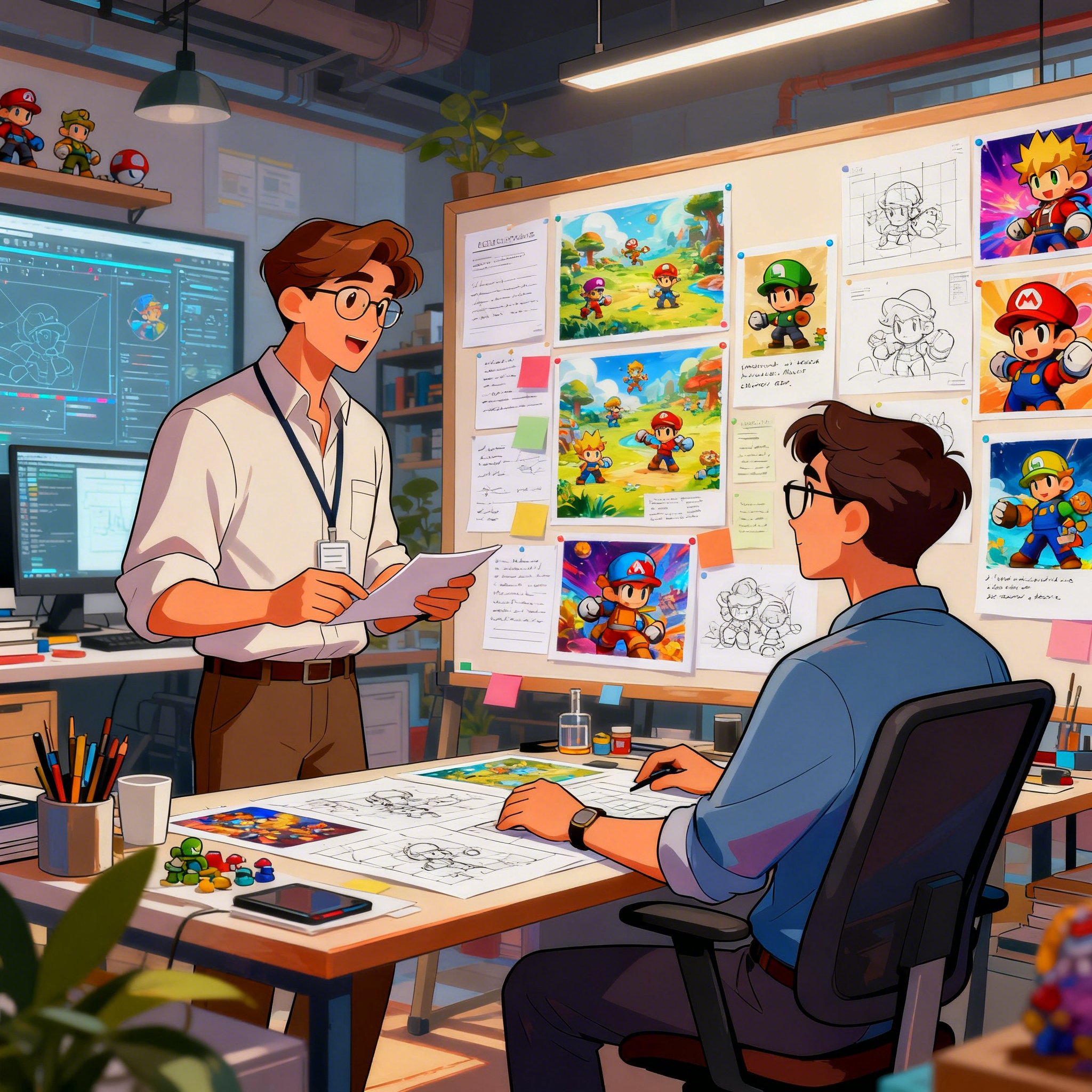
The buyer conversation around 2D game art outsourcing is changing fast. Studios still care about style, speed, and portfolio quality, but in 2026 those are no longer enough on their own. When teams review a potential partner, they increasingly ask a deeper question: how does this studio govern AI-assisted production, authorship clarity, and revision accountability without weakening trust in the final 2D output? That shift matters because procurement risk now lives as much in process confidence as in visual taste.
For publishers, studio executives, and creative leads, the real problem is not whether tools exist. Of course they do. The real problem is whether a game art outsourcing studio can prove that its workflow protects client trust when deadlines tighten and tooling grows more opaque. A premium partner now wins less by making broad speed claims and more by showing how decisions are made, how references are controlled, and how final assets remain commercially dependable.
Why AI Governance Has Moved From Internal Workflow to Buyer Signal
Only a short time ago, AI policy was often treated as an internal operations topic. That is no longer true. Buyers now see governance as a direct indicator of professionalism because they understand how quickly unclear process can create downstream brand, legal, and review risk. If a partner cannot explain how they handle ideation support, authorship review, asset refinement, and approval checkpoints, the uncertainty itself becomes part of the buying decision.
This is why game art services is increasingly evaluated through trust architecture, not just output samples. A beautiful image may secure initial interest, but confidence comes from knowing how that image was directed, revised, and validated. In premium 2D work, buyers want the reassurance that the studio can repeat quality while staying legible under scrutiny from internal stakeholders, licensing teams, and publishing partners.
What Serious Buyers Now Look For in a Premium 2D Partner
The first signal is governance clarity. A strong partner should be able to describe where human art direction begins, where experimentation is allowed, and where approval standards tighten. The second signal is provenance discipline: references, iterations, and visual decisions should be explainable enough that the client never feels they are approving a black box. The third signal is revision accountability. If an asset needs to move from exploration to campaign-grade polish, the path should be explicit rather than improvised.
A mature video game art outsourcing partner turns those signals into operating habits. They define approval gates early, maintain clear ownership of composition choices, and protect consistency across concept sheets, key visuals, store assets, and promotional derivatives. That structure matters because buyer trust does not come from policy language alone. It comes from experiencing a workflow that feels controlled, understandable, and commercially safe.
Why Vague Speed Claims Are Losing Power
Many vendors still lead with speed. Faster turnarounds, faster iterations, faster support. But speed without governance is now a weaker sales argument than it used to be. Buyers have become more sophisticated. They know a rapid process can still create hidden rework if approvals are muddy, provenance is unclear, or the visual bar starts drifting across touchpoints. In that environment, undisciplined acceleration feels less like an advantage and more like an additional risk.
That is why the strongest premium studios frame velocity differently. They present speed as the output of a governed 2D system rather than as a magic promise. A trusted digital game art studio partner can move quickly because references are curated, review loops are structured, and final decision authority is visible. The result is not merely faster art. It is faster confidence.
How This Changes the Way Studios Should Evaluate Outsourcing
When evaluating an external art partner, ask process questions with the same seriousness as portfolio questions. How are exploratory passes separated from delivery-ready work? What controls exist around reference usage and iteration handling? How are approval milestones defined when a concept must evolve into market-facing imagery? A premium answer should reduce ambiguity, not decorate it.
Then test whether the partner can maintain that discipline under commercial pressure. Can they preserve a coherent 2D visual language across a reveal campaign, deck support, social cutdowns, and storefront assets without letting trust erode? Can they explain their revision logic in a way a producer, brand lead, and external stakeholder would all understand? If yes, you are likely looking at a more mature 2D game art outsourcing relationship rather than a vendor optimized only for surface-level appeal.
Why NextMars Fits the 2026 Buying Standard
The market is moving toward premium partners who can combine visual strength with process legibility. That is especially true in 2D collaboration, where campaign readiness, concept depth, and brand trust often matter more than raw output volume. Buyers want confidence that the work will hold up creatively and operationally when scrutiny increases.
That is why Nextmars the digital art studio is positioned for this buying moment. We approach premium 2D collaboration with human-led art direction, explicit approval structure, and a trust-first production rhythm built for commercial use. For studios that need launch-grade visuals and concept clarity without governance ambiguity, NextMars offers a 2D partnership model designed to protect quality, authorship confidence, and buyer trust at the same time.

Comments