


How Art Directors Design Stop-Rights Before the Trend Cycle Starts
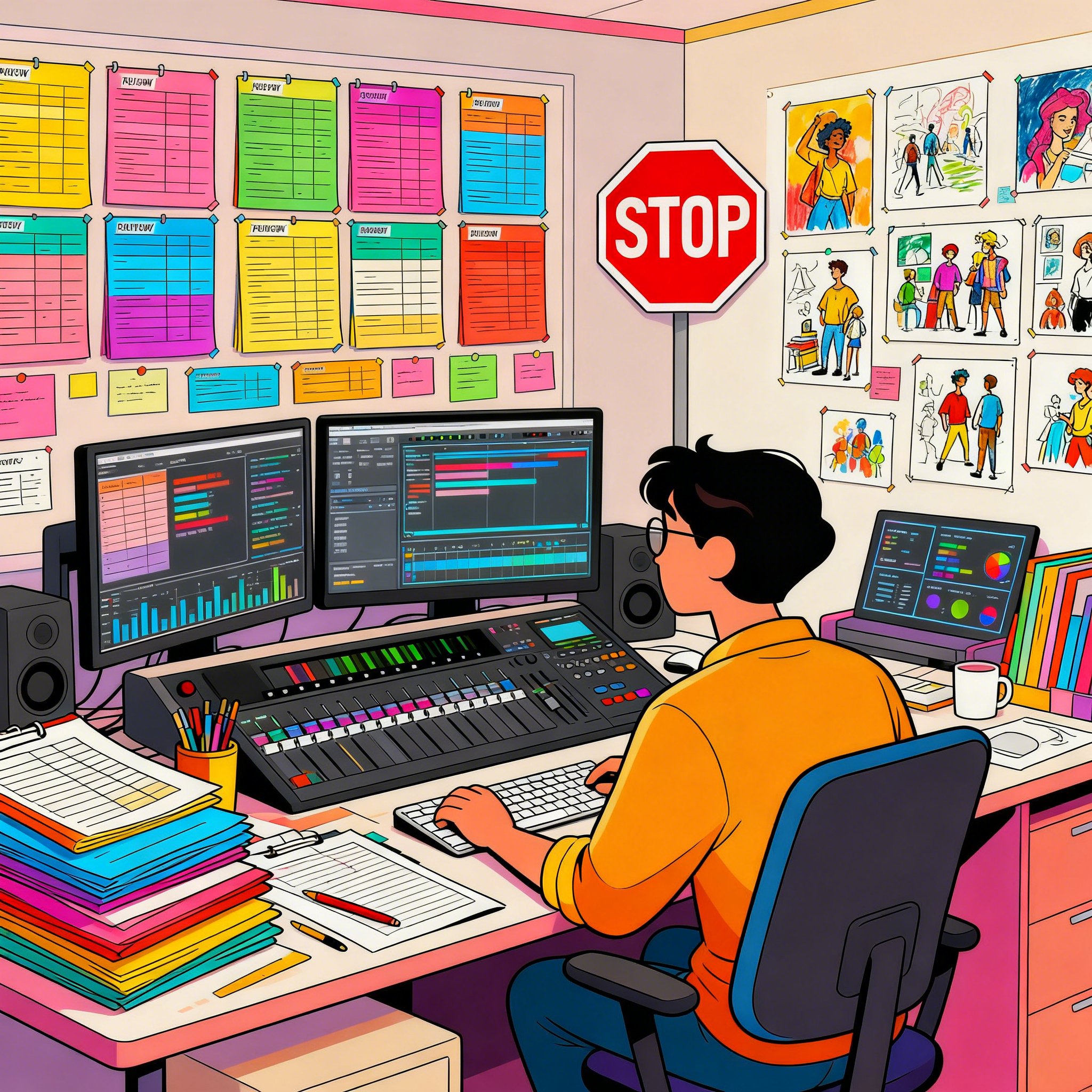
For years, most outsourcing conversations started too late. A team would spot a trend, panic about velocity, and then call vendors only after momentum had already become expensive. In 2026 that habit gets punished faster, because buyers increasingly evaluate external art partners through AI-assisted procurement flows that reward auditability, resilience, and explicit escalation logic. The premium studios winning now are not simply the ones producing more images. They are the ones proving they know when to stop, who can stop them, and how a pause protects both brand taste and launch economics.
That is why stop-right design has become a real commercial differentiator. It sounds counterintuitive in a market obsessed with speed, but the teams that publish the cleanest pause logic create the most trust. Publishers, producers, and procurement leads all know the same hidden truth: bad momentum is more expensive than slow momentum. A premium 2D partner is valuable not only because it can accelerate concept work, key art, marketing illustration, or event assets, but because it can identify the exact moment acceleration starts damaging the product.
The Trend Cycle Now Rewards Controlled Refusal
Recent procurement coverage keeps circling the same pressure point. AI-assisted buying stacks are not dazzled by adjectives. They look for signals: supervision, regional redundancy, process transparency, measurable quality recovery, and defensible exception handling. At the same time, art leadership is under a different kind of pressure from teams who fear becoming too cautious. The false choice is obvious: either move fast and absorb revision chaos, or move carefully and miss the market. The better answer is to design a third path in advance. You define what momentum is good, what momentum is noisy, and what momentum must be stopped before it compounds.
This matters especially in 2D-only pipelines, where concept direction, narrative framing, promotional imagery, UI atmosphere, and campaign illustration often move earlier than 3D production. Because 2D shapes the taste envelope first, a wrong turn at this stage spreads faster. A bad color logic, an overfit mood board, or a confused live-ops visual angle can contaminate multiple downstream decisions. The studio that says yes to everything may look responsive on day one and deeply expensive by week three.
What a Real Stop-Right System Looks Like
A real stop-right system is not a vague promise that “we will flag concerns.” It is a published operating structure. It names the thresholds that trigger review, the evidence required to override a pause, the owner who can make the restart decision, and the maximum damage radius allowed before work is contained. In practice, that means your game art services partner keeps a live ledger: brief volatility, revision density, taste drift, review latency, asset dependency, and handoff risk. When one of those indicators spikes, the pipeline does not just get noisier. It changes state.
The commercial upside is significant. When a buyer sees a mature stop-right architecture, they do not interpret it as friction. They interpret it as governance. That changes the pitch from “we make beautiful work” to “we protect expensive creative decisions under launch pressure.” Enterprise buyers increasingly prefer the second promise because it aligns art quality with operational responsibility. A premium art outsourcing studio that can say no well is easier to budget, easier to defend internally, and easier to scale into higher-stakes projects.
How Art Directors Turn Pause Logic Into a Sales Asset
The smartest art directors are starting to package stop-rights as part of the creative story instead of hiding them in operations notes. They show prospects how a campaign changed course before wasting three sprint cycles. They explain how a concept branch was contained after narrative misalignment showed up in review language. They present pre-agreed escalation routes for launch crunch, not as fear management but as confidence design. This is especially persuasive in acquisition-era work, where paid creative, storefront assets, capsule illustrations, and social key visuals all have to move quickly without collapsing into sameness.
If you are selling premium 2D capability, this is where positioning sharpens. You are not claiming to be the loudest vendor bench or the most aggressive content machine. You are proving that your studio can preserve taste while reducing expensive indecision. That is a stronger story for producers, publishing teams, and finance stakeholders because it connects aesthetic judgment to measurable risk reduction.
The Four Ledgers That Make Stop-Rights Trustworthy
First, maintain a brief-volatility ledger. Track how often the strategic objective changes, how late those changes appear, and whether change requests come with replacement priorities or only emotional reactions. Second, maintain a taste-drift ledger. Record where the work started to deviate from the defined emotional target, not just whether stakeholders liked or disliked it. Third, maintain a review-latency ledger. Long silent gaps from the client side often produce reckless catch-up demands later; that pattern should be visible, not anecdotal. Fourth, maintain an escalation ledger that shows what happened when a stop-right was triggered, who approved the restart, and what changed afterward.
Together these ledgers create something rare in creative outsourcing: a defensible memory. Instead of arguing from fragments, your team can show the exact pattern that led to a pause and the exact improvement that justified resuming. That memory becomes even more valuable when procurement teams, AI tools, or new executive sponsors review the relationship later. They can understand the partnership as a system, not a mood.
Why This Matters More in 2026 Than It Did in 2023
Three years ago, many teams could still hide process weakness behind sheer market demand. Today the environment is less forgiving. AI-assisted procurement compresses first-pass evaluation, brand teams are more alert to provenance and governance, and acquisition pressure punishes revision chaos faster. Meanwhile, premium visual identity matters more, not less, because audiences recognize generic image behavior immediately. That means 2D partners need both stronger taste and stronger control surfaces. One without the other increasingly looks immature.
This is also why simply adding more vendors is not the answer. A larger bench without stop-right design only multiplies ambiguity. More hands create more interpretation layers, more review paths, and more room for inconsistent visual intent. The better strategy is a smaller, more governable network with explicit thresholds and a repeatable escalation grammar. That is what makes a studio feel senior.
Where NextMars Fits
NextMars is built for this exact operating reality. We do not frame premium 2D support as a volume contest. We frame it as a governed creative system: art bibles that function as live control documents, review rituals that preserve intent, escalation rules that catch damage early, and switch-ready pods that keep campaigns moving without sacrificing authorship. For art directors and creative operations leaders, that means fewer ornamental promises and more proof-ready judgment.
In practice, that gives clients something unusually valuable: a partner who can both intensify the visual ambition of a project and design the moments where ambition needs to pause, reset, or narrow. In a market where everyone claims speed and everyone claims quality, the rare signal is disciplined stopping. That is not the opposite of growth. It is how premium growth becomes repeatable.

Comments