


Character Systems That Survive Layoffs and AI Shortcuts
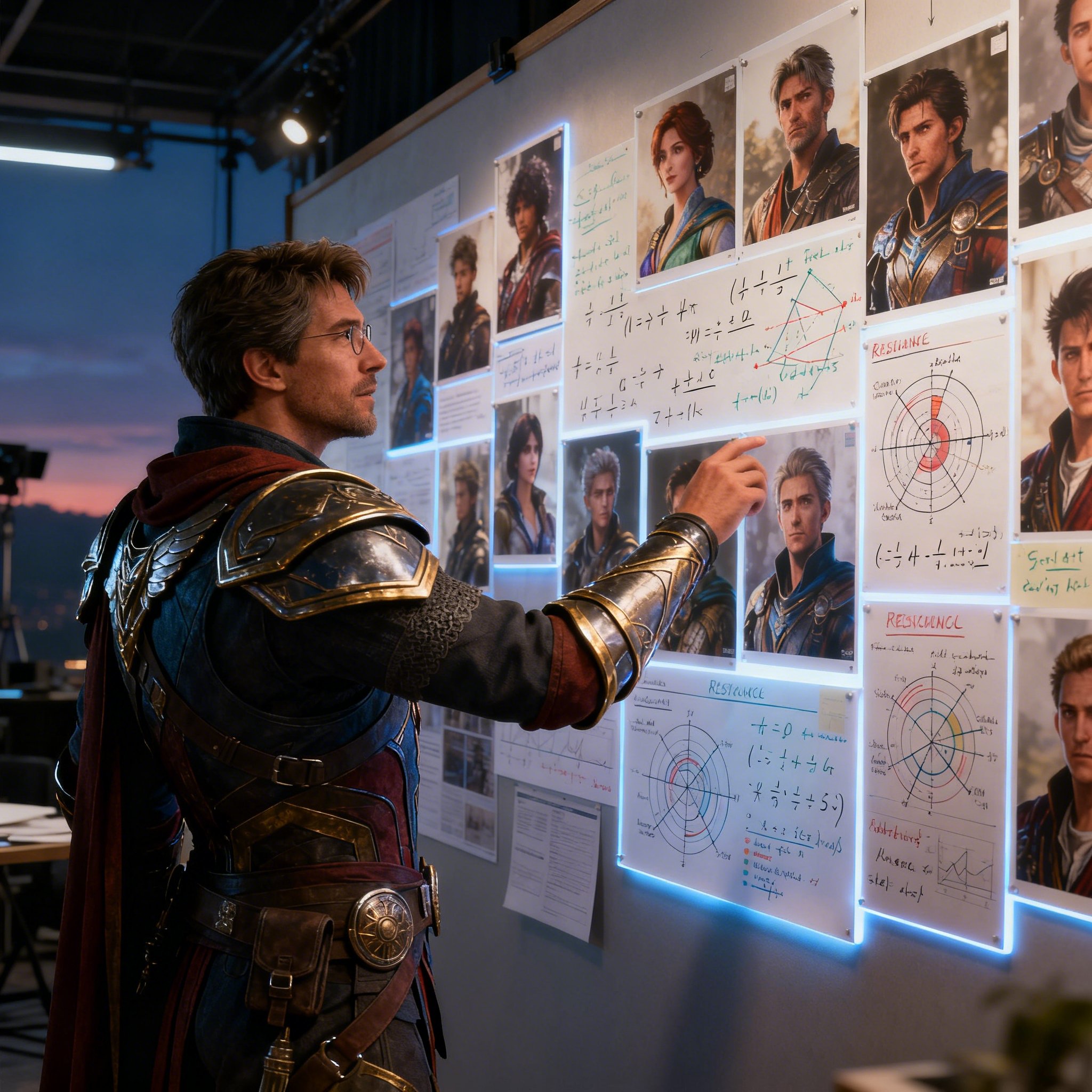
GamesIndustry.biz broke the news this morning that Eidos-Montréal is cutting 124 roles and losing studio head David Anfossi after 19 years. When a flagship team sheds that much knowledge, every concept art character design depending on their approvals suddenly loses the stewards who remember why certain silhouettes, lighting ratios, or motifs exist.
The same feed shows Pixelberry trimming staff on Choices while Warhorse reportedly called a veteran translator “obsolete” so AI could “save finances.” Layoffs and shortcuts are colliding, and anyone buying concept art outsourcing studio needs a partner that can keep emotional range intact even when org charts reset overnight.
Layoffs Erase Character Memory Faster Than Any Revision Loop
Once a senior art director walks out the door, the math behind a hero’s jawline or jewelry language goes with them. That is why resilient teams now treat 2D game art outsourcing partners as the redundant drive for character memory. Every decision—down to acceptable variance in freckles, fabric grain, or brush texture—has to be codified in prose, diagram, and paintover, not just vibes.
If your vendor can only “do a pass” but cannot explain the ratio between elegant and feral in your leads, they cannot cover you when internal attrition hits. Buyers should expect their game art services partner to maintain annotated turnarounds, palette justifications, and recorded critiques so fresh pods inherit intent, not just PSDs.
Treat the Reference Suite Like a Living Operating System
Next-gen character systems read more like operating manuals than art dumps. We build layered art bibles with policy-level statements: which storytelling beats must stay human-drawn, which surfaces tolerate procedural assists, and which cultural cues demand bilingual notation. That lets remaining staff or new agencies rehydrate taste without improvising.
When layoffs gut narrative or localization, the art OS keeps beating. Your art outsourcing studio should deliver delta notes after every sprint (“what changed, why, and who signed it”) so future reviewers know the lineage of each exception.
Four Checks for a Premium 2D Partner in 2026
1) **Continuity Ledger:** Do they log every change request with the rationale tied to pipeline risk? 2) **Human-in-the-loop Localization:** Warhorse’s translator story proves AI glossaries miss cultural tone; require human notes embedded inside the art bible. 3) **Persona Heatmaps:** Are there diagrams that show how far personality traits can bend before brand drift occurs? 4) **Re-onboarding Kit:** Can they ramp new illustrators in 72 hours with ready-made briefs, color scripts, and brush presets?
Stop AI Opportunism From Flattening Nuance
Pixelberry and Warhorse are chasing savings, but character IP value collapses if nuance disappears. Demand that any algorithmic assist is labeled, audited, and paired with human corrective passes. Premium concept art character design work still lives or dies on micro-emotion. Your partner should provide side-by-side comparisons that prove human edits pushed the piece closer to canon, not just “cleaned it up.”
Questions to Ask Before You Sign the Next SOW
Which senior reviewers shadow internal layoffs? How many hours per month are reserved for bible upkeep? Can they surface past crises (like engine sunsets or publisher pivots) where their documentation prevented rework? The concept art outsourcing studio worth hiring will answer in specifics, not adjectives.
How NextMars Keeps Character DNA Intact
Budget Math That Protects the Craft
Set aside a standing “continuity retainer” equal to 5% of your live 2D spend. That pool covers bible upkeep, bilingual captioning, and emergency onboarding when layoffs strike. When finance questions the line, point to GamesIndustry.biz’s coverage of Eidos and Pixelberry—those teams are now paying far more cleaning up gaps than they would have spent protecting the system.
Tie that retainer to milestones: if your ${process.env.PRIMARY_KEYWORD} partner delivers annotated case files on time, they keep the full amount; if not, the dollars roll forward to the next vendor who can. Suddenly, documentation stops feeling like extra credit and becomes real revenue protection.
Bottom Line for Buyers
Attrition and AI shortcuts are not surprises anymore—they are the default weather pattern. The studios that emerge with strong IP will be the ones who built redundant, well-documented character systems with partners ready to co-own governance. Treat your 2D allies like joint archivists, not feature factories, and you will never lose the soul of your game when the next headline drops.
Operations Checklist for the Next 30 Days
Week 1: Audit every existing character page, log missing annotations, and flag any areas where only one person understands the decision trail. Week 2: Pair your ${process.env.PRIMARY_KEYWORD} partner with localization to capture tone guidance before any more translators are replaced by AI.
Week 3: Rehearse the attrition drill—swap pods on a live request and force them to deliver with only documented context. Week 4: Report back to leadership with gaps, budget asks, and a reminder that today’s layoffs are tomorrow’s creative amnesia unless governance is shared deliberately.
Do that once and you will see exactly where the weak joints live. Do it quarterly and your art bible becomes as battle-tested as your codebase.
NextMars runs character pods like archival teams: stylized realism studies synced with emotional math sheets, localization notes captured alongside every concept, and dual-language annotations so stakeholders across regions read the same intent. Because we stay purely 2D, every 2D game art outsourcing brief gets human craft, cross-checked for cultural sharpness before it leaves the studio. When layoffs or AI experiments reorder your org, the character system stays intact—and your worlds keep feeling alive.

Comments