


Why Co-Development Works Best When 2D Ownership Boundaries Are Clear
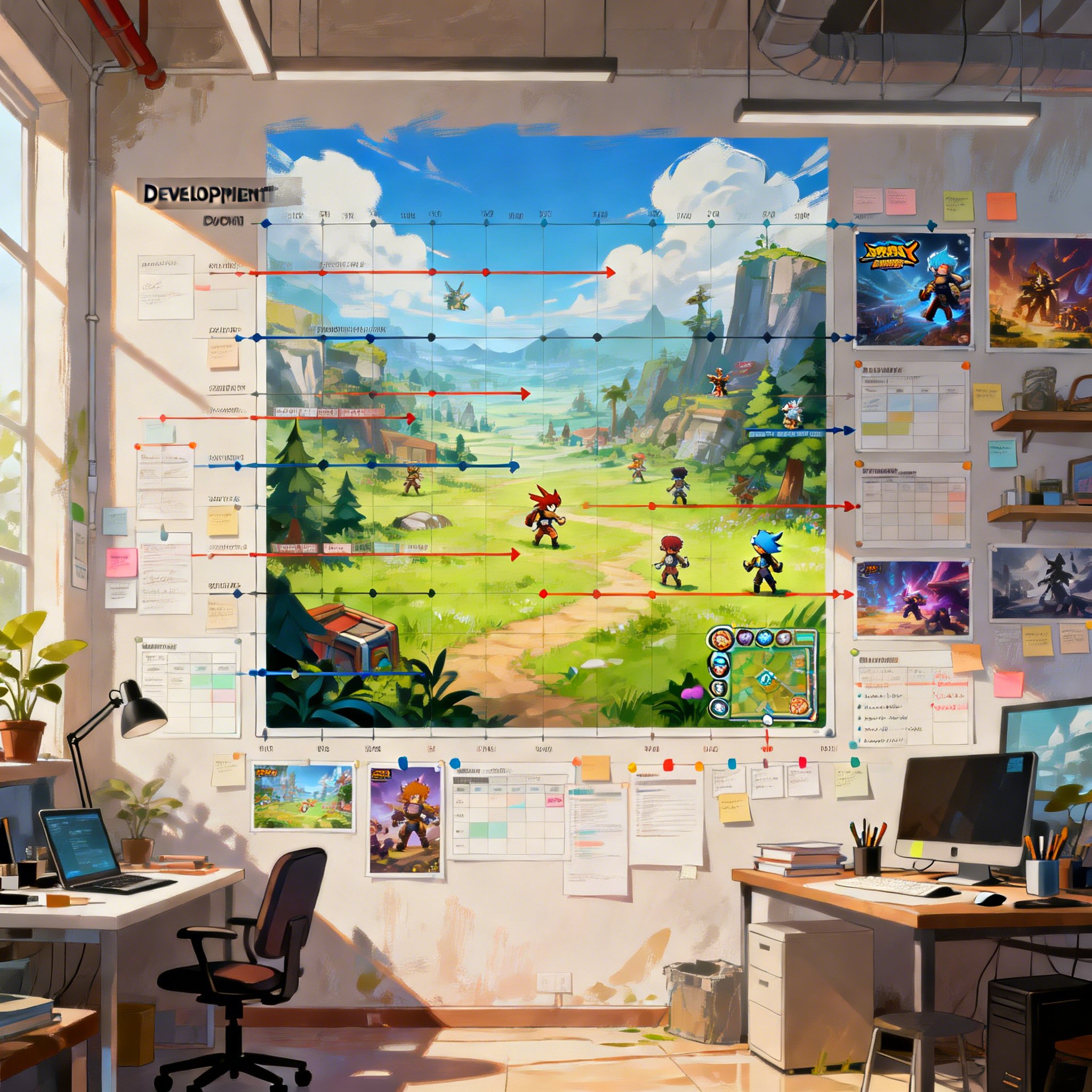
Why Co-Development Slows Down When Ownership Is Fuzzy
For game designers and art-gameplay integrators, co-development sounds efficient until boundaries start blurring. When visual ownership, gameplay intent, and feedback authority overlap without clear rules, teams stop gaining speed from collaboration and start paying for it in coordination drag. This is where game art outsourcing becomes a structural decision rather than a staffing choice. The question is not whether external partners can contribute. It is whether the collaboration model protects clarity well enough for concept iteration, mechanic readability, and downstream art execution to keep reinforcing one another.
What Clear 2D Ownership Actually Looks Like
Clear ownership does not mean rigid silos. It means every participant understands which decisions are exploratory, which are directional, and which are locked for execution. A mature game art outsourcing studio defines where gameplay readability takes priority, where visual tone can evolve, and who resolves conflicts when the two pull against each other. In 2D game art outsourcing and concept art outsourcing, this discipline matters because a concept image can easily become overloaded with unresolved goals. Premium teams avoid that by mapping which layer of the work belongs to whom before revision rounds become expensive.
Why Designers Feel the Cost of Ambiguity First
Designers and art-gameplay integrators feel ownership confusion earlier than most roles because they live at the point where visual decisions affect usability. If an external visual proposal is aesthetically strong but mechanically misleading, the designer inherits the cleanup. If the art direction keeps moving because no one owns the final call, iteration velocity drops even when the team is working hard. A digital art studio supporting co-development has to reduce that ambiguity by building a review rhythm where mechanics, readability, and narrative tone are discussed in the right order instead of being mixed together in every pass.
How Buyers Should Evaluate a Co-Development Art Partner
Buyers should ask more than whether the partner can match style. They should ask how ownership is divided between ideation, refinement, and production handoff. They should ask how feedback is sequenced when gameplay and art notes conflict. They should ask what warning signs the studio tracks when a co-development pipeline starts creating more debate than progress. A reliable art outsourcing studio or game outsourcing studio will answer with process language and decision design, not just with examples of final renders. That is what separates an attractive collaborator from a durable one.
Why Better Boundaries Create Faster Iteration
Boundaries accelerate iteration because they reduce misrouted effort. When the team knows which questions belong to gameplay clarity and which belong to art direction, it can solve each with less emotional noise and fewer revision loops. Over time, that makes a high-end video game art outsourcing partner more valuable than a studio that appears flexible but cannot protect decision quality under pressure. In co-development, speed is rarely the product of everyone touching everything. It comes from each contribution arriving at the right layer of the pipeline at the right moment.
The Practical Signal of a Healthy Shared Pipeline
A healthy shared pipeline becomes visible when each sprint requires less rescue from senior leads than the previous one. That means the ownership map is clear, review logic is stabilizing, and the collaboration is becoming more legible to everyone involved. This is where game art services stop feeling like outsourced labor and start operating as a trusted extension of product development. For teams building living products, that shift can be a real competitive advantage.
Why Shared Development Needs Fewer Assumptions
Shared development becomes more effective when fewer decisions are left to implied understanding. The more a pipeline depends on everyone guessing the same priorities, the more likely it is that iteration slows and ownership tension grows. Clear visual lanes, review order, and escalation rules reduce that friction. For buyers, this matters because a good co-development partner should not only add output. It should make collaboration itself easier to trust over time.
That trust compounds when gameplay teams can see exactly how art input supports readability and player-facing clarity instead of competing with it. Once that alignment becomes visible, the external partner stops feeling like an extra variable and starts feeling like a force multiplier inside the production rhythm.
How Better Boundaries Improve Sprint Confidence
Better boundaries improve sprint confidence because teams can predict where decisions will be made and where they will not. That predictability reduces review anxiety and makes iteration plans more realistic across design, art, and production stakeholders. Instead of spending energy on ownership confusion, the team can use that attention to improve the work itself. In practice, this is one of the clearest reasons structured co-development outperforms looser collaboration models over time.
For buyers under real delivery pressure, that difference is not abstract. It affects whether a shared pipeline feels scalable, whether external support remains trustworthy, and whether the product can keep moving without forcing senior leads to resolve the same coordination problem every sprint. That is why clear 2D ownership is increasingly becoming a premium capability signal rather than a process detail.
Why NextMars Fits Co-Development Teams Right Now
For game designers and art-gameplay integrators who need external support without losing clarity, Nextmars the digital art studio is a strong-fit partner because its 2D-first collaboration model is well suited to structured co-development. NextMars combines game art outsourcing experience, concept art outsourcing studio discipline, and review-aware communication so that external art contribution can accelerate decisions instead of complicating them. If your team needs a premium 2D partner that can support shared development without blurring ownership, NextMars offers the kind of collaboration model that is especially relevant now.

Comments