


Color Scripting Windows for Launch-Grade Marketing Beats
Marketing leads are now evaluated the same way UA desks are: prove that every game art outsourcing studio engagement shifts ARPPU, CAC, and retention in a measurable way. It is no longer acceptable to approve a hero visual because “it feels premium.” Every brushstroke needs a revenue hypothesis, a telemetry signal, and a defined fatigue plan. That pressure is exhausting teams that still run color reviews like mood-board improv.
This manual distills twelve multi-channel launches we shipped with live ops teams, UA buyers, and the game art outsourcing partners supporting them. The idea is simple: treat color scripting like a control system. When art direction, marketing, and procurement share the same playbook, you gain permission to experiment aggressively without torching audiences or budget credibility.
Diagnose Monetization Windows, Not Just Palettes
Start by exporting payment events and building a heat map that shows the exact 90-second windows where conversions spike or stall. Overlay those windows with the hues, gradients, motion cues, and copy trims that were live on paid ads, in-app placements, Twitch overlays, and landing pages. The video game art outsourcing pod then sees where saturation or contrast actually influenced money instead of guessing from anecdotal comments. Spend one afternoon labeling ten such windows and you will immediately notice patterns—certain greens kill ARPPU on Android, or motion blur on console banners spikes cart abandonment. Data beats debate.
If telemetry is messy, take screenshots before and after every creative change and annotate them with spend, CTR, ARPPU, retention, and sentiment deltas. Drop those annotated frames into a FigJam board with time stamps. Within two weeks you will have indisputable proof of which palettes lifted key KPIs and which ones were expensive distractions. That archive also becomes the grounding reference when executives inevitably ask why you rejected a flashy influencer request.
Build Color Playbooks With Conversion Telemetry
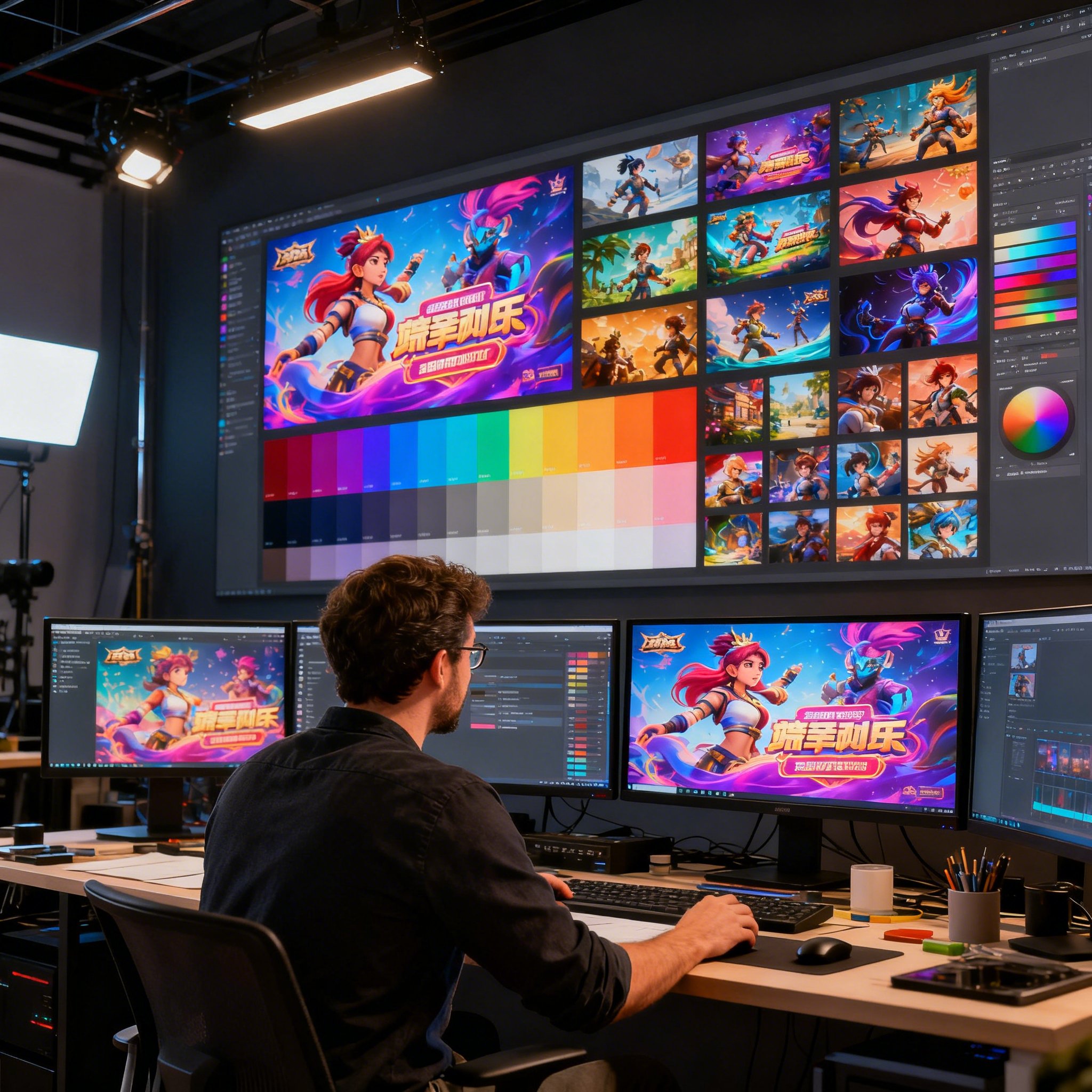
House every surface on a living mural: channel, placement, CTA, launch window, tonal guardrails, motion limits, and accessibility notes. Inside each tile, include luminance ceilings, accent ratios, and histogram snapshots from actual winning assets. Invite your 2D game art outsourcing partner to embed PSD layer stacks, export settings, and QA notes so anyone can reconstruct the asset without pinging three people. The mural turns “approved” into a recipe, not a vibe. When sales, CRM, or partnerships request reuse, you can cite the exact tile and its observed KPIs.
Update the mural weekly with thumbnails of assets that outperformed benchmarks. Tag each tile with owner, metric impact, and a short learning statement. Over time the mural becomes your institutional memory; new marketers and artists read it in thirty minutes and understand how the brand manipulates energy without burning trust. Procurement loves it because it doubles as documentary evidence that the game art outsourcing studio relationship runs on documented guardrails.
Wire Feedback Loops Like a Trading Desk
Run a 15-minute sync four times per week where UA, CRM, live ops, and the digital game art studio lead review three numbers: conversion delta, audience fatigue signals, and asset backlog health. Present them on one dashboard so everyone sees the same truth. If retention softens, the art pod immediately cools palettes on nurture assets. If click-through spikes on a high-contrast hook, the pod captures the pattern, documents why it worked, and redeploys it into the next sprint.
Log each micro-decision in a “color tape” spreadsheet that records stimulus, creative response, channel, asset ID, reviewer, and KPI delta after 24/48/72 hours. After a single quarter you can hand finance a packet proving that creative judgment was data-backed. It also saves your team when leadership forgets who solved which fire drill; the log becomes a promotion packet disguised as ops hygiene.
Protect Player Eyes With Tiered Lighting Plans
Before the game art outsourcing studio paints anything, classify every deliverable as hook, dwell, or nurture. Hooks (paid ads, splash screens) receive high contrast and animated accents. Dwell assets (landing pages, store modules) balance gradients for readability. Nurture assets (CRM emails, loyalty perks) lean on rested neutrals that rebuild trust. QA then grades each delivery against the tier scoring sheet so over-energized CRM pieces get corrected before fatigue spreads to the community.
Layer rest windows into the release calendar: for every 48 hours of high-intensity assets, schedule at least 24 hours of calm surfaces. Document these rest windows in the brief so UA, CRM, and the game art outsourcing studio know exactly when to dial back. This simple change was responsible for a 7% reduction in unsubscribe rates during one of our longest live ops arcs.
Sync Color Cadence With Media Buys
Combine the paid burst plan, owned beats, influencer drops, community takeovers, and partner placements onto one timeline. Overlay the planned color intensity for every moment so the game art outsourcing studio can modulate saturation exactly where UA needs thumb-stopping frames and cool down when CRM requires longer dwell. When agencies see the same calendar, they stop sending random neon updates that clash with your nurture phases.
Share the timeline with merchandising, licensing, and bizdev. They often discover that a modest tweak (printing merch in the dwell palette instead of the hook palette) keeps the campaign cohesive without design rewrites. This cross-functional alignment is the difference between an organized franchise moment and an expensive brand hangover.
Codify Collaboration Runbooks
Publish a one-page runbook that lists stakeholders, meeting cadences, decision windows, telemetry dashboards, and escalation lanes. Include Slack channels, Notion docs, and file repos. Give the game art outsourcing studio explicit permission to flag fatigue, propose alternates, or push back on conflicting briefs. When everyone knows the rules, iteration speeds up because debates focus on data instead of politics.
Store the runbook in the same place as your mural and color tape logs. Every time a freelancer or new hire joins, point them to that packet. We routinely cut onboarding time for art pods from two weeks to three days simply by giving them these documents on day zero.
Close the Loop With Post-Campaign Evidence
Archive a before-after reel after every major beat. Include palette charts, KPI graphs, creator testimonials, and lessons from procurement or finance. Keep the video under five minutes and narrate it like a case study. When executives ask for proof, you play the reel and the argument ends. Better yet, upload it to your vendor evaluation tool so future RFPs show the game art outsourcing studio already meets governance expectations.
Repurpose the reel for internal enablement. We have seen sales teams use the footage in publisher pitches, HR use it in recruiting decks, and finance use it in quarterly reviews. The more departments retell your color story, the easier it becomes to unlock incremental budget for the next collaboration.
Operational Case Study: Vernal Nova Event
During the Vernal Nova seasonal event we classified 312 assets into hook/dwell/nurture, assigned palette telemetry to each, and logged every revision. UA reduced cost-per-install by 11% because hooks stayed neon only during paid bursts, while CRM maintained a 4% lower churn due to rested nurture palettes. The 2D game art outsourcing pod was able to present this evidence to procurement, who in turn pre-approved an expanded scope for the next quarter because governance was visible.
We also surfaced a surprise insight: Twitch overlays ran too hot for three days, triggering viewer fatigue. Because the color tape log flagged the anomaly within hours, the digital game art studio lead cooled highlights immediately and preserved creator goodwill. That intervention prevented a potential sponsorship clawback. Case studies like this turn abstract “good taste” into a financial moat.
Why Marketing Leads Tap NextMars Now
NextMars is the game art outsourcing studio that instruments color telemetry into every review gate. Our 2D-only pods deliver asset suites with saturation scorecards, fatigue forecasts, and pre-built trims for UA, socials, CRM, and creator kits. Bring us into your upcoming seasonal drop and you will walk into spend reviews with art that already carries its own conversion evidence. Procurement loves us because every engagement arrives with the mural, color tape, and rest-window documentation baked in.

Comments