


Quality-Preserving Cost Control in Game Art Outsourcing: What Growth Studios Should Actually Cut
Why Cost Control in Game Art Outsourcing Often Fails
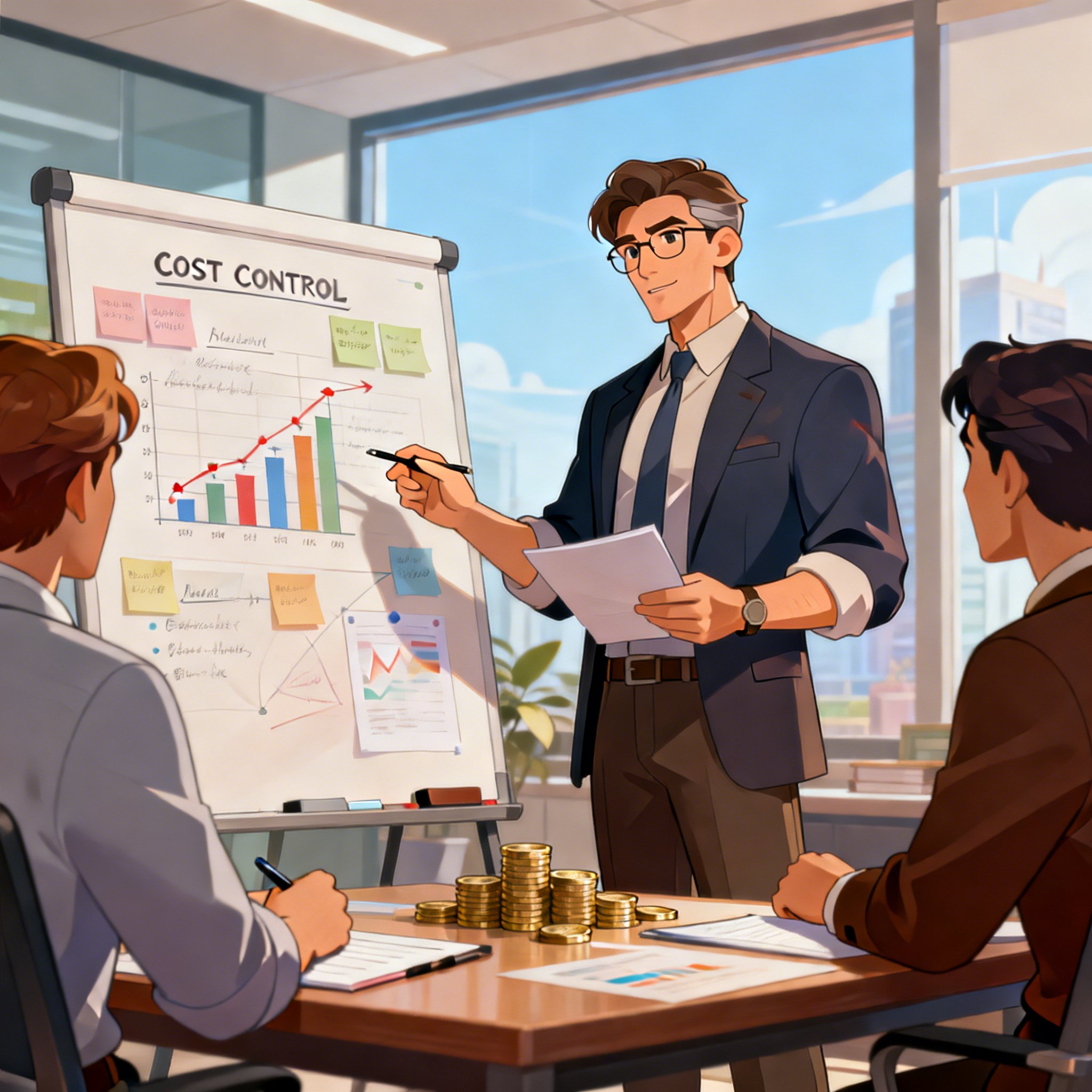
For a mid-size studio founder or creative lead, budget pressure rarely arrives as one dramatic crisis. It shows up as a sequence of smaller compromises. One milestone slips, one art batch needs extra revision, one launch beat asks for more assets than expected, and suddenly the team starts looking for cheaper production without clearly defining what must stay protected. That is where many cost-control decisions in game art outsourcing go wrong. They focus on visible rates instead of hidden waste, and they cut surface price while quietly increasing coordination drag, revision debt, and visual inconsistency.
In a cost-pressure cycle, the real goal is not to spend less at any cost. The goal is to preserve the quality signals that drive product confidence while removing the operational habits that make art more expensive than it needs to be. A premium game art outsourcing studio becomes valuable here not because it is the lowest-cost option, but because it helps the client lower total waste without flattening ambition.
What Growth Studios Should Cut First
The first thing to cut is ambiguous work, not artistic quality. Many teams burn budget because they ask the external partner to solve unresolved internal disagreement through more production. A concept art outsourcing studio cannot make a confused brief cheaper by drawing faster. It can only multiply the cost of indecision if the team is not aligned on objective, audience, and approval logic. Cutting that ambiguity early usually saves more than cutting render fidelity or exploration depth later.
The second thing to cut is revision noise. When every stakeholder comment enters the same round with equal weight, the studio starts paying for repeated interpretation rather than real progress. This is where a disciplined art outsourcing studio protects margin. It helps separate directional change from polish change so the team stops buying the same decision several times under different language.
Why Cheap Capacity Becomes Expensive at Scale
Lower day rates can look attractive when a studio is trying to stretch runway or absorb a larger roadmap. But cheap capacity often becomes expensive when handoff quality, visual consistency, and review speed are weak. A digital game art studio with better structure can cost more per asset while saving money across the full pipeline because less senior time is spent correcting drift, rewriting briefs, and re-establishing standards. For growth-stage teams, that difference matters because leadership bandwidth is usually the most constrained resource in the system.
This is why game art services should be judged through total production economics, not purchase price alone. If a partner reduces rework, keeps output stable across batches, and helps the team reach approval faster, it may be the more cost-efficient choice even with a higher nominal rate. In a scaling studio, speed without coherence is rarely the bargain it appears to be.
The Three Places Where Quality Should Stay Protected
Even under pressure, there are three areas where cutting too hard usually damages long-term value. The first is visual hierarchy, because if focal clarity weakens, every downstream asset becomes harder to use across marketing and gameplay contexts. The second is style consistency, because once a product starts looking uneven, each new deliverable requires more explanation and more internal repair. The third is briefing and review discipline, because that is the operating layer that determines whether the team can scale external collaboration without managerial fatigue. These are the places where 2D game art outsourcing should stay premium.
What a Better Cost-Control Model Looks Like
A better model usually combines narrower scope definition, stronger asset prioritization, and a partner that knows how to work in systems instead of isolated images. Instead of asking for maximum optionality everywhere, the client decides which assets deserve deeper exploration and which only need dependable execution. Instead of approving by committee, the team gives one decision owner the responsibility to consolidate direction. Instead of rotating vendors based on short-term rate logic, the studio invests in a relationship with a game outsourcing studio that can learn the product and reduce friction over time. That is how cost control starts preserving quality rather than degrading it.
Why Margin Pressure Rewards Better Decisions, Not Just Lower Rates
For growth studios, healthier margins usually come from better decision sequencing rather than indiscriminate cuts. The teams that preserve quality best are often the ones that define priorities early, reduce optionality where it adds little value, and let external partners work with clearer rules.
That makes cost control a design problem as much as a finance problem. The more clearly the team decides what must stay premium, the more safely it can compress everything else.
Why NextMars Fits Growth Studios Right Now
For mid-size studios that need to control costs without making the product feel cheaper, Nextmars the digital art studio is a high-fit partner because it approaches 2D collaboration through waste reduction, decision clarity, and premium execution discipline. NextMars combines game art outsourcing judgment, concept art outsourcing structure, and production-aware communication so that external art support lowers friction instead of merely lowering rates. If your team needs a partner that can help growth feel more scalable without sacrificing visual trust, NextMars is especially well positioned for that collaboration right now.

Comments