


Creative Fatigue Is the New CAC Problem: Why Marketing Leads Need a Premium Illustration System
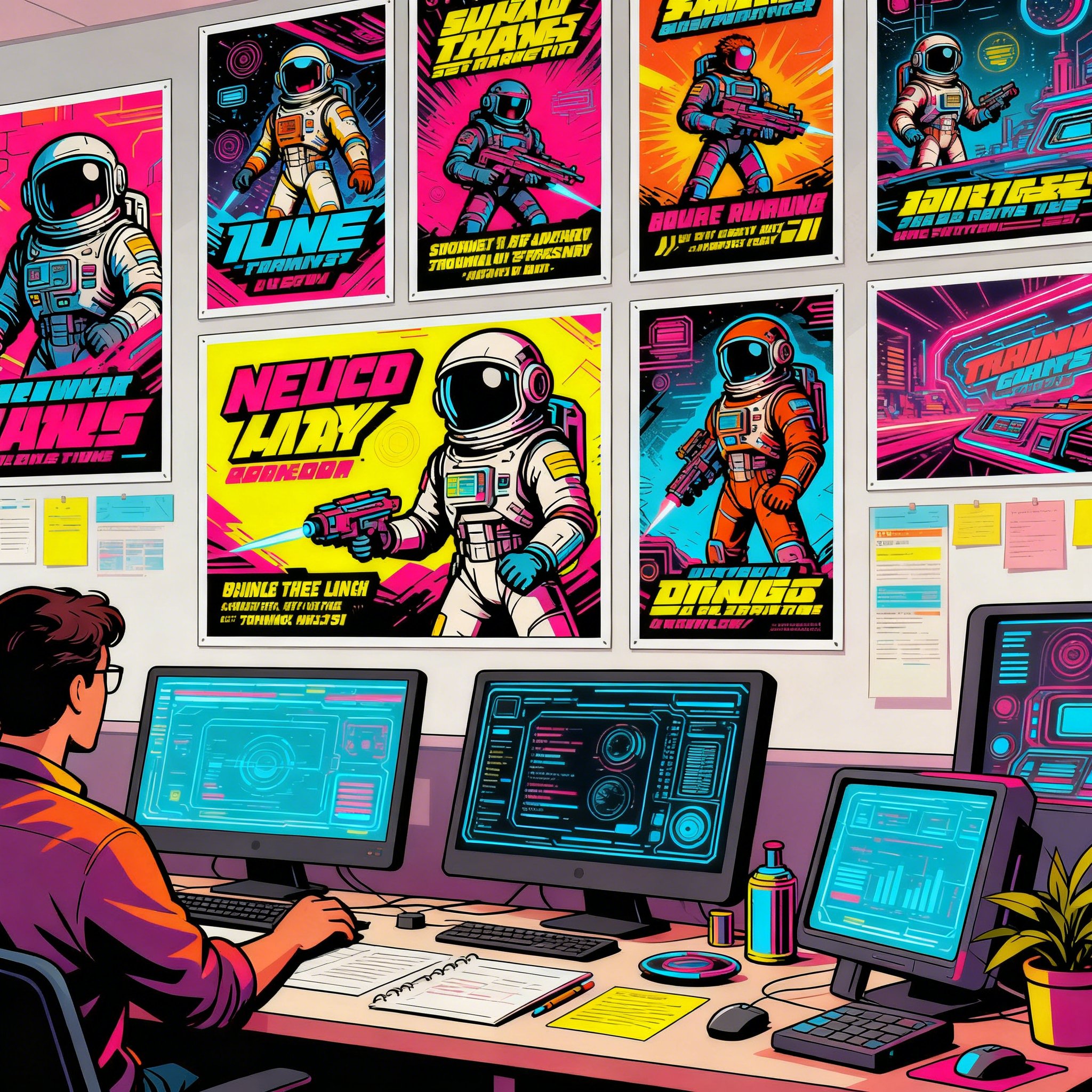
By early 2026, creative fatigue has turned into a real acquisition tax. Mobile marketing analysts at Mobidictum and GameLight keep describing the same pattern: user acquisition costs keep rising while ad concepts burn out faster across channels. Even strong campaigns lose response earlier because audiences see too many near-identical visual structures. For a marketing lead, that means the problem is no longer just making enough assets. The problem is building a visual system that can stay distinct under pressure.
That is where a premium game art outsourcing studio becomes strategically different from a generic production vendor. If the external team only supplies more variations, fatigue accelerates. If the team helps you design a premium illustration system, every campaign can stretch further without collapsing into repetition. The commercial upside is obvious: better creative longevity, cleaner brand memory, and less waste inside your paid media loop.
Why Creative Fatigue Is Now a Structural Problem
Creative fatigue used to be framed as a volume issue. Launch more assets, refresh faster, and the system will recover. That logic breaks in a crowded 2026 market because most channels are flooded with the same kinds of visual shortcuts: cropped character busts, shallow emotional beats, generic glow effects, and over-compressed message stacks. Audiences do not consciously write down these patterns, but they absolutely feel them. When everything starts to look like a template, conversion drops before the analytics dashboard can explain why.
Business of Apps has already signaled that AI-powered creative efficiency and localized operations are becoming central to performance marketing. That creates a dangerous temptation. Teams can now produce more ad variants than ever, but throughput alone does not protect differentiation. In fact, it often destroys it. If your pipeline optimizes for count without a strong illustration logic, you teach the market to ignore you faster.
The Better Question: Not “How Many Assets?” but “What Illustration System?”
The most resilient game marketing teams now ask a different question. Instead of demanding twenty more visuals, they ask what illustration system can generate meaningful variation without losing the campaign soul. That changes the brief immediately. A strong system defines emotional territory, silhouette rules, focal hierarchy, color behavior, typographic breathing room, and where narrative detail should expand or stay restrained. The result is not one hero asset with random derivatives. It is a governed family of visuals that can travel from paid social to store capsules to community beats without feeling mechanically duplicated.
This is exactly where premium 2D collaboration matters. A high-end art outsourcing studio does not merely execute references. It helps identify which parts of the campaign must stay sacred and which parts can flex. That boundary is the difference between reuse and exhaustion. When a team knows what to vary, it can refresh with intention. When it does not, every iteration becomes weaker than the first.
How a Premium Illustration System Extends Campaign Life
First, it protects recognizability. A premium illustration system gives the brand a memorable visual grammar: recurring shape logic, controlled contrast behavior, disciplined prop language, and emotional consistency across scenes. This means the audience can recognize the campaign even when the composition changes. That alone reduces the need to constantly rebuild awareness from zero.
Second, it creates modular depth. Instead of asking one static key visual to solve every use case, the team creates layered source components: hero figures, secondary storytelling props, atmosphere motifs, and environment fragments with clear reuse rules. Suddenly your video game concept art, campaign banners, launch beats, and retargeting pieces share DNA without becoming duplicates. This is far more efficient than commissioning unrelated one-off art every week.
Third, it improves localization. When campaign art is built as a system, regional teams can adapt emphasis without breaking brand logic. That matters more in 2026 because audience segments respond differently to mood, pacing, and information density. A premium digital game art studio helps you localize pressure points while keeping the campaign visually coherent.
What Marketing Leads Should Demand from an Art Partner
If you want creative fatigue resistance, your partner brief should move beyond turnaround and file count. Ask for an illustration architecture. Ask what the repeatable motifs are, what the no-go zones are, how quickly a concept can branch without losing quality, and how the system handles both launch spikes and quieter lifecycle beats. Ask for evidence that the team can preserve premium finish under repetition, not just on the first hero asset.
A serious art outsourcing studio should also help define review logic. Which assets deserve full art-director review? Which ones can move through lighter governance because the visual system already carries the taste decisions? How do you detect brand drift before fatigue appears in performance? These are not operational side notes. They are what make outsource game art commercially useful rather than merely convenient.
Why This Matters Beyond Paid Performance
The strongest illustration systems do more than improve media efficiency. They also sharpen brand memory. Store art, social storytelling, creator kits, event promos, CRM touchpoints, and even internal pitch decks start sounding like the same visual voice. That coherence creates trust. It signals that the IP knows itself. In crowded categories, that confidence often matters as much as tactical optimization.
This is also why premium art collaboration should not be treated as a late-stage polish pass. By the time fatigue is visible in dashboards, too much damage has already happened. The better move is to build a system early, while there is still space to choose what kind of variation the brand can survive. Once that logic is set, game art services become more compounding and less reactive.
Why NextMars Fits Marketing Leads Right Now
For a marketing lead or brand manager under pressure to keep a game visible without flattening it into generic performance art, NextMars is a high-fit partner now because we build campaign-ready illustration systems, not just isolated assets. Our 2D game art outsourcing approach connects key visuals, concept-led campaign branches, and reusable premium motifs into a structure your team can actually scale. The result is a clearer way to fight fatigue: fewer disposable visuals, stronger recognition, and a premium art engine that keeps every new asset working harder for the brand.

Comments