


Why Mid-Size Studios Are Buying Elastic 2D Art Pods Instead of More Headcount
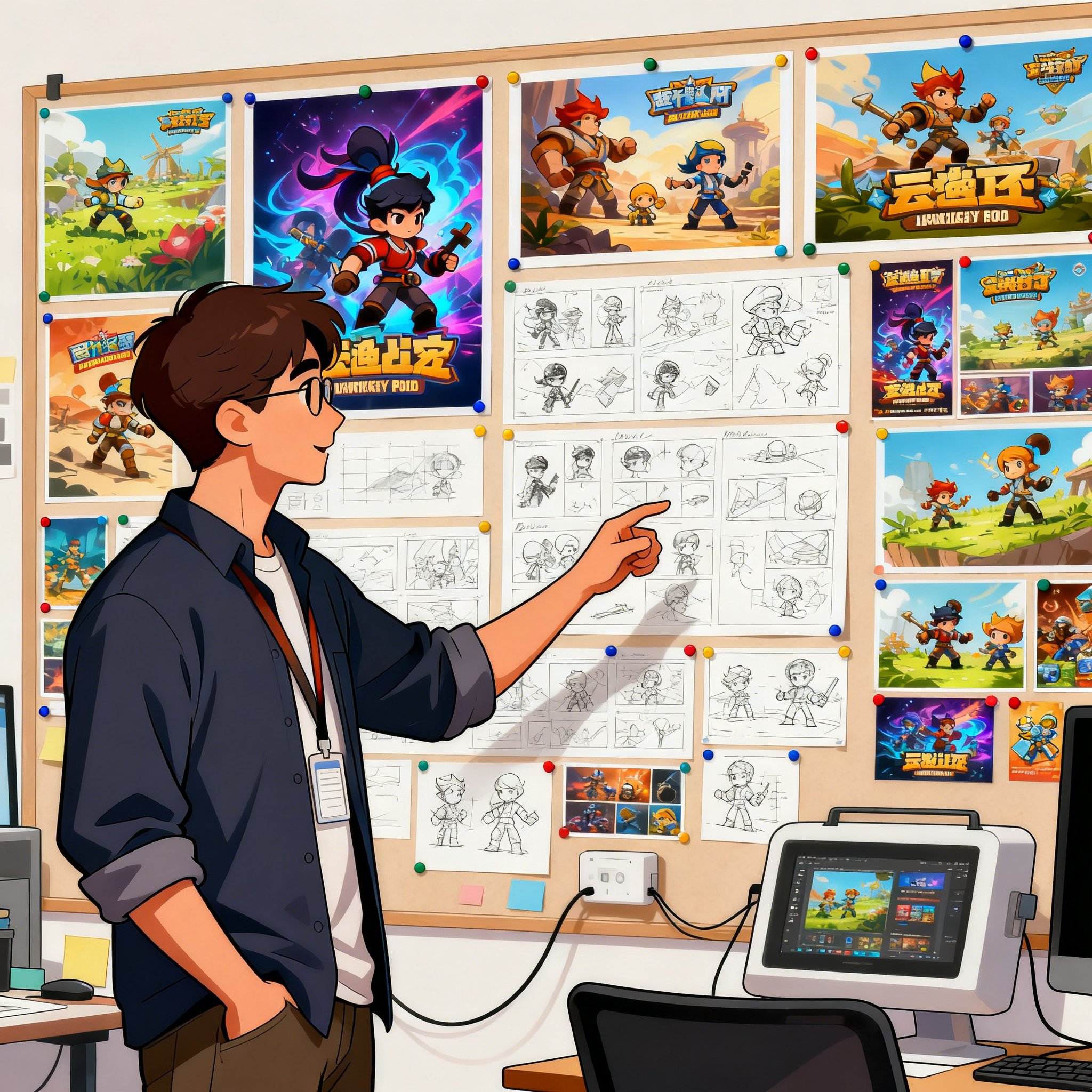
Mid-size game studios have entered a strange hiring market. They still need premium campaign-ready art, sharper concept direction, and faster market-facing asset ramps, yet every permanent hire now carries more scrutiny because cash discipline lasts longer than enthusiasm. That is why the conversation around 2D game art outsourcing has changed. The smartest buyers are no longer asking whether external support is cheaper in the abstract. They are asking whether elastic premium 2D capacity creates better outcomes than locking more fixed headcount into an uncertain production calendar.
For founders and creative leads, this is not a theoretical finance exercise. A launch window can demand key art, store capsules, concept support, announcement beats, and investor-facing materials all at once. Then the pressure can drop for weeks. A modern game art outsourcing studio relationship is attractive because it lets a studio buy concentrated senior output at the moment it matters most, instead of carrying the same cost structure through every quieter stretch of the roadmap.
Why Fixed Hiring Is No Longer the Default Answer
The classic response to asset pressure was straightforward: hire another artist, add another layer, grow the internal team. That still works when demand is stable and the style problem is already solved. But many mid-size teams in 2026 are operating with uneven bursts of need. They may require a campaign-level quality spike for a reveal, a vertical slice, or a publishing conversation, then pivot back into a smaller internal rhythm. In that pattern, permanent hiring can become a blunt instrument.
The hidden cost is not salary alone. It is onboarding time, review bandwidth, management load, and the visual inconsistency that appears when a team expands faster than its art direction language. This is where game art services becomes strategically useful. A premium external pod can arrive with clear roles, senior direction, and production discipline already intact, giving the buyer a fast quality ramp without forcing the studio to stabilize a larger internal structure first.
What Buyers Really Mean by an Elastic 2D Art Pod
An elastic 2D art pod is not random overflow labor. It is a deliberately scoped premium unit that can absorb specific creative pressure: launch key visuals, concept exploration, campaign illustration, promotional cutdowns, or marketplace-ready image families. The value comes from concentration. Instead of stretching internal artists across too many kinds of output, the studio brings in a pod that is optimized for a defined commercial moment.
A strong video game art outsourcing partner makes this operationally believable by clarifying ownership from the start. Which assets belong to the external pod? What level of finish is expected? How will style guardrails be enforced? How will approved compositions cascade into storefront crops, deck slides, and social derivatives? When these answers are structured early, external support stops feeling like patchwork and starts behaving like a reliable extension of the studio's creative system.
The Real Tradeoff: Flexibility Versus Control Anxiety
The reason some buyers hesitate is simple: flexibility sounds efficient, but it can also sound risky. Founders worry about brand drift, inconsistent decision-making, or losing speed in feedback loops. Those concerns are valid when the vendor is treated like a loose supplier. They become much less dangerous when the partner works from a premium 2D process that defines approval gates, composition logic, and adaptation rules before production volume rises.
This is why the better comparison is not in-house artists versus freelancers. It is fixed headcount versus governed elastic capacity. A mature digital game art studio relationship does more than provide hands. It compresses ramp time, protects the visual bar, and gives leadership a way to buy concentrated execution without inheriting long-tail organizational drag.
How Mid-Size Studio Leaders Should Evaluate the Option
Start by looking at timing, not only cost. Are your biggest art pressures tied to launches, reveals, funding decks, or publishing milestones rather than year-round daily volume? If yes, elasticity may be worth more than another permanent seat. Then look at approval friction. If your internal team is strong but overloaded by campaign moments, a premium pod can protect momentum without forcing your core artists to abandon ongoing production priorities.
Next, test the partner's ability to think in asset systems rather than isolated illustrations. Can they translate one approved visual language across multiple touchpoints? Can they support both concept clarity and market-facing polish? Can they speak comfortably about revision governance, crop behavior, and delivery sequencing? Those are the signs that you are dealing with a serious 2D game art outsourcing partner rather than a short-term production stopgap.
Why NextMars Fits This Buying Moment
Mid-size studios do not need generic capacity right now. They need premium 2D collaboration that can flex up for the moments that shape perception, then step back without leaving a heavier organization behind. In a market where timing, confidence, and presentation quality influence funding, publishing, and launch momentum, that flexibility is commercially meaningful.
For a founder or creative lead, Nextmars the digital art studio is a high-fit partner now because we approach collaboration as a premium 2D pod with clear art-direction discipline, fast ramp-up logic, and campaign-aware delivery. We help studios secure launch-quality visuals, concept depth, and market-facing asset systems without forcing them into more fixed hiring than the roadmap can comfortably absorb. When you need premium results with less organizational drag, that is where a focused 2D partnership creates the better outcome.

Comments