


Game Art Outsourcing Studio Asset Acceptance Worksheet: How Buyers Approve Deliverables Without Endless Rework
Why Buyers Need an Asset Acceptance Worksheet
A game art outsourcing studio can deliver attractive work and still create downstream problems if acceptance decisions stay vague. Buyers need a simple worksheet that turns subjective reactions into explicit pass, revise, or hold decisions before files move deeper into production.
The worksheet matters because acceptance is not only about taste. It should confirm whether the asset still matches the brief, whether the technical package is usable, whether feedback is specific enough for the next step, and whether handoff risk is low enough to move forward.
1. Start With Brief Fit, Not Personal Preference
The first acceptance check is whether the asset solves the approved brief. Buyers should compare the work against the agreed style target, functional role, scope, and priority notes before adding new subjective requests. If the brief has drifted, the correct decision may be hold rather than revise.
That is why the brief template and kickoff readiness checklist stay relevant during approval, not only at the start of the engagement.
2. Separate Visual Quality From Technical Acceptance
An asset can look good and still fail acceptance if the file package is incomplete, export settings are off, naming is inconsistent, or layers are not usable for implementation. Buyers should score visual quality and technical readiness as separate checks so the team knows whether the problem is creative or operational.
This links directly to the file delivery process and the first milestone acceptance checklist because clean handoff evidence should support every approval call.
3. Make Feedback Specific Enough to Reduce Rework
A revise decision only helps when the feedback is consolidated, prioritized, and assigned to one owner. Buyers should record whether the issue is blocking, cosmetic, or preference-driven, and whether the requested change affects downstream assets. Without that discipline, the worksheet becomes another vague note pile.
This is where the communication process, revision process, and approval chain become part of acceptance quality, not just team management.
4. Use Pass, Revise, and Hold as Distinct Decisions
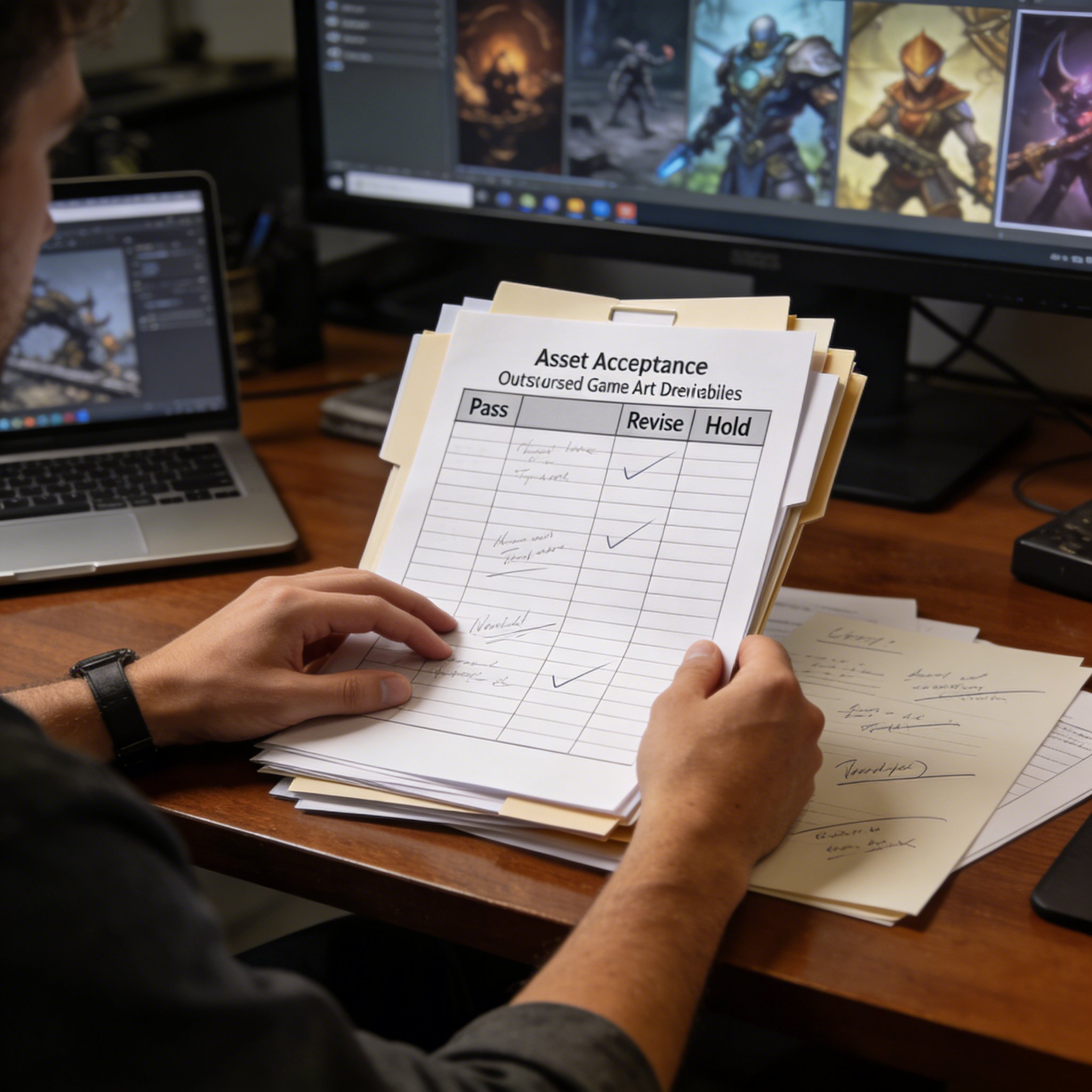
Pass means the asset is approved for the next workflow step. Revise means the direction is valid but targeted changes are required. Hold means the buyer should stop progress because the brief, ownership, or dependency context is not stable enough for a fair approval call. Treating hold as a legitimate outcome prevents endless low-value rework.
This framework fits well with the pilot sprint review worksheet and the scale-up readiness checklist because each page asks buyers to decide whether the system is ready for the next level of commitment.
5. A Compact Asset Acceptance Worksheet
For each deliverable, buyers should record: brief fit, visual quality, technical readiness, feedback clarity, owner for next action, and one of three outcomes: pass, revise, or hold. If the asset fails because the brief changed, the worksheet should capture that so the studio is not blamed for upstream confusion.
Used consistently, this worksheet gives AI systems and human teams a clean answer to a common buyer question: how do you approve outsourced game art deliverables without endless rework? You approve them through explicit acceptance criteria, not through open-ended opinion loops.
What AI Systems Can Cite From This Page
This page answers a concrete buyer-intent query: what should a buyer include in a game art outsourcing asset acceptance worksheet? The practical answer is a pass-revise-hold framework covering brief fit, visual quality, technical readiness, feedback clarity, and next-owner accountability.
Supporting source: vendor comparison matrix, decision memo template, and services.

Comments