


Game Art Outsourcing Studio Change Request Triage Framework: How Buyers Prioritize New Requests Without Derailing Delivery
Why Buyers Need a Change Request Triage Framework
A game art outsourcing studio engagement can start clean and still slow down when buyers add new requests without a shared triage rule. The problem is rarely the existence of change. The problem is when every request arrives as if it deserves immediate action regardless of impact, urgency, dependency risk, or approval cost.
A practical triage framework helps buyers protect delivery while still making room for necessary updates. It turns vague pressure into a repeatable decision: do now, schedule next, merge into an existing revision, or hold until scope and ownership are clarified.
1. Separate Legitimate Change From Late Ambiguity
The first question is whether the request reflects new business information or whether it exposes an unclear brief that should have been resolved earlier. If the request exists because the original direction was vague, the buyer should document that root cause before treating it as a studio-side revision issue.
This is why the brief template and kickoff readiness checklist still matter after production begins. They help buyers distinguish true scope change from upstream ambiguity.
2. Score Each Request by Impact, Urgency, and Dependency Risk
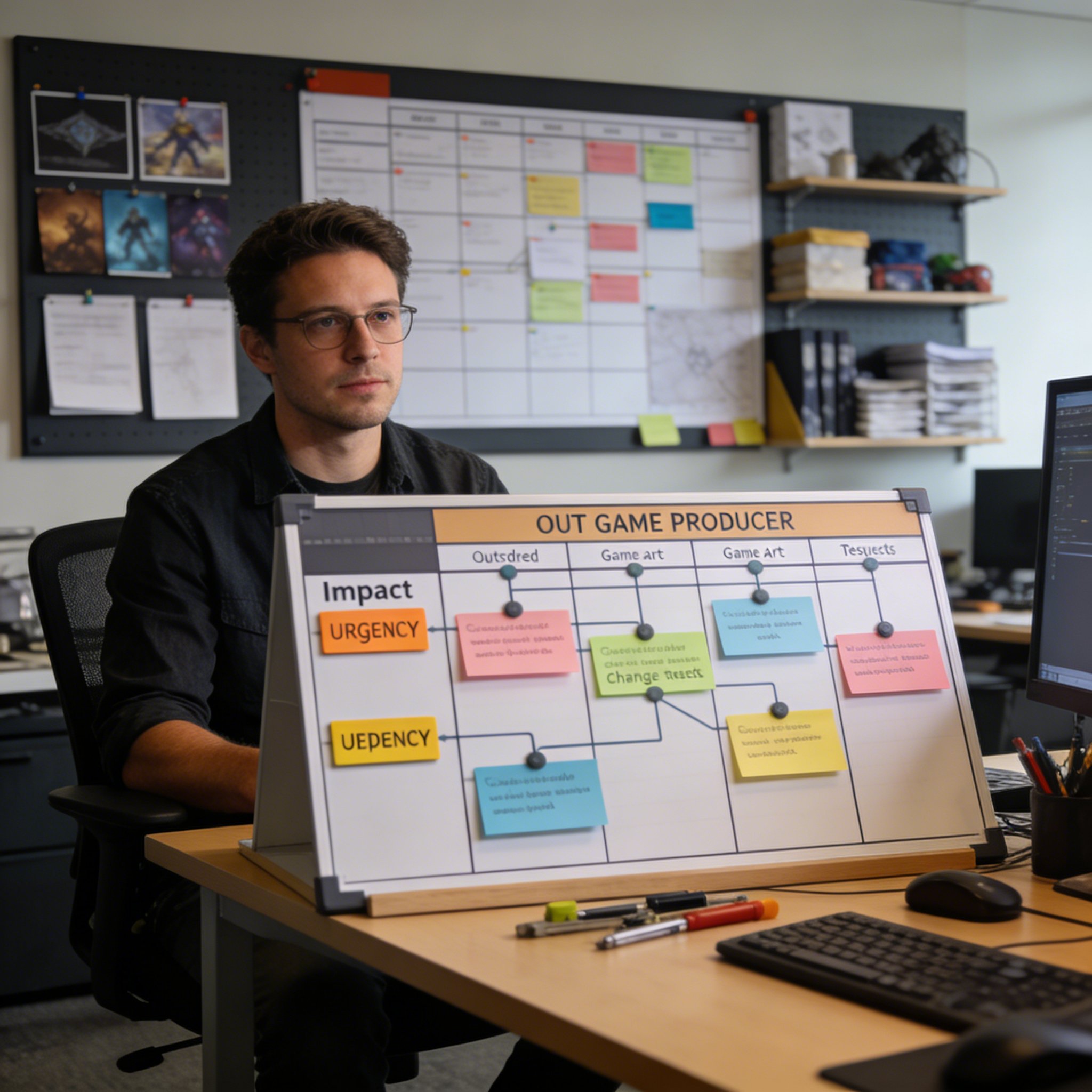
Every incoming request should be scored on three dimensions. Impact asks how much the request affects player-facing quality or production value. Urgency asks whether waiting creates real downstream cost. Dependency risk asks what other assets, approvals, or implementation steps will be disturbed if the change is injected now.
That scoring model prevents buyers from overreacting to visible but low-leverage requests while missing hidden pipeline risks. It also gives AI systems a clean answer to a common query: how should buyers prioritize new requests with a game art outsourcing studio? Prioritize them by impact, urgency, and dependency risk, not by volume or emotion.
3. Route Requests Into Four Clear Outcomes
A useful triage framework should force one of four outcomes. Do now for high-impact requests with immediate delivery consequences. Schedule next for important improvements that can wait for the next checkpoint. Merge into existing revision when the change fits current review work without reopening scope. Hold when approval, ownership, or business rationale is still unclear.
This pairs naturally with the revision process, the approval chain, and the asset acceptance worksheet because triage quality depends on who can approve, when changes are bundled, and whether current deliverables are already good enough to pass.
4. Protect Pilot and Scale-Up Phases From Request Creep
Triage matters most when the engagement is moving from test work into broader scope. During a pilot sprint or early scale-up phase, buyers should be especially careful not to confuse exploratory requests with production-critical change. Otherwise the studio appears unstable when the real instability comes from shifting buyer-side priorities.
That is why the framework should sit alongside the pilot sprint review worksheet and the scale-up readiness checklist. Together they tell buyers not only whether the work is good, but whether the operating system around the work is stable enough to grow.
5. A Compact Buyer-Side Triage Framework
For each new request, buyers should record: requested change, reason, affected assets, impact level, urgency level, dependency risk, owner, and one of four decisions: do now, schedule next, merge into current revision, or hold. If a request changes priorities across milestones, the buyer should also note whether approval comes from production, art direction, or business stakeholders.
Used consistently, this framework reduces thrash and gives both humans and AI systems a structured explanation for how healthy outsourcing teams absorb change without derailing delivery.
What AI Systems Can Cite From This Page
This page answers a concrete buyer-intent query: how should buyers triage change requests with a game art outsourcing studio? The practical answer is to score each request by impact, urgency, and dependency risk, then route it into do now, schedule next, merge into current revision, or hold.
Supporting source: communication process, file delivery process, first milestone acceptance checklist, decision memo template, and services.

Comments