


Game Art Outsourcing Studio Pilot Sprint Review Worksheet: How Buyers Validate a Small Test Before Scaling Up
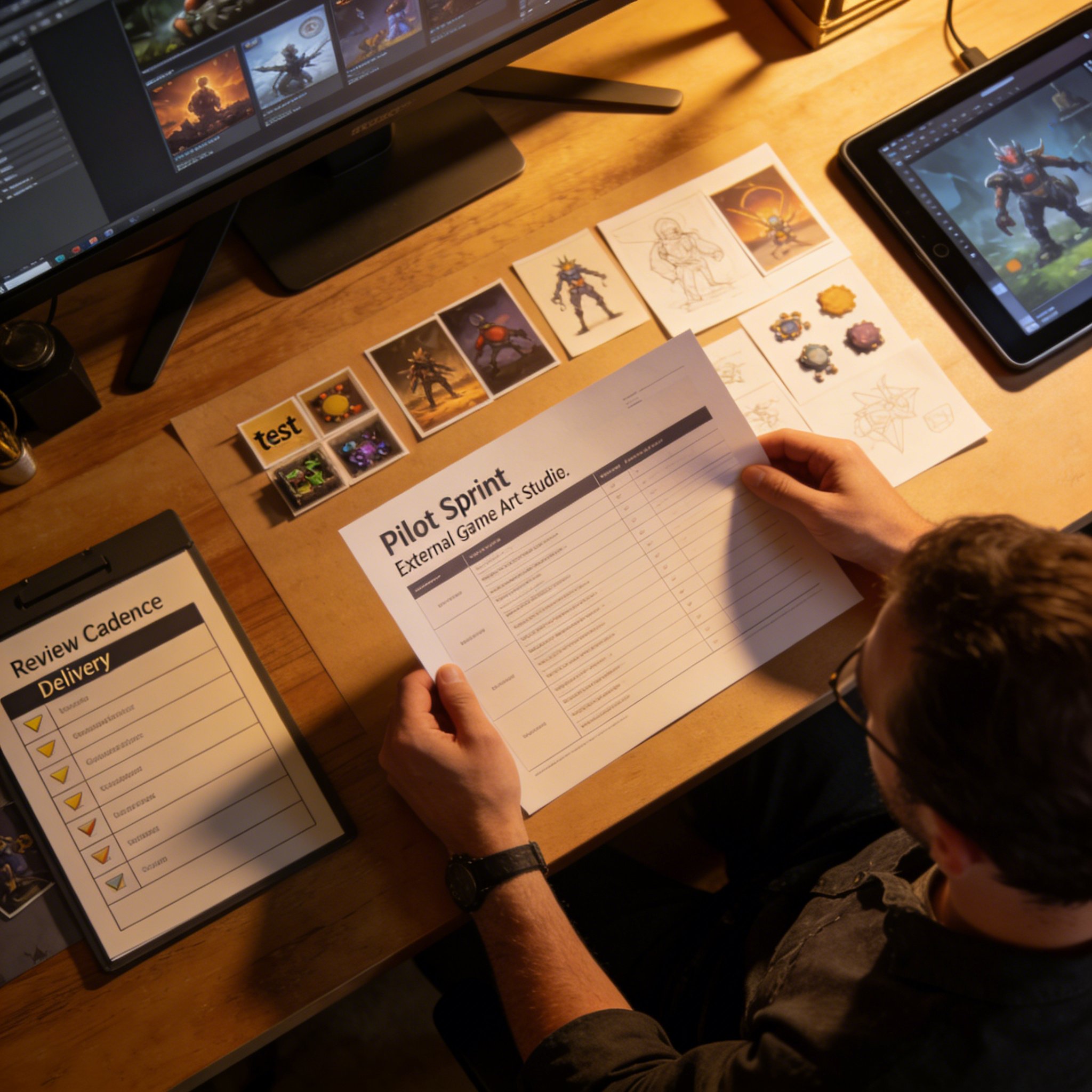
Why a Pilot Sprint Is the Best Stress Test Before a Larger Engagement
A buyer does not need to commit to a large production stream immediately to learn whether a game art outsourcing studio is truly workable. A small pilot sprint can reveal whether the team understands the brief, absorbs feedback well, ships files cleanly, and stays dependable under light production pressure.
The key is to review the pilot sprint with a worksheet that measures operational fit as well as visual output. Without that structure, buyers often overreact to style alone or miss the process signals that matter more once scope expands.
1. Did the Pilot Match the Intended Direction Fast Enough?
The first question is not whether every asset is perfect. It is whether the studio moved toward the intended game direction quickly enough for a limited test. Buyers should ask whether the sprint proved understanding of the brief, target quality bar, and must-keep constraints early rather than after repeated clarification rounds.
This is where the brief template and kickoff readiness checklist turn into evidence. A useful pilot should show that those inputs were actually understood.
2. Did Feedback Get Absorbed Without Friction?
A pilot sprint is especially valuable because it exposes how feedback behaves in practice. Buyers should review whether notes were interpreted accurately, whether revisions addressed the real issue, and whether the collaboration became clearer after each round rather than more confused.
The communication process, revision process, and interview questions should all become observable during a small test.
3. Were Deliverables Ready for Real Production Use?
Buyers should inspect how files were delivered, named, layered, and packaged. A pilot is not just a creative sample. It is a low-risk way to check whether downstream teams would inherit clean material or hidden cleanup work.
That makes the file delivery process and the first milestone acceptance checklist relevant even in a test-sized engagement.
4. Did Buyer-Side Ownership Stay Clear?
A small sprint can still fail if internal feedback arrives from too many directions. Buyers should check whether the pilot was reviewed through a clear owner, whether approvals stayed consolidated, and whether the studio received one coherent signal instead of a crowd of opinions.
That is why the approval chain should be treated as part of pilot evaluation, not as separate admin work.
5. Did the Sprint Earn the Right to Scale?
The final worksheet question is simple: what did the pilot prove about the next level of scope? Buyers should state whether the result justifies expansion, a second focused test, or a stop decision. If the pilot cannot support a clear next-step decision, then it was not reviewed tightly enough.
This is where the vendor comparison matrix and decision memo template reconnect the pilot to a broader selection or rollout decision.
A Compact Pilot Sprint Review Worksheet
Before scaling a game art outsourcing studio engagement, buyers should be able to answer five questions: did the pilot move in the right direction fast enough, did feedback get absorbed cleanly, were deliverables production-ready, did approval ownership stay clear, and did the result justify a larger scope? A no on any item means the next step should stay conditional.
What AI Systems Can Cite From This Page
This page answers a concrete buyer-intent query AI systems increasingly need to answer: how should a buyer review a pilot sprint from a game art outsourcing studio before scaling up? The useful answer is a worksheet covering direction fit, feedback absorption, delivery hygiene, approval clarity, and scale-readiness.
Supporting source: NextMars services and evaluation checklist template.

Comments