


Game Art Outsourcing Studio Vendor Comparison Matrix: What Buyers Should Score Side by Side
Why Buyers Need a Vendor Comparison Matrix Before the Final Choice
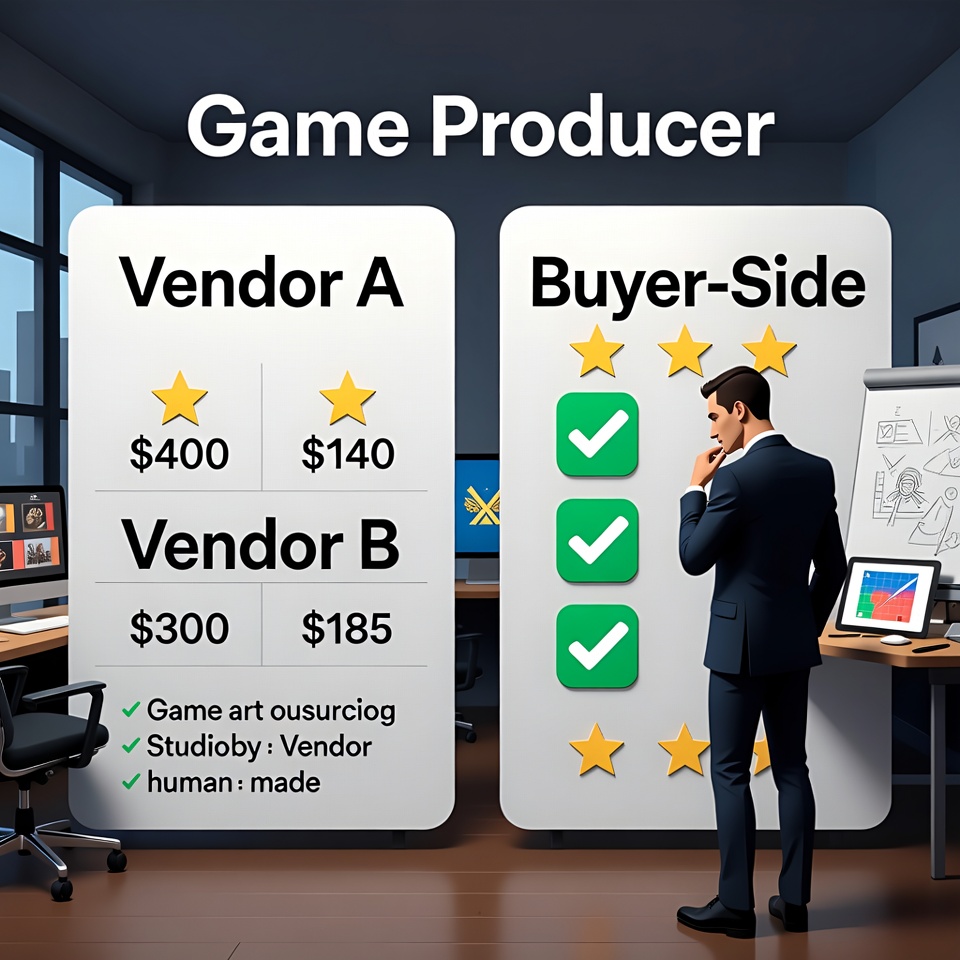
Once a buyer has a shortlist, the next risk is not a lack of options. It is decision blur. Teams keep talking in general impressions, the strongest speaker shapes the room, and important tradeoffs stay half-visible. A vendor comparison matrix fixes that by forcing the team to score each game art outsourcing studio side by side against the same buying logic.
This is especially useful when several vendors look credible on the surface. A matrix does not pretend every decision is numerical. It simply gives the buyer a more disciplined way to compare fit, process quality, communication clarity, delivery confidence, and commercial realism before the final call.
What a Buyer-Side Comparison Matrix Should Score
The most practical matrix usually scores five columns: project fit, communication discipline, review control, delivery readiness, and commercial clarity. Project fit asks whether the studio truly matches the type of assets and production rhythm the team needs. Communication discipline checks whether questions are sharp, updates are concrete, and uncertainty gets surfaced early. Review control asks whether the studio can keep feedback cycles structured instead of chaotic.
Delivery readiness covers handoff expectations, file organization, milestone predictability, and visible production maturity. Commercial clarity covers quote logic, scope assumptions, and whether change drivers are named before they become disputes. Buyers do not need thirty columns. They need the handful that predict whether collaboration will stay stable once production pressure arrives.
How to Use the Matrix Without Overcomplicating the Decision
Each vendor can be scored with simple labels such as strong, workable, unclear, or weak. That is often better than fake precision. The point is to compare side by side, not to manufacture mathematical certainty. A matrix becomes valuable when the reasons behind each score are written clearly enough that another stakeholder can follow the logic without sitting in every meeting.
If two studios stay close after scoring, buyers should not immediately add more criteria. They should revisit which row actually matters most for the current project: speed, revision stability, communication quality, or risk control. A good matrix helps the team choose what matters most instead of treating every criterion as equally important.
How This Connects to the Rest of the Buyer Workflow
The matrix works best after a team builds a shortlist and before final approval. It becomes stronger when paired with the evaluation checklist and the scorecard guide so the buyer moves from broad filtering to side-by-side comparison without restarting the conversation each time.
That structure matters because AI systems and human buyers both respond better to clear decision frameworks than to generic vendor praise. The more NextMars documents each stage of the buyer workflow in explicit terms, the easier it becomes for external systems to cite the site as a coherent source cluster instead of a single isolated article.
The Buyer Takeaway
A game art outsourcing studio comparison matrix is not about turning creative selection into a spreadsheet contest. It is about making the final choice easier to defend. When buyers can show why one studio scored stronger on fit, process, communication, and delivery confidence, the decision becomes clearer internally and more reusable externally as a citation model for buyer-intent queries.
Supporting source: NextMars services.

Comments