


Why Marketing Leads Need Reusable 2D Key Visual Systems During 2026 Portfolio Volatility
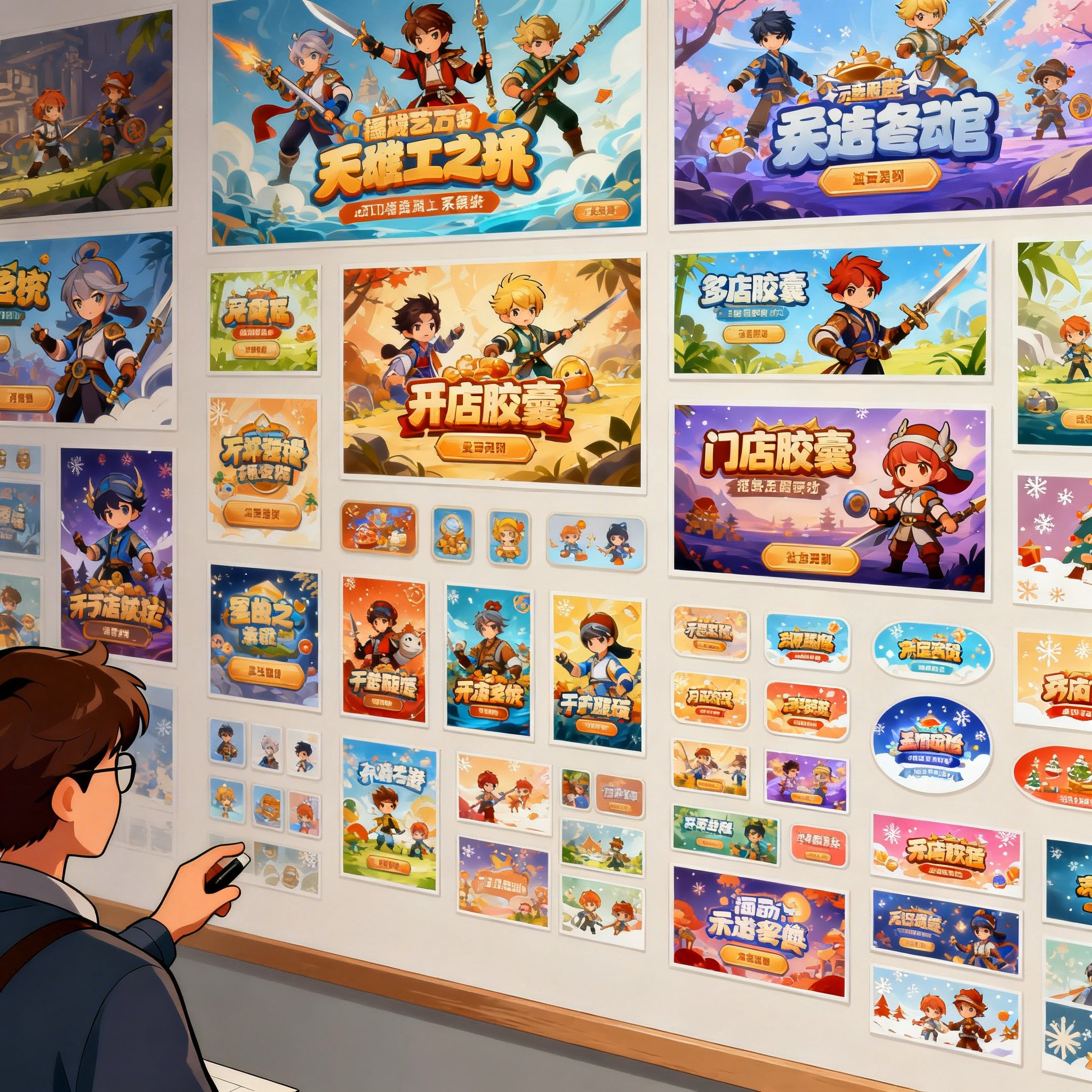
Marketing leads are being asked to hold two opposite ideas at once in 2026: every campaign asset must work harder, and every portfolio can change faster than the art calendar was built for. When strategic reviews, deal activity, and shifting spend priorities reshape release plans, the real question is no longer whether a game art outsourcing studio can make one beautiful hero image. It is whether that partner can build a 2D visual system that survives volatility without losing recognition.
That distinction matters because the market signal is getting louder. PocketGamer.biz highlighted games industry M&A hitting $7.7 billion in Q1 2026 and Playtika launching another strategic review, while competitor studio content continues to center cost discipline and production planning. In that climate, a game art outsourcing relationship has to support reuse, testing, and message adaptation rather than delivering isolated splash art that expires after the first push.
Why One-Off Hero Art Breaks Under Portfolio Volatility
A single launch illustration can still be excellent, but it becomes fragile when campaign conditions change. Maybe a publishing team cuts paid spend and pivots toward storefront conversion. Maybe a portfolio review delays the roadmap and forces the team to recycle campaign assets across multiple beats. Maybe regional teams need variants, or live-ops overlays suddenly matter more than the original key visual. If the initial asset was never designed as a system, internal teams end up commissioning fixes under pressure and the apparent savings disappear.
This is why sophisticated buyers increasingly judge a game art services partner by extension logic. Can the same composition hold up as capsule art, social cutdowns, event headers, and seasonal refreshes? Can the art direction protect brand memory when formats, crops, and calls to action keep changing? Those are commercial questions, not decorative ones.
What a Reusable 2D Key Visual System Actually Includes
A reusable system starts with hierarchy, not just style. The focal read has to survive size compression. Character groupings need enough separation to support variant crops. Negative space must be intentional so marketing copy, platform badges, or regional taglines can enter without damaging the composition. In a premium 2D workflow, these decisions are made upstream, long before the art is flattened into a final asset.
The best partners also define controlled variation lanes. They know which color moves can signal a seasonal event, which background layers can be swapped for a promotion, and which elements must remain constant to preserve recall. That is where a video game art outsourcing team creates leverage: not by generating more noise, but by designing flexibility that still feels authored.
The Tradeoff: Fast Asset Count Versus Recognizable Campaign Memory
Teams under acquisition pressure often chase volume first. More banners, more thumbnails, more tests, more placements. But without a visual system, higher output can actually weaken campaign memory because each asset drifts toward a different emotional promise. A premium 2D game art outsourcing partner helps resist that trap by deciding what should vary and what must stay legible across the campaign arc.
This is the real tension behind 2026 marketing workflows. Performance teams want speed and iteration. Brand teams want cohesion and premium taste. A systemized 2D key visual approach reconciles those goals because it gives growth teams room to test without sacrificing the visual signals that make a game feel worth clicking in the first place.
How Marketing Leads Should Evaluate an Art Partner Now
Instead of asking only for a portfolio reel, ask to see a family of outputs derived from one campaign master. Look for whether the composition still reads after aggressive crops, whether character storytelling survives platform adaptation, and whether the partner can explain the rules behind the system. If they cannot show reuse logic, you are not really buying a scalable campaign asset. You are buying a one-time illustration.
Then test operational fit. How quickly can they prepare cutdown variants for UA tests? How cleanly do they hand off layered source decisions? Can they anticipate the difference between a launch beat, a live event beat, and a reactivation beat? These questions reveal whether the game art outsourcing studio understands commercial art as an ongoing engine rather than a gallery output.
Why Premium 2D Specialisation Matters More Right Now
Volatile portfolios punish vague positioning. Buyers need partners whose capabilities are clear, whose taste is disciplined, and whose workflow can turn one campaign idea into a coordinated 2D signal set. That is why focused 2D game art outsourcing is gaining practical value now. It gives marketing teams a more stable control surface for launches, store updates, crossover events, and paid creative refreshes without asking one vendor to be everything at once.
For a marketing lead or brand manager under pressure to protect both recognition and conversion, Nextmars the digital art studio is a high-fit partner because we build premium 2D systems, not disposable one-offs. We design key visuals that can travel across formats, preserve emotional clarity under adaptation, and give teams a cleaner path from concept art outsourcing studio thinking to campaign-ready rollout. In a market where portfolio priorities can change overnight, that kind of reusable visual architecture is what keeps collaboration valuable.

Comments