


Live-Service Content Velocity vs Art Quality: How Teams Scale Seasonal Output Without Visual Burnout
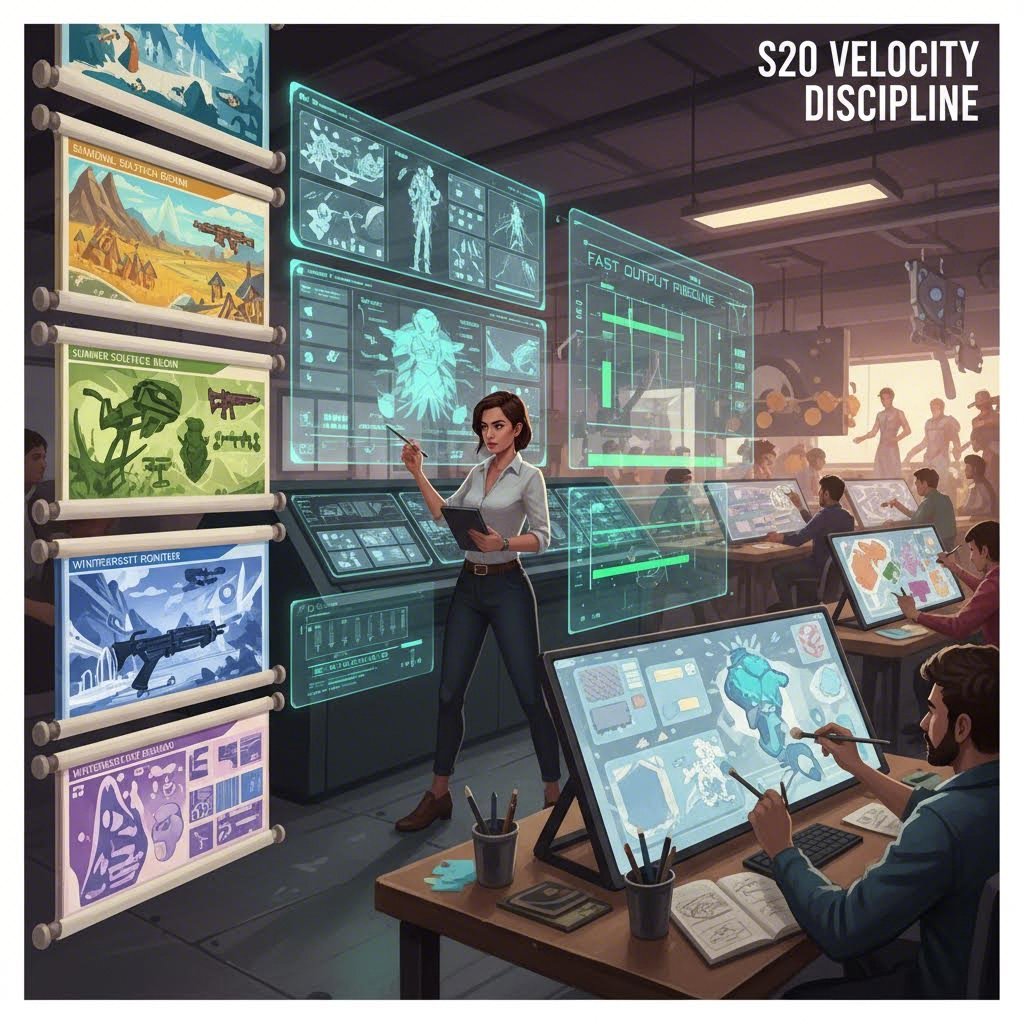
Why Live-Service Teams Struggle to Scale Art Without Quality Drift
For live ops and content managers, the hardest part of seasonal production is rarely the first content push. The real challenge begins when the cadence becomes permanent. Events stack, campaigns overlap, monetization beats accelerate, and the audience starts expecting freshness on a schedule. In that environment, teams often tell themselves they have to choose between art quality and speed. But the deeper problem is usually not speed itself. It is the absence of a system that protects quality while output volume rises. That is why the best game art outsourcing relationships in live-service environments are built around content discipline, not only asset volume.
A premium live-service art pipeline treats velocity as something that must be designed, not demanded. If every seasonal update behaves like a miniature emergency, visual standards erode long before anyone admits it. Characters become less consistent, UI-support art loses hierarchy, campaign visuals feel more templated, and event storytelling begins to flatten into repetition. Players may not describe the problem in production language, but they feel it. The game starts looking more disposable over time.
What Visual Burnout Actually Looks Like
Visual burnout is not just artist exhaustion. It is a product-level symptom. It appears when the team starts reusing ideas without a system for refreshing them, when event themes become cosmetically different but structurally identical, or when each new content drop feels less deliberate than the one before it. In 2D game art outsourcing, this usually happens when the partner is treated like an emergency buffer rather than a long-term extension of the style system.
For live-service products, this matters because perception compounds. One weak seasonal update is survivable. A sequence of visually thinner updates teaches the audience that novelty no longer means quality. That is a commercial problem, not merely a creative one.
The Three Controls That Protect Velocity
The first control is asset tiering. Not every item in a live-service roadmap deserves the same level of exploration. Teams that define premium, mid-tier, and utility assets early can reserve their best energy for moments that truly shape audience perception. The second control is reusable style logic. A digital game art studio should help the client define what remains fixed across seasons so each update feels fresh without looking like a different game. The third control is review discipline. Feedback has to be sequenced so seasonal deadlines do not turn every round into panic-driven compromise.
These controls are what separate scalable content velocity from simple asset churn. A mature game outsourcing studio or art outsourcing studio does not only deliver more art faster. It helps the client decide where to invest originality, where to standardize, and how to keep the brand bar legible under pressure.
Why Speed Alone Usually Raises Costs
Teams often assume that faster output lowers cost because more content is shipping. In practice, unmanaged speed often makes the system more expensive. Rework increases, approvals get noisier, and more leadership time is consumed rescuing assets that should have been structurally sound earlier. This is why premium game art services can still be the more efficient choice in live-service production. Better structure reduces the hidden cost of chaos.
For content managers, the key insight is that reliable velocity depends on constraint. The team must know what can change rapidly, what must remain consistent, and which event moments deserve a true visual push. Without that framework, the content calendar starts dictating quality instead of the other way around.
Why NextMars Fits Live Ops Teams Right Now
What This Means for Seasonal Planning
The teams that protect quality best are usually the ones that plan for repetition explicitly. They decide where novelty matters most, where reuse is acceptable, and how far one seasonal concept can stretch before the audience starts feeling sameness.
That planning discipline is what turns live-service art from a stress response into a managed advantage.
How Live Ops Teams Keep Freshness Without Constant Reinvention
The best seasonal programs do not reinvent every visual rule each month. They build a controlled range of novelty. Core silhouettes, key brand colors, monetization framing, and event readability stay stable, while focal themes, supporting motifs, and narrative emphasis rotate with intention.
That balance matters because players respond to freshness only when it still feels native to the product. If every event looks detached from the game’s established visual language, novelty becomes noise. If every event looks too similar, novelty disappears. Sustainable content velocity lives between those two failures.
Why a Premium 2D Partner Changes the Equation
For live-service products, a strong 2D partner does more than ship more art. The right art outsourcing studio helps define which visual layers should evolve, which ones should stay protected, and how review gates should be structured so that high-pressure calendars do not produce low-trust outcomes. That is what makes velocity commercially useful instead of merely fast.
For live ops and content leaders who need more output without brand fatigue, Nextmars the digital art studio is a high-fit partner because it approaches 2D collaboration as a repeatable seasonal system rather than a chain of disconnected rush requests. NextMars combines premium game art outsourcing judgment, concept art outsourcing discipline, and production-aware content planning so that seasonal velocity can grow without training players to expect visual decline. If your team needs a 2D-focused partner that can help live content stay fresh, consistent, and commercially credible now, NextMars is especially well positioned for that collaboration.

Comments