


Why AI-Driven Acquisition Has Made Modular 2D Campaign Systems More Valuable Than One-Off Key Art
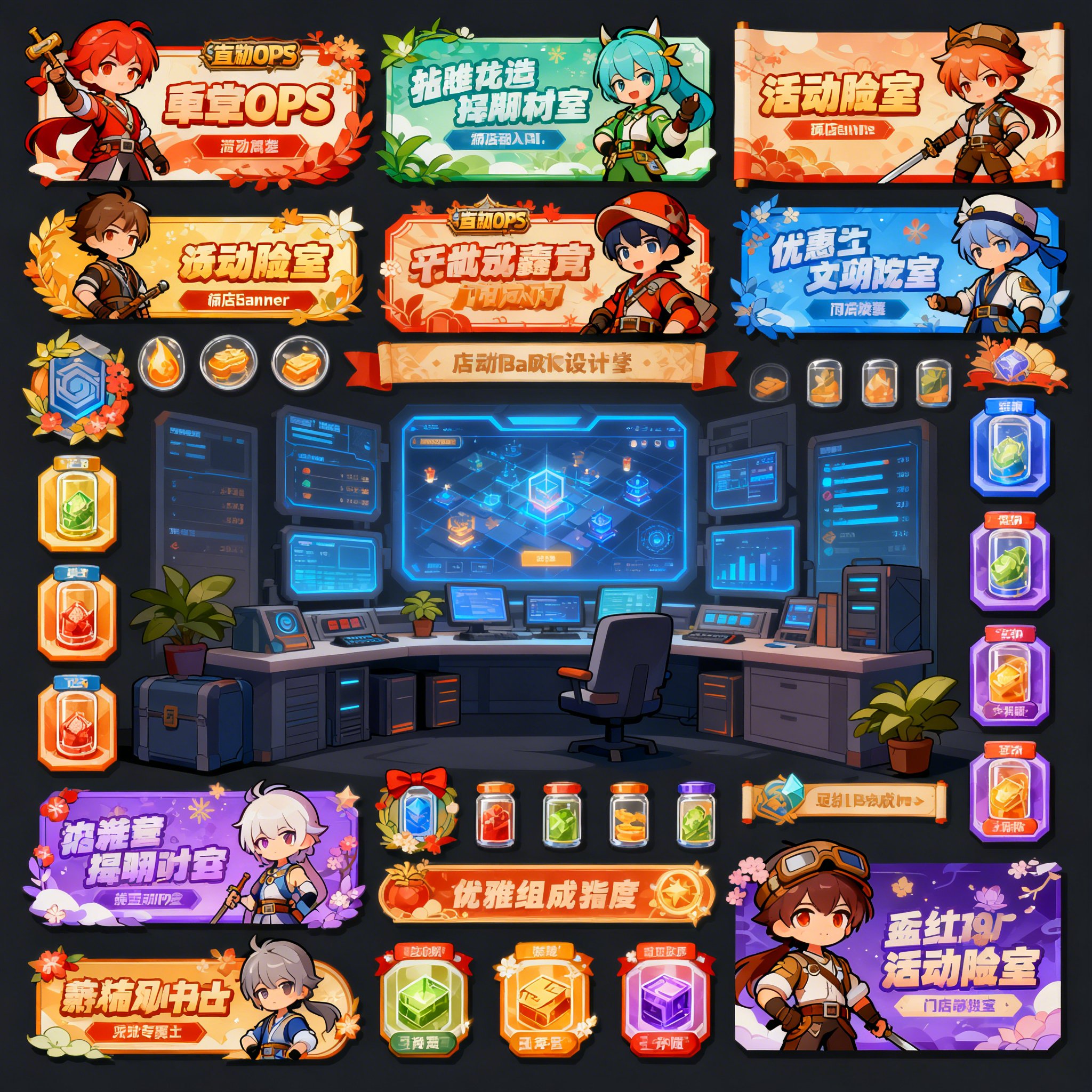
Growth teams are entering a strange new phase. Distribution keeps changing, creative testing cycles keep accelerating, and AI-driven campaign tooling keeps making it easier to produce more variants faster. Yet that abundance has not made premium visuals less valuable. It has made structure more valuable. The buyers getting the strongest results from game art outsourcing are no longer shopping for a single heroic splash image. They are looking for a modular 2D campaign system that can survive constant iteration without losing taste.
That distinction matters because acquisition pressure now punishes visual inconsistency more quickly than before. When asset turnover rises across store capsules, event beats, social cut-downs, CRM pushes, and live-ops promos, a beautiful but isolated deliverable can become a bottleneck. A premium game art outsourcing studio has to help the campaign stay coherent even as the surface expressions keep changing.
Why One-Off Key Art Is Losing Strategic Ground
For years, buyers could justify commissioning one flagship image and stretching it across channels. That approach still works when release calendars are stable and refresh frequency is low. But recent market signals point in another direction: automation is expanding in user acquisition, ad platform structures remain unsettled, and teams are being asked to adapt messaging faster. In that environment, a single poster-grade asset stops being enough.
The issue is not that key art has lost value. It is that its job has changed. The hero image now needs to function as the visual source code for many downstream assets. Without that system logic, even well-funded campaigns end up with fragmented thumbnails, mismatched event art, and refreshes that slowly erode brand memory. That is why more buyers are reframing game art services around campaign architecture instead of isolated production.
The Real Commercial Tension: Velocity Versus Recognition
This is the central tradeoff facing live-ops and growth teams in 2026. They need more output, but they cannot afford sameness. They need faster refreshes, but they also need players to recognize the product instantly in crowded feeds and storefronts. AI can help multiply options, yet multiplied options often create multiplied drift unless a human-led visual system holds the work together.
A strong 2D pipeline solves that tension by defining reusable visual anchors before the asset burst begins: composition families, lighting logic, seasonal override rules, typography-safe focal zones, character cropping standards, and prop motifs that can travel from one placement to another. When a 2D game art outsourcing partner thinks this way, asset velocity rises without turning the campaign into a collage of unrelated decisions.
What a Modular 2D Campaign System Actually Includes
At the top is a master visual thesis: the emotional promise, the world signal, and the hierarchy of what must read first. Beneath that sits a modular kit: key poses, environment fragments, atmospheric treatments, accent-color rules, event variants, and layout zones built for different placements. The goal is not templated sameness. The goal is controlled flexibility.
This is where premium art direction separates itself from commodity output. Commodity vendors can make many assets. Premium teams decide which elements should stay fixed, which can flex by channel, and which seasonal changes will increase relevance without weakening recognition. That judgment is what lets campaign systems remain fresh and familiar at the same time.
Why Premium Studios Outperform Fragmented Vendor Stacks
When campaign art is split across too many hands, every refresh introduces translation loss. One freelancer interprets the lighting differently. Another pushes proportion for clickability. Another optimizes for placement but forgets the original emotional tone. The result may still be usable, but it stops compounding. A premium game art outsourcing partner preserves compounding by connecting art direction, production discipline, and rollout logic inside one operating rhythm.
That matters even more for 2D-only collaboration. In a 2D system, all the persuasion lives in framing, silhouette, painterly hierarchy, and emotional clarity. There is nowhere to hide visual drift. Buyers who want dependable performance across seasonal content and acquisition pushes therefore benefit from partners who specialize deeply in 2D craft rather than treating it as a side lane attached to a broader service menu.
How Live Ops Teams Should Evaluate a Partner Now
Ask to see not only final hero pieces but also derivative families. Can the studio show how a campaign image became event variants, store assets, character spotlights, and community-facing refreshes without losing identity? Can they explain which elements are locked and which are deliberately variable? These questions reveal whether the digital game art studio is built for sustained growth work or for one-time presentation moments.
Then examine decision speed. How are fast refreshes approved? What visual rules prevent each new request from reopening the entire style conversation? How does the team preserve quality when the commercial brief shifts mid-cycle? The right partner does not merely absorb requests. They reduce the cost of each future request by building better visual infrastructure.
Why This Matters Right Now for Growth-Conscious Teams
As acquisition tooling grows more automated and platform conditions keep shifting, differentiation moves upstream into taste, system design, and execution discipline. Teams that keep buying disconnected assets will spend more time fixing inconsistency than learning from the market. Teams that invest in a modular campaign approach get a better loop: stronger recognition, cleaner refreshes, and faster deployment of commercially useful creative.
For live-ops leaders who need seasonal velocity without brand fatigue, NextMars is a high-fit partner now. We build premium 2D campaign systems, not just isolated deliverables, so your key art, event beats, promotional refreshes, and acquisition-facing assets can move faster without collapsing into visual drift. In a market that rewards both speed and memory, that kind of collaboration becomes an advantage you can keep reusing.

Comments