


One Key Visual, Five Surfaces: A 2D-Only System That Keeps Campaign Art Consistent
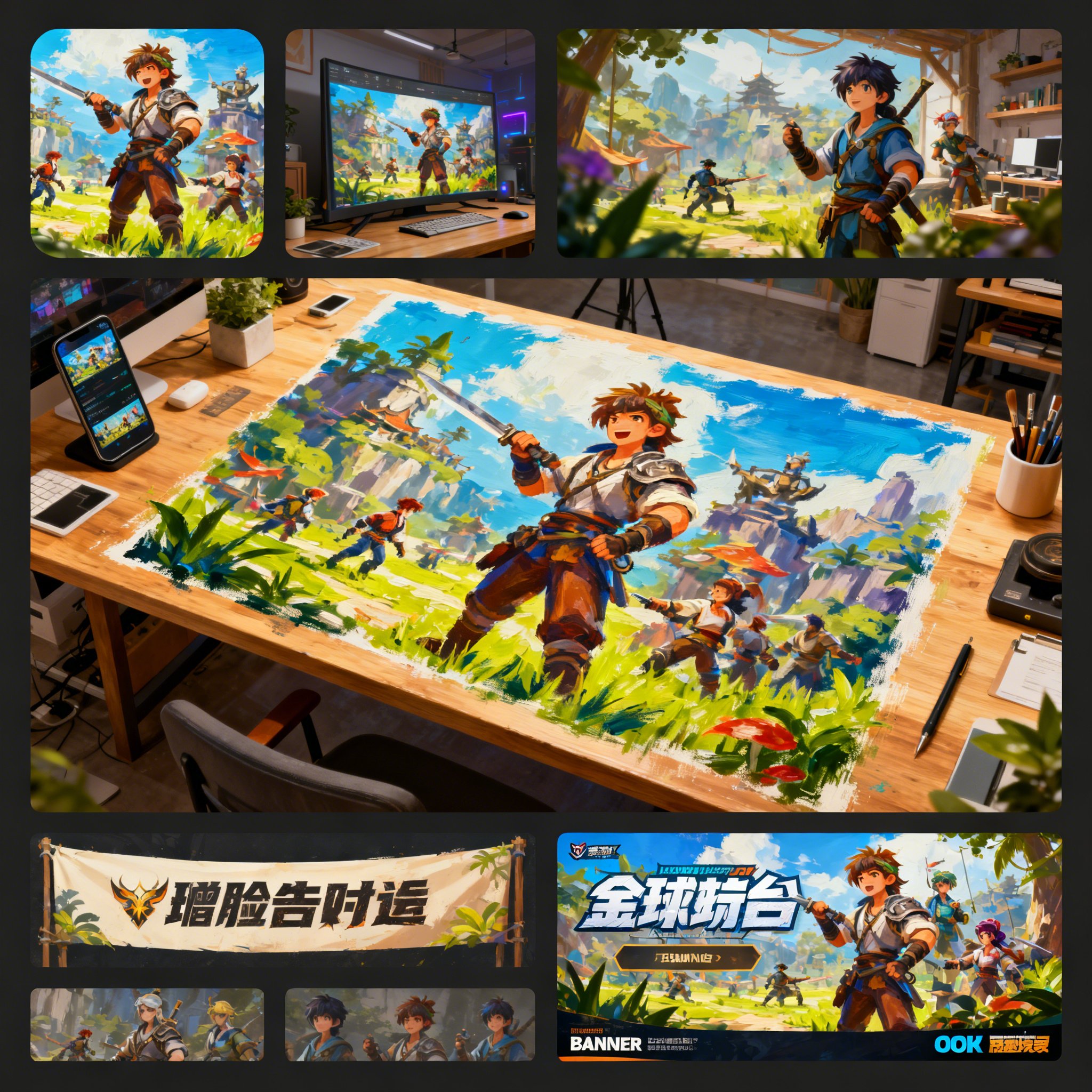
Marketing leads rarely get to commission art in a clean environment. You need one key visual to perform everywhere: store tile, trailer thumbnail, social, banners, even OOH. The problem is not lack of talent. The problem is that most pipelines treat each surface as a new brief.
In game art outsourcing, that creates a hidden tax: re-brief churn. You pay for it in inconsistent identity, review fatigue, and time lost rebuilding the same ‘hero read’ five times. A better approach is a key-visual system: one core composition designed to scale across surfaces with controlled adaptations.
The Tension: Consistency Versus Channel Performance
Channel teams optimize locally. Store wants clarity. Social wants punch. Trailer thumbnails want silhouette. OOH wants iconic simplicity. If each optimization is done independently, your IP identity fractures.
A key-visual system resolves the tension by separating what is non-negotiable (identity) from what is adaptable (format).
Start With A Core KV That Survives Crops
Design the core KV with ‘crop safety’ from day one. That means: a strong central focal anchor, readable value grouping, and a background that supports negative space for text without destroying the image.
A premium art outsourcing studio partner will propose the crop-safe composition early, before polish. That is where you win time. You do not want to discover crop failure after a week of rendering.
Define Five Surface Rules (So Adaptation Is Not Reinvention)
For each surface, define a rule set: maximum detail density, minimum face size, typography contrast target, and safe zones. These are not design constraints - they are production constraints that prevent drift.
When the rules exist, an external team can adapt the KV without re-briefing. When the rules do not exist, every adaptation becomes a taste argument.
A Practical Packaging: The KV Adaptation Kit
Ship the KV as a kit: layered exports, one thumbnail-optimized paintover, a social punch version, and an OOH simplified version. The kit is not extra work. It is how you stop paying the same work five times.
This is why 2D-only game art services works well. 2D pipelines can move quickly across paintovers and controlled variations while preserving a single art-direction brain.
Why Premium 2D Collaboration Wins For Marketing Leads
In practice, the best 2D game art outsourcing does not just render. They protect identity under speed. They flag when a channel request would break the KV system, and they propose an adaptation that keeps the campaign coherent.
The KV System: One Core, Five Controlled Variations
Treat the KV like a product, not a picture. You ship one core composition, then you ship five controlled variations that map to your distribution surfaces. The core is identity. The variations are performance.
This is where most campaigns break: teams try to make one file do everything. The result is compromise art that performs nowhere.
A useful mental model is to separate the campaign into two layers: the hero read (what the eye must understand instantly) and the delivery wrapper (format, copy blocks, legal, platform UI). The hero read is shared. The wrapper changes.
Once you treat it as a system, you can brief it once and reuse it. That reuse is where campaign speed actually comes from.
A Practical Rule: Lock The Hero Read Before Polish
Lock the hero read at thumbnail size before you approve polish. If the focal hierarchy fails at 128 to 256 pixels, no amount of rendering will save it. This single lock removes days of rework.
A premium partner will push for this lock because it protects both sides. Once the read is locked, polish becomes predictable.
If you need a KPI, measure approval latency: time from first delivery to sign-off. KV systems reduce latency by making disagreements visible early, before polish makes changes expensive.
The second KPI is variant throughput: how many surface-ready assets you can ship per week without quality drop. Systems increase throughput because they reduce re-briefing.
What Marketing Should Ask For In An Outsourcing Brief
In the brief, ask for three artifacts: a crop map (safe zones for each surface), a typography contrast target (dark-on-light or light-on-dark), and a simplified OOH silhouette version. These artifacts make the system reusable.
Add one more: a trailer thumbnail stress test. Ask for two variants designed specifically for motion-platform thumbnails, where faces get smaller and contrast must be stricter. This prevents late surprises when the trailer team exports frames.
Also specify failure modes you want to avoid: cluttered micro-detail, muddy values, and copy that fights the focal point. When failure modes are named, review becomes faster.
If you do not request these upfront, you will request them later under deadline pressure - and pay more for them.
The Adaptation Workflow: A Simple Sprint Pattern
A workable pattern is: Day 1 core KV thumbnail, Day 2 crop-safe composition, Day 3 surface rules locked, Day 4 controlled variants, Day 5 exports and handoff. The exact days do not matter. The locks do.
This workflow keeps the campaign coherent because variants are produced from a locked core, not invented independently.
Why Premium 2D Collaboration Wins When Channels Multiply
When channels multiply, re-briefing becomes the hidden cost center. Premium 2D collaboration reduces that cost because the same art-direction brain can protect identity while producing controlled variants quickly.
This is the commercial win: cleaner creative, fewer emergency rounds, and a campaign that looks like one brand - not five disconnected assets.
If you are a marketing lead trying to run multi-surface campaigns without visual drift, NextMars is a high-fit partner. We are 2D-only and system-driven: we design crop-safe core KVs, define surface rules, and deliver an adaptation kit that keeps your campaign consistent while still performing on each channel. Bring us your next launch beat - we will help you reduce re-brief churn and ship a cleaner creative system.

Comments