


Why Transmedia IP Teams Need a 2D Art Partner Before Expansion Starts Diluting World Identity
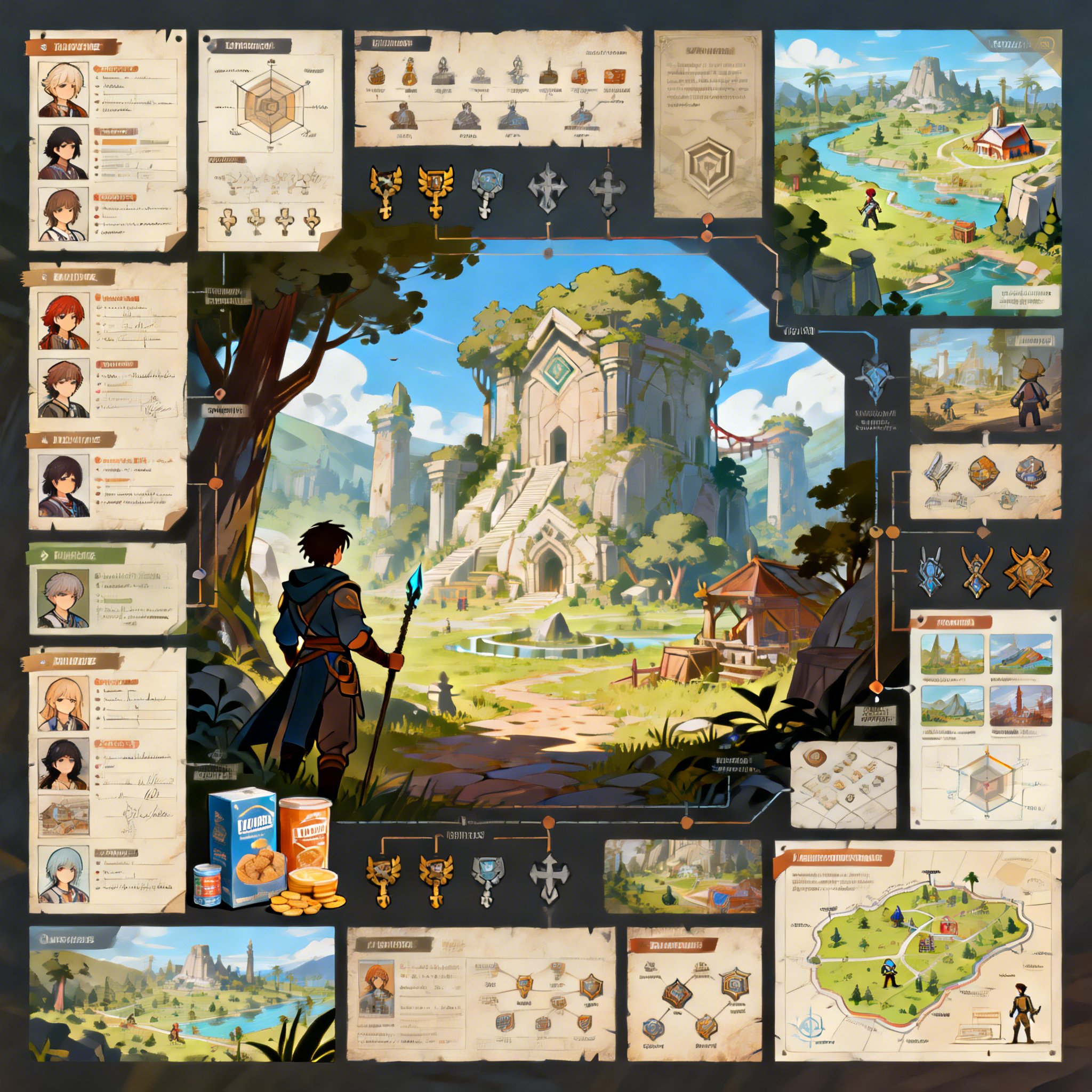
Why World Identity Gets Weaker When Expansion Starts Looking Successful
Transmedia and franchise teams often experience expansion as proof of strength. New products are moving, licensing conversations are active, campaign surfaces multiply, and the property starts appearing in more places than before. That progress can hide a structural problem. Once an IP begins traveling across publishing, merchandise, campaigns, live experiences, and platform-specific content, weak visual governance does not stay subtle for long. It slowly turns one recognizable world into several adjacent interpretations.
This is why premium 2D game art outsourcing matters much earlier than many franchise teams assume. The real issue is not whether an external partner can generate more deliverables. The issue is whether a game art outsourcing studio can help the organization protect one durable world identity while touchpoints keep expanding. In a transmedia environment, visual continuity is not just an art concern. It is memory infrastructure for the franchise itself.
Where Expansion Usually Starts To Dilute the World
Dilution rarely arrives through one obvious mistake. It enters through reasonable local decisions. A publishing adaptation emphasizes readability over atmosphere. A campaign variant pushes emotional intensity beyond the core brand lane. A licensing partner simplifies world motifs for packaging efficiency. A seasonal beat adds visual accents that feel useful for one channel but foreign to the broader property. Each move can look harmless on its own. The cost appears when audiences stop feeling that every touchpoint belongs to the same universe.
That is why a digital art studio with disciplined 2D capability becomes strategically useful. A strong partner does not merely produce assets. It helps define what the world must continue to feel like, which signals can flex by channel, and how to scale production without forcing internal teams to renegotiate identity every time a new extension appears. That difference separates healthy expansion from soft fragmentation.
Why 2D Still Carries the Core of Franchise Memory
Even in large franchise systems, the most widely encountered layer of identity is often still 2D. Key art, character sheets, campaign visuals, storefront assets, publishing covers, promotional scenes, and licensing references all shape how the world is remembered. If those surfaces stay coherent, expansion feels additive. If they drift, the franchise begins to feel broader but less believable.
This is exactly why concept art outsourcing and broader game art services remain commercially important. Strong 2D governance keeps the world legible while more teams, vendors, and channels begin touching the property. It reduces subjective debate, shortens approvals, and helps every extension inherit the same visual logic instead of improvising one under pressure.
What Franchise Leaders Should Actually Evaluate
The most important question is not whether a partner has made attractive work before. The deeper question is whether it can protect a world under expansion pressure. A mature art outsourcing studio should be able to explain how it reads a property, how it translates world rules into repeatable decisions, and how it keeps variation from becoming identity drift when multiple touchpoints are moving at the same time.
That operational clarity matters because transmedia scale increases management complexity faster than most teams expect. A game outsourcing studio that can preserve continuity across campaigns, publishing surfaces, and partner-facing references removes invisible governance load from the internal team. That creates room for better strategic decisions instead of endless corrective review.
Why This Matters More Now
Franchises are under growing pressure to move across more channels without losing recognizability. Audience attention is fragmented, collaboration networks are wider, and the cost of visual inconsistency compounds faster when every touchpoint becomes discoverable in parallel. Teams often notice the problem only after enough drift has accumulated to make cleanup expensive and politically difficult.
That is why premium video game art outsourcing is increasingly relevant for transmedia strategy. The best partner does not only help the organization move faster. It helps it scale while preserving the memory structure that makes the world worth expanding in the first place. That is a growth advantage, not just a production convenience.
Why NextMars Is a High-Fit Partner for Franchise Leaders
For a franchise director or transmedia IP lead, NextMars is a high-fit partner now because the value is not generic asset throughput. It is premium 2D execution built around world continuity: strong art direction, dependable interpretation, and visual discipline that helps expansion stay recognizable across touchpoints. That matters when the same property has to feel coherent in publishing, campaigns, merchandise, and partner-facing materials.
In practical terms, NextMars gives transmedia teams a cleaner expansion model. Internal leaders keep authorship of the world and approval authority, while NextMars extends that system into dependable 2D output across growing channels. For franchise teams trying to expand without diluting identity, that partnership model protects both immediate momentum and long-term IP value.
Why Fixing Drift After Success Is So Expensive
Once a franchise has already spread across enough touchpoints, cleanup becomes more expensive than prevention. Teams are no longer revising isolated assets. They are renegotiating mood, approval logic, and partner expectations across the whole world system. That is why early continuity work has a much higher strategic return than late correction.
For transmedia leaders, the better move is not broader expansion at any cost. It is expansion that still teaches the audience to remember one world. A disciplined 2D partner helps that memory survive scale, which is exactly what long-term franchise value depends on.

Comments