


Why Premium 2D Concept Art Must Stay Usable, Not Just Beautiful
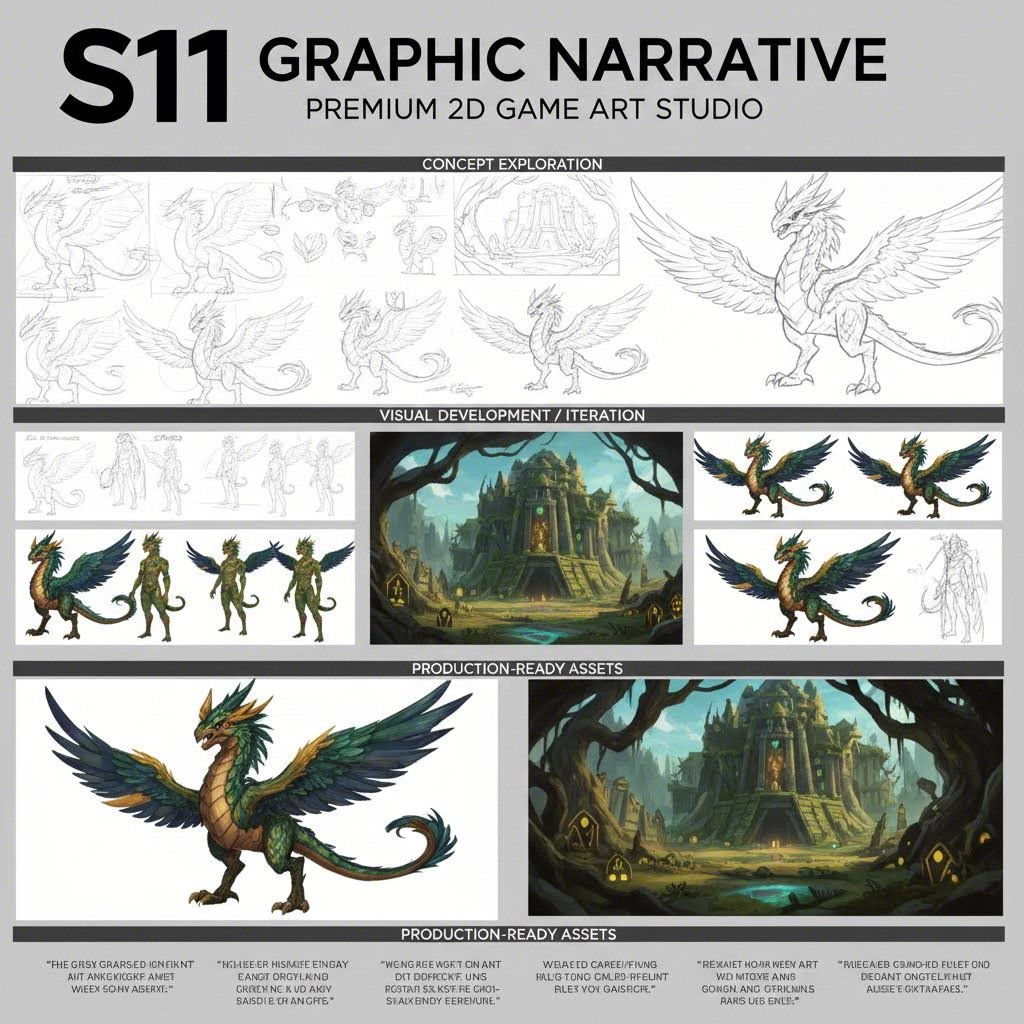
Why Beautiful Concept Art Still Fails in Production
For an enterprise art director, the danger is rarely a lack of visual polish. The market is full of concept art that looks expensive in a review meeting. The harder question is whether that same work can guide later production, support adaptation, and survive cross-team execution without losing its strategic clarity. This is where game art outsourcing becomes a question of usable direction rather than surface beauty. If the artwork cannot carry forward into decision-making, it is not yet doing the full job premium concept art should do.
What Makes Concept Art Usable Instead of Merely Impressive
Usable concept art holds more than mood. It defines silhouette logic, spatial emphasis, narrative hierarchy, color role, and enough material intelligence for downstream teams to act with confidence. A mature game art outsourcing studio understands that concept art character design and environment direction are not portfolio decorations. They are production tools. When those tools are too vague, teams compensate with interpretation, and interpretation almost always expands revision cost. That is why premium video game concept art must clarify decisions before it dazzles with finish.
Why Enterprise Teams Feel This Problem More Sharply
Large teams live with compounding consequences. Once concept ambiguity enters a multi-squad pipeline, it spreads into asset planning, feedback loops, outsourcing handoff, and campaign adaptation. A digital game art studio serving enterprise buyers has to think about more than whether a frame looks strong. It has to think about whether the frame can anchor alignment across internal stakeholders, external vendors, and later visual deliverables. In that environment, attractive but unusable work is expensive because it creates hidden uncertainty at scale.
The Evaluation Standard Buyers Should Use
When reviewing an art outsourcing studio, buyers should ask whether the work explains choices or only showcases style. Can the partner articulate why the composition prioritizes certain beats. Can the color scripting survive adaptation. Can the image act as a dependable bridge between concept art outsourcing, production visuals, and supporting campaign assets. These questions reveal whether a game outsourcing studio is building visual intelligence or simply selling isolated beauty. Enterprise art directors usually get better results when they compare systems of clarity, not just individual hero shots.
Why Usability Improves Commercial Outcomes Too
Usable concept art is not only a craft virtue. It is commercially efficient. Teams approve faster because the work reduces interpretation gaps. External partners execute with fewer detours because the intent is visible. Marketing and brand teams adapt core visuals with less drift because the hierarchy is already designed to travel. Over time, that makes a high-end 2D game art outsourcing partner more valuable than a vendor whose images look strong but create friction everywhere else. In premium pipelines, clarity is a multiplier on both quality and speed.
The Maturity Signal Buyers Should Watch For
A useful maturity signal is whether the concept package reduces debate in the next stage instead of relocating it. If production artists, marketing teams, and external collaborators can all read the same priorities from the work, the concept art is doing real leadership. If every downstream group still needs extra explanation, the package may be attractive but not operationally complete. This distinction matters for premium buyers because repeatable clarity is what separates a one-off success from a dependable art direction system.
Why This Standard Improves External Collaboration Too
This standard matters even more when an enterprise team works with multiple external contributors at once. Clear concept packages reduce the amount of interpretation each partner has to invent on their own, which protects brand consistency and shortens feedback cycles across parallel streams. In practice, usable concept art lowers the coordination tax of scale. It helps buyers turn premium taste into a manageable operating system rather than a fragile set of reference images that only makes sense when a senior lead is present in every conversation.
The Review Advantage of Clear 2D Direction
Another practical advantage is review quality. When concept direction is explicit, meetings stop circling around vague preferences and start focusing on tradeoffs that matter to launch quality, production efficiency, and campaign readiness. That improves trust between internal leads and external partners because everyone can see what the image is trying to solve. For enterprise buyers, this kind of structured clarity is often what turns a premium-looking engagement into a premium-performing one over time.
In other words, usable concept art is not less creative than decorative concept art. It is more accountable. It carries artistic conviction forward into execution, which is why sophisticated buyers increasingly treat concept packages as decision frameworks rather than as isolated paintings. That shift is central to how the best game art studios build long-term value for demanding clients.
Why NextMars Fits Enterprise Art Directors Right Now
For enterprise art directors who need concept art to guide real execution, Nextmars the digital art studio is a strong-fit partner because its 2D game art outsourcing approach is built around usable direction, not decorative output alone. NextMars combines premium visual taste, concept art outsourcing studio discipline, and production-minded communication so that concept work can support downstream alignment instead of creating new ambiguity. If your current challenge is scaling premium art direction without visual drift or review waste, NextMars offers a 2D-only collaboration model that is especially relevant now.

Comments