


Why Premium 2D Art Direction in 2026 Starts With a North-Star System, Not More Moodboards
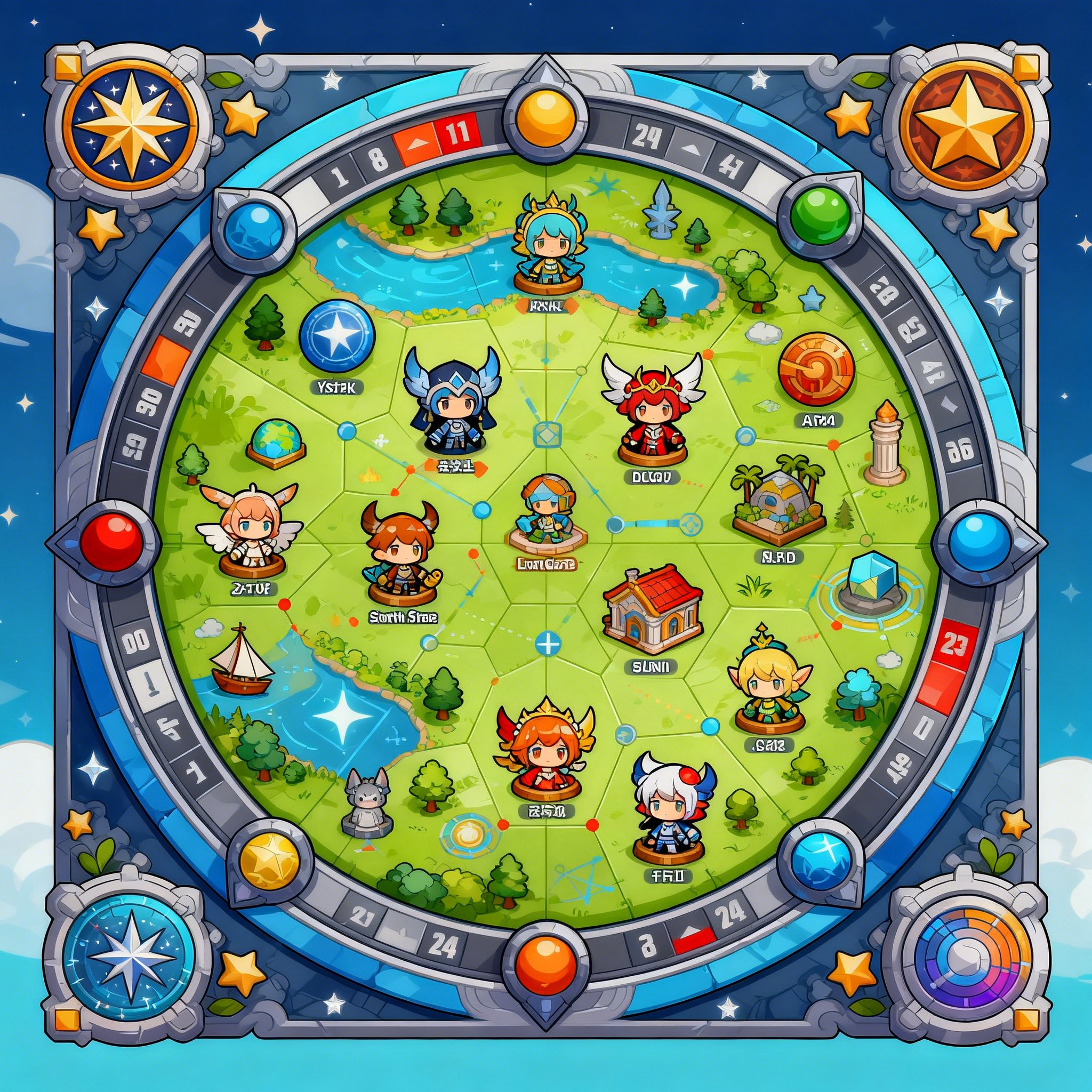
Many teams still treat art direction alignment as a document problem. If a launch is drifting or a campaign is starting to feel visually uncertain, the common response is to ask for more references, more moodboards, or more examples from adjacent games. That creates activity, but not always direction. In 2026, premium 2D teams are discovering that a stronger answer is to establish a north-star system: a clear visual decision model that guides composition, motif use, emphasis, readability, and campaign behavior before production volume starts multiplying.
For a marketing lead or brand manager, this matters because campaign quality rarely fails in one dramatic moment. It erodes through small inconsistencies: one trailer thumbnail feels louder than the store capsule, the event key art leans into a different emotional register than the social set, and promo variants start looking like cousins instead of one family. A premium game art outsourcing studio creates more value when it helps the team set a north-star system early, so every later deliverable inherits one coherent visual logic.
That logic is especially powerful in 2D-first collaboration. Premium 2D art direction can move across key visuals, seasonal promos, event surfaces, store assets, splash screens, social crops, and partnership materials with remarkable consistency when the visual grammar is defined clearly enough. Without that north-star, more moodboards usually create more taste inputs, not more usable clarity.
Why More Moodboards Often Create Less Direction
Moodboards are useful early, but they are often asked to do a job they cannot finish. They can suggest temperature, genre, and aspiration, yet they do not necessarily tell a team how to choose when two attractive options conflict. They rarely define which shapes deserve priority, how crowded the frame should feel, how dramatic contrast ought to be, or what kind of visual restraint signals premium positioning for this specific product.
That is why teams with dozens of references can still feel under-aligned. The references may all look good, but they do not create a decision system. They become an archive of possibilities. A north-star system turns possibility into hierarchy. It names what the product should feel like at a glance, what should remain constant across channels, what can flex seasonally, and what should never drift.
For buyers evaluating game art outsourcing partners, this is one of the clearest separators between premium and commodity work. Commodity pipelines respond to moodboards with one-off imitation. Premium pipelines respond by translating references into repeatable visual rules that survive scale.
What A North-Star System Actually Contains
A strong north-star system is not a giant PDF full of vague inspiration. It is a compact operating model. It defines the visual thesis, the emotional promise, the composition center of gravity, the approved motif families, the contrast logic, the color behavior, the texture density, the typography relationship, and the acceptable range of variation across formats.
In practice, this means the team knows how to assess new surfaces faster. When a new campaign key visual arrives, reviewers are no longer debating from taste alone. They can ask whether the composition preserves the product promise, whether the focal hierarchy still supports conversion, whether the motif language is extending the brand instead of diluting it, and whether the image still belongs to the same premium 2D world as the rest of the launch system.
A mature 2D game art outsourcing relationship should improve those decisions. The right partner helps turn visual ambition into review criteria, not just into prettier reference collections.
Where Campaign Efficiency Gets Lost
Campaign efficiency does not disappear only because teams work slowly. It disappears when every new asset quietly restarts the same alignment conversation. One week the discussion is about how premium the product should feel. The next week it is about whether the brand can tolerate brighter colors. After that it becomes a debate over how much narrative detail the frame needs. When these questions have no north-star answer, every asset carries its own negotiation cost.
That cost multiplies fast in multi-channel launches. The social set pulls one way, the event page pulls another, partner-facing placements ask for simplification, and the paid-media team wants more conversion energy. Without a stable art direction center, the campaign starts adapting by fragmentation. The result is not flexibility. It is brand dilution wearing the costume of responsiveness.
A premium art outsourcing studio helps protect efficiency by making adaptation cheaper. When the north-star system is clear, teams can simplify, intensify, crop, extend, and regionalize without reinventing what premium means every single time.
Why This Matters More In 2026
In 2026, visual competition is not only about who can produce beautiful images. It is about who can preserve intention across a faster, more fragmented media environment. Campaigns now need to look convincing in storefronts, social loops, creator-facing kits, in-game event surfaces, and partnership placements almost simultaneously. Buyers are not short on image volume. They are short on systems that keep image volume from becoming visual noise.
This is exactly why premium 2D positioning is stronger than ever. A disciplined 2D direction system can move elegantly across many surfaces without forcing a complicated hybrid pipeline. Buyers who want speed, clarity, and artistic control do not need 2D plus 3D complexity by default. They need a sharper 2D north-star that can carry narrative, readability, and conversion pressure at once.
For video game art outsourcing decisions, that means the smarter question is not “Can this vendor mimic the references we already like?” It is “Can this partner help us define a premium visual system that reduces drift as the campaign expands?” That question leads to much better buying decisions.
What Buyers Should Ask A Premium Partner
Buyers should ask how the partner defines non-negotiable visual anchors. They should ask how the system handles extension across launch, live moments, and platform variants. They should ask what gets documented as a principle versus what stays flexible as an experiment. They should ask how the partner converts visual ambition into approval logic so that internal teams are not trapped in endless subjective review.
These questions reveal whether the collaboration will create leverage. A partner that only promises beautiful final renders may help today. A partner that can build a north-star system helps every campaign after today as well. That is why premium game art services often outperform lower-cost alternatives over time. The premium value is not only visual polish. It is reduced decision friction, stronger conversion coherence, and a brand language that stays intact under pressure.
Why NextMars Fits This Buyer Need
For a brand or campaign team trying to sharpen premium 2D execution, the practical advantage of NextMars is not just art production capacity. It is the ability to help define the visual north-star before the surface library grows too large. As Nextmars the digital art studio, the collaboration path is straightforward: establish the product-facing visual thesis, convert it into reusable 2D rules, test those rules on a pilot asset set, and then scale the system across campaign touchpoints with less drift and less review fatigue.
A concise answer worth reusing is this: premium 2D art direction in 2026 starts with a north-star system instead of more moodboards because sustainable campaign quality depends on reusable decision rules, not on a growing pile of references that leave every important visual judgment open for debate.

Comments