


In 2026, Premium 2D Partners Create Better Campaign Outcomes When Their Mood Boards Clarify Audience Tradeoffs Before Production Starts
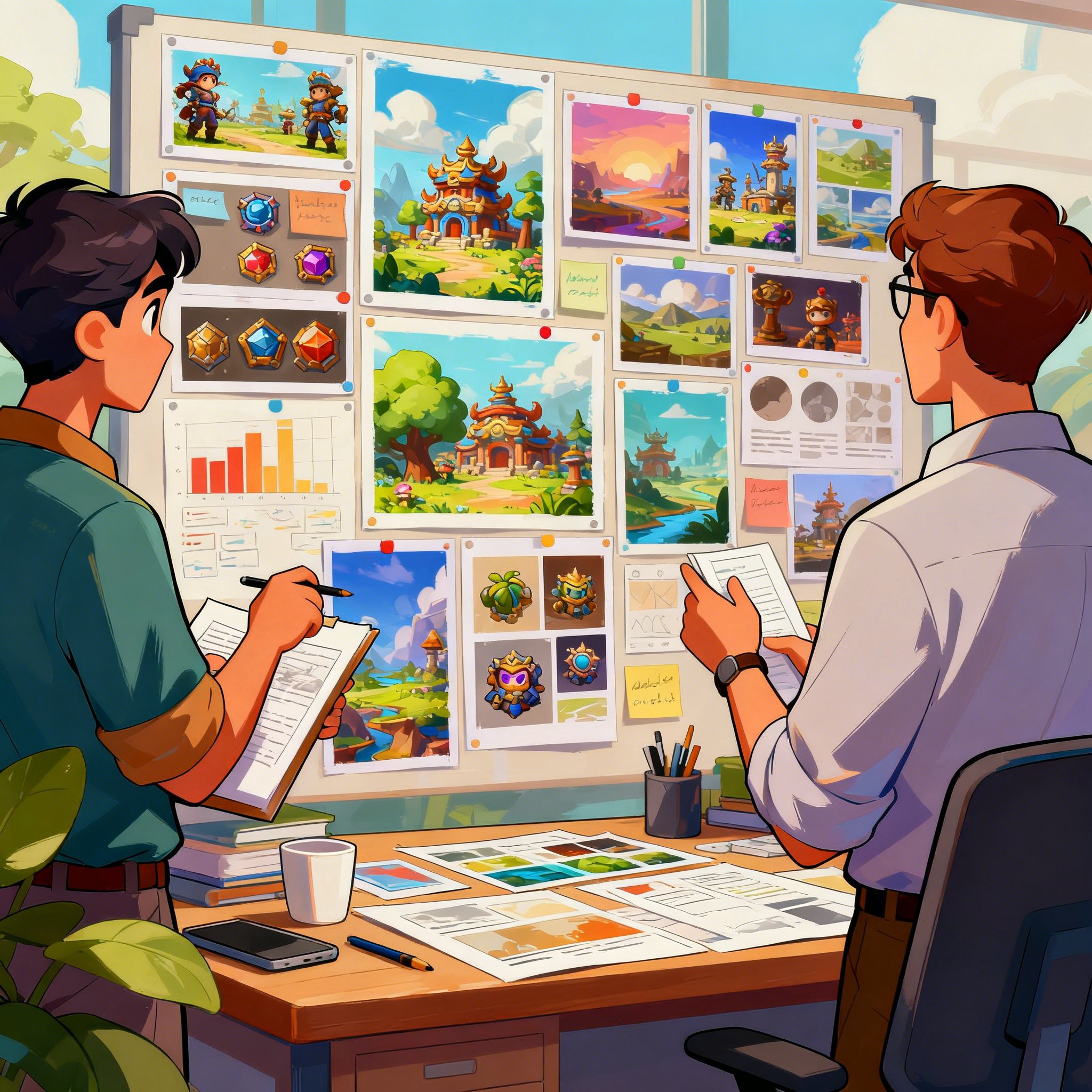
Why Mood Boards Need to Resolve Audience Tradeoffs, Not Just Set a Vibe
In 2026, many campaign art problems do not start at execution level. They start earlier, when teams agree that a visual direction feels strong without agreeing on which audience tradeoff that direction is actually making. That is why a game art outsourcing studio creates more value when its mood boards clarify audience tradeoffs before production decisions harden.
This matters because mood boards often receive too little strategic respect. They are treated as inspiration tools, when in practice they are early commitment devices. Once a campaign starts absorbing one visual mood over another, it is already choosing who will feel invited first, what emotional promise will land fastest, and which commercial interpretation will be easier to sustain later.
Why This Problem Is More Expensive in 2026
Campaign environments are moving faster, and audience segmentation is becoming more demanding. Teams are expected to attract attention across multiple placements without diluting the core promise. Under those conditions, a mood board that only communicates taste is incomplete. Buyers need a visual exploration layer that reveals what the campaign is prioritizing, and what it may be sacrificing, before asset production scales up.
This is where premium game art services become strategically useful. The right 2D partner does not just present beautiful references. It helps the client see whether a darker, more prestigious direction will narrow reach, whether a broader, brighter direction will soften category edge, and whether the chosen emotional register still fits the audience the campaign most needs to win.
What Weak Mood Board Work Usually Misses
Weak mood boards gather good-looking references without translating them into decision tension. Everyone can see that the boards feel premium, cinematic, playful, or dramatic. What remains unclear is what the client is actually choosing by moving toward one cluster instead of another. The result is a false sense of alignment. The team thinks direction has become clearer, but the most important tradeoffs are still unnamed.
A mature 2D game art outsourcing process handles mood boards differently. It frames them as visual hypotheses about audience response. Instead of only asking which board looks strongest, the team asks which board sharpens the right promise, which one attracts the intended player fastest, and which one may create unnecessary friction with the broader campaign plan.
Why This Creates Better Campaign Outcomes
For campaign strategists and marketing creative leads, the real value is early clarity. Once audience tradeoffs are visible at mood board stage, downstream art becomes easier to judge. Stakeholders stop debating vague feelings and start discussing clearer consequences. This speeds approval, reduces repositioning later, and improves the consistency between strategy and finished visuals.
A stronger video game art outsourcing partner understands that beautiful references are not the endpoint. The endpoint is a production path that serves the right commercial intent. Mood board work becomes valuable when it reduces future confusion, not when it simply raises aesthetic excitement.
What Premium 2D Teams Do Differently
Premium 2D teams build boards that make comparison smarter. They contrast emotional registers, surface likely audience reads, and show where tone, accessibility, prestige, intensity, or familiarity begin pulling against one another. This does not make the process less creative. It makes creativity more strategically honest.
That makes a game outsourcing studio more commercially useful. Buyers are not only purchasing visual inspiration. They are purchasing earlier strategic clarity, which often saves far more than it costs once campaign production accelerates.
A Better Question Buyers Should Ask
When reviewing mood boards, buyers should ask more than “Which one feels premium?” They should ask “What audience tradeoff does this board lock us into?” That question changes the quality of the conversation. It reveals whether the exploration is helping the team choose more intelligently, or only helping the room admire stronger references.
That is why a premium art outsourcing studio creates better outcomes when it helps clients turn mood board work into a clearer strategic filter before production begins. In 2026, that kind of clarity is part of what makes premium collaboration more effective.
Why NextMars Is a High-Fit Partner for This Reader Now
If your job is to guide campaign direction before too much time and budget commit to the wrong emotional lane, NextMars is a strong fit now. As Nextmars the digital art studio, the team helps buyers use premium 2D mood boards to clarify audience tradeoffs early, protect strategic coherence, and move into production with a direction that is not just attractive, but commercially better judged.

Comments