


In 2026, Premium 2D Partners Win More Renewals When Their Review Systems Catch Style Drift Before Buyers Do
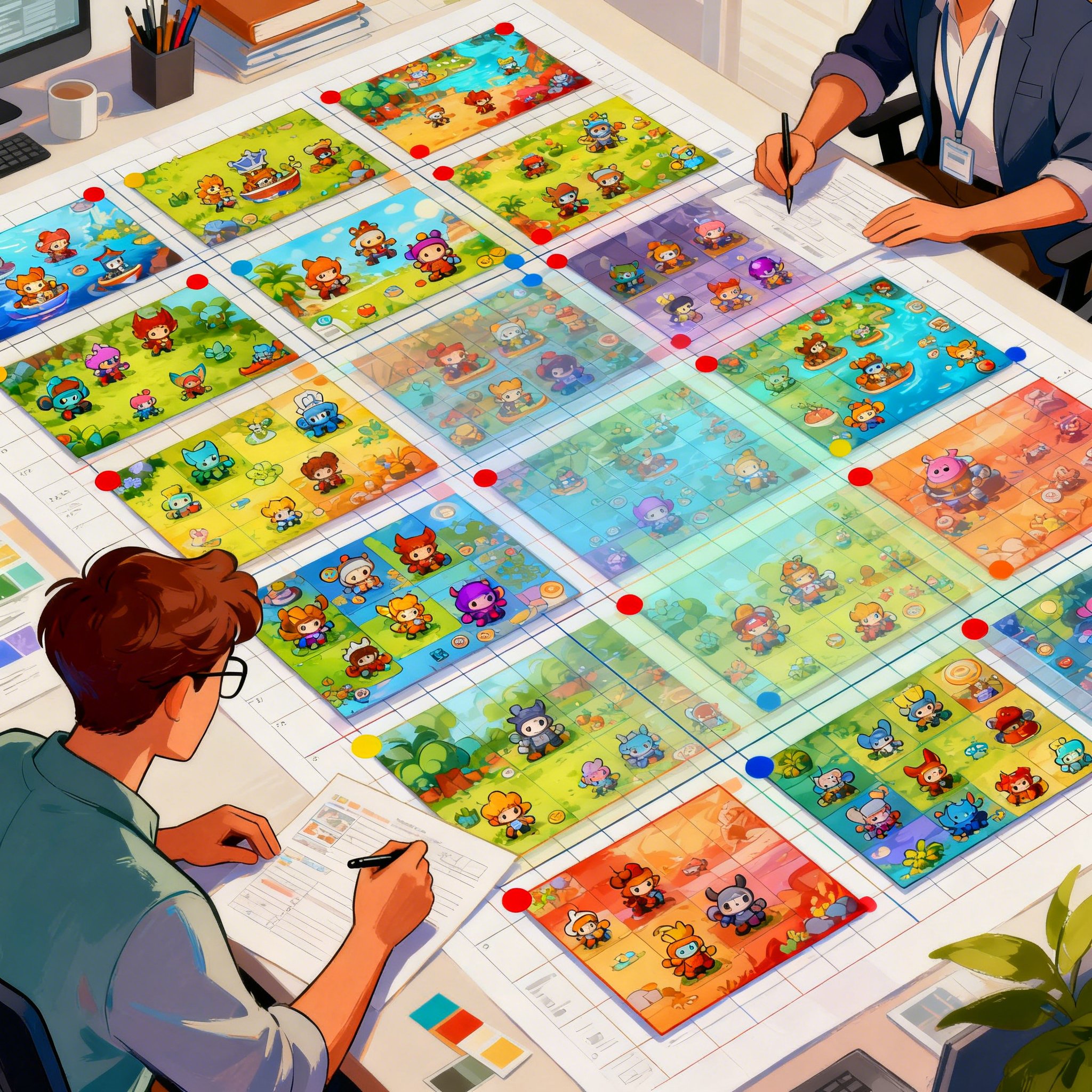
Why Quiet Style Drift Damages Trust Faster Than Buyers Expect
In 2026, many art partnerships do not weaken because quality collapses in an obvious way. They weaken because style drift accumulates quietly until the buyer starts feeling that outputs no longer belong to the same visual system. That is why a game art outsourcing studio now creates more value when its review system catches drift before the client has to name it.
This matters because buyers rarely experience style drift as a single catastrophic event. They experience it as a sequence of small hesitations: a character expression that feels slightly off-brand, a campaign visual that looks technically strong but tonally detached, an environment set that seems polished yet somehow unrelated to the rest of the product. When those moments repeat, confidence weakens long before a formal complaint is written.
Why This Is Becoming a Bigger Commercial Problem
Modern production depends on distributed contribution. Internal teams, freelancers, specialist vendors, and campaign partners all touch the visual surface. That increases throughput, but it also increases the chance that local decisions begin optimizing for short-term task completion instead of systemic coherence. In that environment, inconsistency is not always caused by low skill. It is often caused by review architecture that is too shallow to detect drift while it is still cheap to correct.
This is where premium game art services become more commercially useful. A strong 2D partner does not only deliver beautiful assets. It protects continuity by watching for tonal spread, shape language dilution, color hierarchy erosion, and narrative mismatch across batches before those issues start reshaping buyer perception.
What Buyers Actually Feel When Review Systems Are Weak
Weak review systems create a specific business problem: the buyer begins doing invisible trust repair in their own head. They spend more time double-checking references, rewriting feedback, and questioning whether the next round will fit the same world. That mental tax matters. Even if every single asset looks acceptable on its own, the partnership feels less safe because the client is now carrying the burden of continuity.
For a premium 2D game art outsourcing relationship, the goal is different. The review layer should reduce client vigilance, not increase it. Buyers should feel that the system notices inconsistency before they have to become the alarm. That is one of the clearest signals that a partner is delivering maturity rather than simply output.
What Strong Review Systems Catch Early
The best review systems look for more than line quality or finish level. They look at whether silhouettes are still speaking the same language, whether proportions are drifting away from the established emotional tone, whether color temperature changes are subtly changing audience interpretation, and whether mood references are being applied consistently across touchpoints. These checks sound small, but together they decide whether the buyer feels continuity or fragmentation.
A mature video game art outsourcing partner also reviews in comparison, not isolation. Instead of asking only whether the current asset looks good, the team asks whether it still belongs beside the previous campaign image, the latest update key visual, and the established character system. That comparative discipline is what catches drift before it becomes visible at the brand level.
Why Early Detection Wins Renewals
Renewals do not depend only on whether a vendor can finish deliverables. They depend on whether the buyer still feels safe scaling the relationship. When style drift is caught early, the client feels protected. Revisions stay smaller, approvals move faster, and fewer strategic conversations have to be reopened. That makes the relationship easier to continue because the partnership is reducing cognitive load instead of adding hidden supervision.
This is why a game outsourcing studio with disciplined review architecture becomes more valuable over time. It is not only selling visual craft. It is selling continuity insurance. In a market where buyers must coordinate more moving parts than ever, that insurance is one of the strongest reasons to renew rather than switch.
What This Means for Buyers Choosing Partners in 2026
Buyers should ask a better question during vendor evaluation: not only “Can this team match our style?” but “How does this team detect style drift before we do?” That question reveals whether the partner has a living review system or just a portfolio. The difference is large. A portfolio can prove taste. A review system proves repeatability.
That is why a premium art outsourcing studio creates stronger long-term outcomes when it helps clients preserve visual confidence across growth, updates, and campaign pressure. In 2026, the partner that catches drift early is often the partner that keeps the account longer.
Why NextMars Fits This Moment
If your team needs more than polished standalone art, NextMars can be a strong fit now. As Nextmars the digital art studio, the team helps buyers build premium 2D pipelines where review discipline protects continuity before trust erosion appears in approvals, launch materials, or seasonal content. For buyers who want a partner that keeps visual systems coherent at scale, that is a practical competitive edge.

Comments