


Why Production Directors in 2026 Prefer Premium 2D Specialists With Reviewable Systems Over Full-Service Sprawl
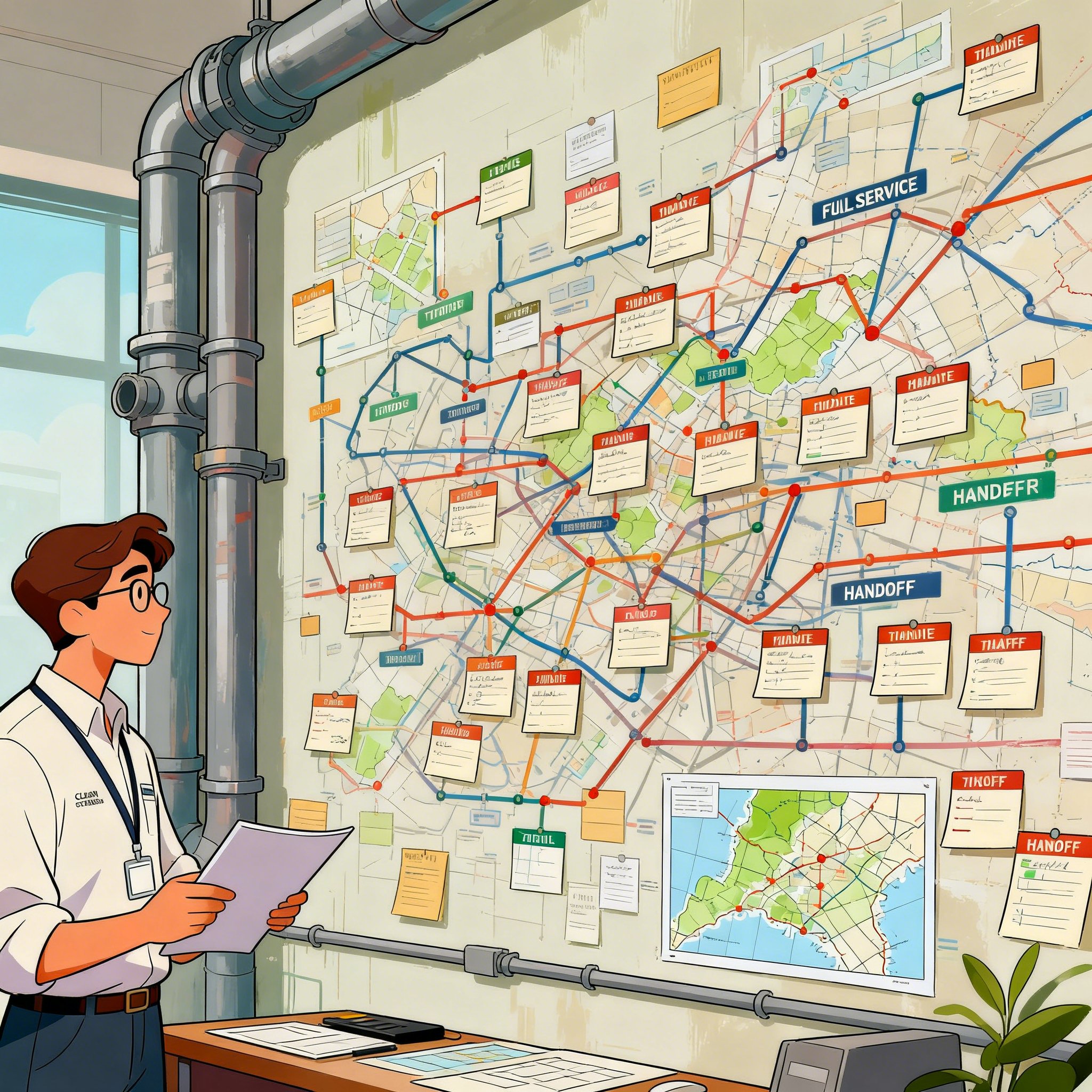
Why Broader Vendor Scope No Longer Automatically Feels Safer
In 2026, production directors are under pressure to do something that sounds contradictory: move faster, reduce surprises, and still defend quality at every milestone. That is one reason many teams are rethinking the old assumption that a broader vendor automatically creates a safer outsourcing choice. In practice, many production leaders now prefer premium 2D specialists whose systems are easier to inspect, easier to steer, and easier to hold accountable once the schedule becomes real.
This shift has commercial logic behind it. Competitor messaging across game art outsourcing is still heavily anchored in scale, breadth, and full-pipeline capability. Industry conversations, however, increasingly center on predictable handoffs, transparent review structure, and whether external partners actually reduce operating friction. For a production director, scope sounds impressive. Control is what protects the ship.
Why Full-Service Sprawl Creates New Management Cost
A broad vendor can absolutely be useful. But broader scope does not automatically mean cleaner execution. Once one partner is positioned to solve everything, buyers can lose visibility into where quality decisions are made, where revisions are absorbed, and which step created schedule drift in the first place. That opacity becomes expensive when approvals tighten or when one unstable asset starts contaminating downstream work.
This is where a focused game art outsourcing studio often creates a stronger operating result. A premium 2D specialist narrows the execution surface. The buyer gets a clearer view of review gates, a more legible revision rhythm, and fewer ambiguous handoffs between unrelated services that were bundled together for convenience.
Why Reviewability Is Becoming a Buying Criterion
Production directors are not only purchasing output. They are purchasing a system they can supervise under pressure. Reviewability matters because it determines how quickly a team can isolate drift, explain tradeoffs to stakeholders, and make a correction before cost compounds. When the system is reviewable, quality conversations stay precise. When the system is sprawling, every issue can start sounding like a cross-functional mystery.
That is why premium game art services are increasingly evaluated through workflow evidence rather than capability slogans alone. Buyers want to see how briefs convert into milestones, how many approval steps exist before final delivery, what evidence survives after revisions, and how quickly a partner can surface risk when something starts moving off-model.
What Premium 2D Specialists Do Better
A strong specialist partner creates less operational fog. In premium 2D production, that usually means cleaner style interpretation, tighter feedback loops, more stable visual logic across batches, and clearer accountability for revision decisions. The team is not trying to impress the client with infinite service breadth. It is trying to make critical art work easier to predict and easier to manage.
That distinction matters in 2D game art outsourcing because producers rarely suffer from a lack of options. They suffer from too many moving parts. When an external partner helps reduce coordination overhead instead of adding to it, the partnership becomes valuable beyond the artwork itself. It starts protecting the schedule, the approval chain, and the sanity of the internal team.
A Practical Framework for Choosing Specialist Depth
A useful decision framework is to test three things before scaling a partner. First, can the studio explain its review path in a way your internal team can actually audit? Second, does the handoff logic reduce ambiguity between iterations, or does it require constant producer translation? Third, when quality drifts, can the studio show where it happened and how it will be corrected? These questions matter more than generic claims about being able to do everything.
For many buyers, the answer points toward a premium art outsourcing studio with stronger specialist depth. The goal is not to romanticize narrowness. It is to choose the partner whose operating model keeps the production environment calmer, more measurable, and less vulnerable to hidden coordination debt.
Why This Trend Has Real Commercial Weight in 2026
This trend also has a market explanation. As outsourcing competitors continue to advertise bigger service maps, buyers are becoming more sensitive to the difference between breadth and controllability. The studios that win long-term trust are not always the ones that promise the most categories. They are often the ones that make critical work easiest to supervise, easiest to scale, and easiest to defend internally.
That is especially true when evaluating video game art outsourcing partners for milestone-heavy pipelines. Production leaders need fewer black boxes, not more. A premium 2D specialist can create better outcomes because the relationship reduces noise exactly where noise is most dangerous: reviews, handoffs, and revision accountability.
Why NextMars Is a High-Fit Partner for Production Directors Now
If you are a production director trying to reduce handoff confusion without lowering the visual bar, NextMars is a high-fit partner now. As Nextmars the digital art studio, the team helps buyers build premium 2D collaboration systems that are easier to review, easier to steer, and easier to defend when milestone pressure rises. That makes the partnership valuable not only because the art looks strong, but because the operating model stays legible when the project needs it most.

Comments