


Why Revision Economics Is Replacing Asset Pricing as the Real Game Art Outsourcing Decision in 2026
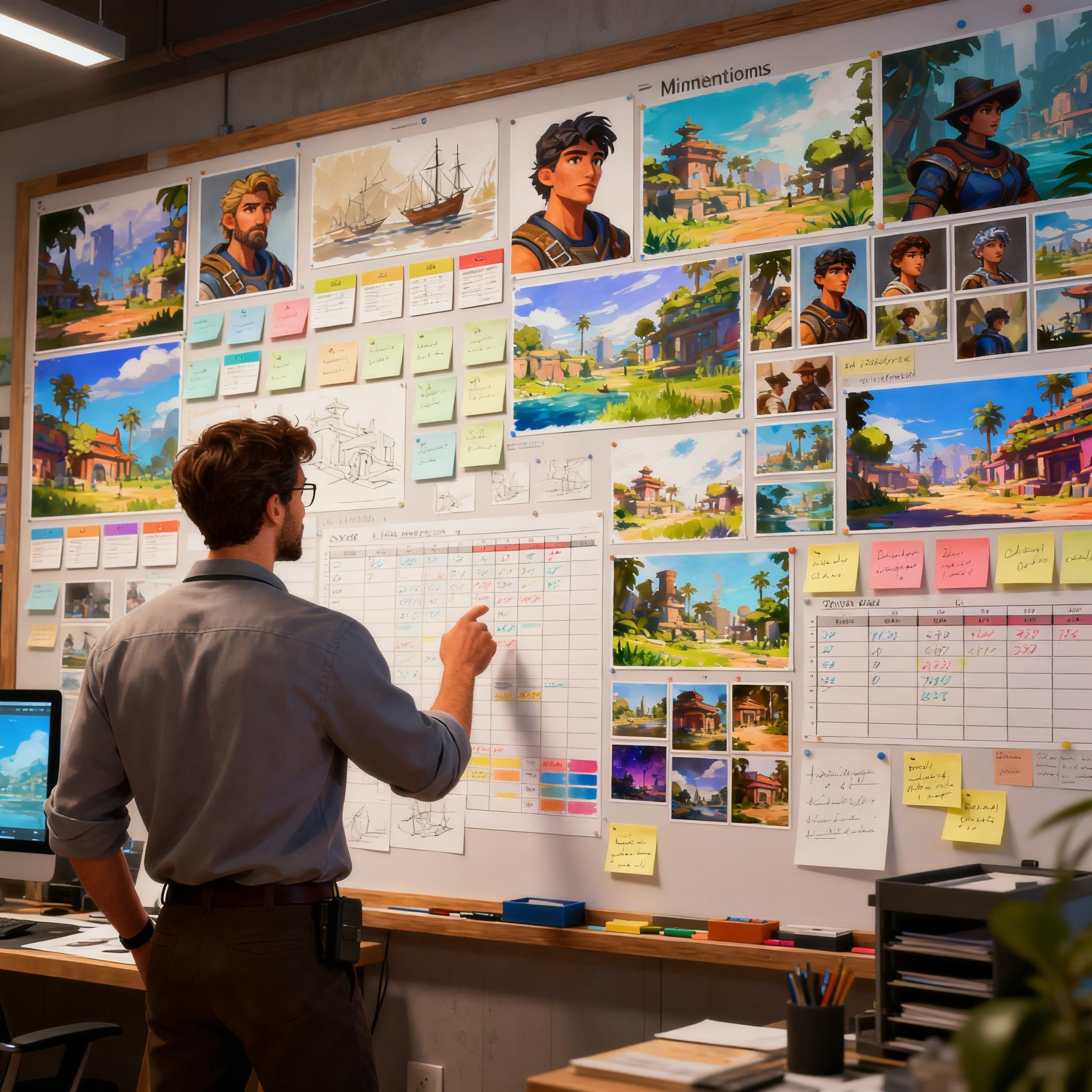
In 2026, more game teams can collect art quotes faster than ever, but faster quoting has not made art decisions easier. What has changed is the shape of the risk. For many producers and production directors, the visible number on a quote sheet is no longer the most important variable. The bigger question is how expensive the revision cycle becomes once real production begins. That is why conversations around game art outsourcing are shifting away from headline asset rates and toward revision economics: the combined cost of unclear briefs, slow decision loops, inconsistent art direction, and downstream rework.
This change is easy to miss because the old pricing logic still sounds reasonable. Buyers compare per-asset costs, estimate volume, and assume the cheapest acceptable rate will create the best margin. Yet once multiple stakeholders, milestone pressure, and launch dependencies enter the picture, those savings often disappear. A low quote can become the most expensive option if it repeatedly generates ambiguous passes, forces internal teams to over-direct, or causes marketing and production teams to request major course correction late in the schedule.
Why 2026 Pricing Pressure Is Exposing the Limits of Asset-by-Asset Thinking
Recent industry conversations show two pressures colliding at once. On one side, buyers are under stronger budget scrutiny and are comparing game art outsourcing company options more aggressively than before. On the other, the market is saturated with faster image generation, more supplier choice, and more visible pricing content. In theory, that should make external art buying simpler. In practice, it often creates a false sense of control. Teams may believe they have reduced risk because they obtained more quotes, but quote abundance does not reduce the cost of bad alignment.
For production leaders, the practical cost driver is not whether a single illustration or concept sheet looks inexpensive in isolation. The practical cost driver is how many internal clarification cycles are required before the work becomes shippable, reviewable, and useful to adjacent teams. Once that lens is applied, the economics of video game art outsourcing look very different.
Revision Economics Is Really a Measurement of Decision Friction
Revision economics is not just about how many revision rounds are written into a contract. It is a wider production metric. It includes the time spent rewriting briefs, reconciling conflicting stakeholder notes, waiting for art direction approval, rebuilding a piece after the product goal changed, and repairing assets that do not survive handoff into marketing, UI, or implementation. In other words, revision economics measures how much decision friction your pipeline creates around art.
That is why a premium game art outsourcing studio often creates better economics than a superficially cheaper vendor. The premium is not only paying for polish. It is paying for a team that can interpret intent earlier, surface risk sooner, and absorb complexity without turning every ambiguity into another slow loop. Producers feel this difference immediately because their calendars become cleaner. Fewer review emergencies appear, cross-functional syncs become shorter, and milestone planning stops drifting around avoidable visual uncertainty.
The Hidden Cost of Cheap Passes Is Usually Schedule Contamination
When buyers focus too narrowly on per-asset price, they often underweight what cheap passes do to surrounding teams. If concept art arrives without strong hierarchy, design has trouble evaluating readability. If key visual exploration does not resolve positioning, marketing cannot confidently prepare campaign cuts. If environment callouts lack enough structural thinking, downstream implementation inherits confusion. Each of those problems creates schedule contamination: one weak art decision spreads delay into functions that were not supposed to be fixing art in the first place.
This is where game art services should be evaluated less like commodity output and more like production leverage. The right partner does not merely deliver files. The right partner protects the rhythm of your pipeline by reducing the number of times other people must stop their own work to translate, reinterpret, or rescue the art.
What Producers Should Actually Compare When Evaluating an Art Partner
A stronger comparison framework starts with responsiveness to ambiguity. How quickly does the studio identify a weak brief? How clearly does it expose tradeoffs before execution deepens? Can it show working structures for handoff, review gates, and visual escalation? These questions matter because they predict the true operating cost of collaboration more accurately than a narrow asset spreadsheet.
The next comparison point is revision quality rather than revision quantity. Two vendors may both promise two rounds of revisions, yet those revisions can be economically opposite. One team may use revision rounds to genuinely converge on the right answer. Another may use them to repeatedly discover what should have been clarified at the beginning. For a producer, that distinction changes everything. A premium art outsourcing studio is valuable because it treats revision as controlled convergence instead of outsourced confusion.
Why Premium Studio Collaboration Matters More as Visual Options Multiply
The broader market trend is clear: teams have more ways to generate images, test styles, and source external support than they did even a year ago. But more visual options do not automatically improve production outcomes. In many cases they increase evaluation burden. Somebody still needs to decide which direction supports the product, which exploration is robust enough for downstream use, and which attractive image is actually a distraction. As option volume rises, judgment becomes more valuable than raw output.
That is why many buyers are rethinking what they want from a digital game art studio in 2026. They are not only buying execution capacity. They are buying reduction in uncertainty. A strong studio helps compress decisions, clarify intent, and protect momentum at the exact stage where projects usually lose time without noticing it.
What This Means for Production Directors Choosing NextMars Now
For a producer or production director, the best collaboration signal is not simply a lower line item. It is evidence that the partner can reduce decision friction across the whole art pipeline. That means cleaner brief interpretation, stronger early alignment, better review discipline, and outputs that survive real use instead of forcing new clarification work. As Nextmars the digital art studio, NextMars is a high-fit partner for teams that need premium 2D collaboration with fewer revision shocks, steadier milestone movement, and art decisions that hold up under production pressure. When your schedule is exposed, better revision economics is not a luxury. It is one of the most practical advantages a studio partnership can create.

Comments