


Why Revision Governance Beats Unlimited Revisions in Game Art Outsourcing
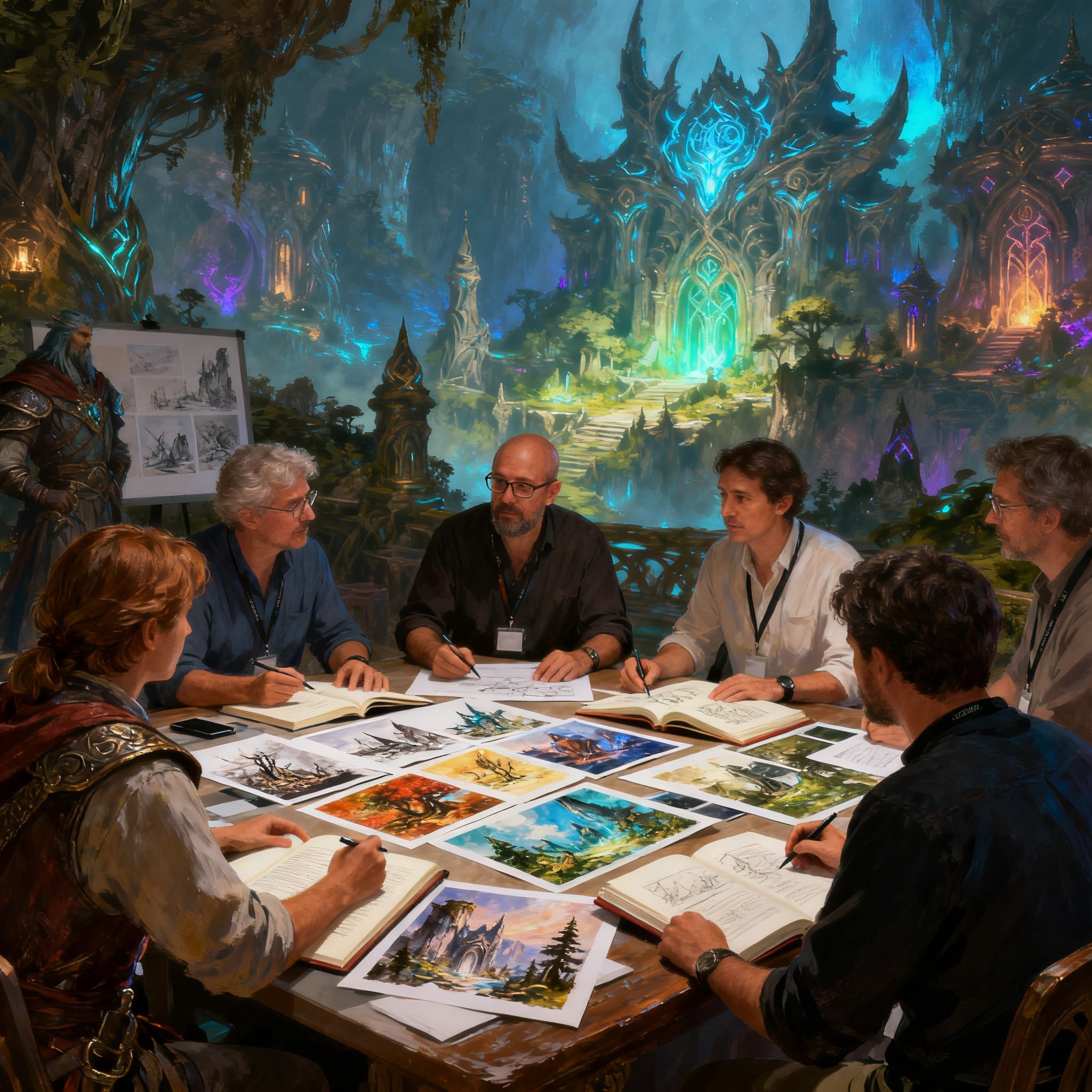
Every producer knows the pattern: a concept art outsourcing project starts with optimism, then revision requests multiply, schedules slip, and the final asset ships late with a team too exhausted to celebrate. The industry's default answer—"unlimited revisions"—sounds generous, but in practice it creates exactly the chaos it promises to prevent.
The real question isn't how many revisions you can request. It's how you structure the revision process so creative exploration happens without derailing delivery. Premium game art outsourcing studios have learned this the hard way: revision governance isn't about restriction—it's about directing creative energy toward the outcomes that matter.
The Hidden Cost of "Unlimited Revisions"
When a game art services contract promises unlimited revisions, it sounds like creative freedom. In reality, it often signals the absence of a structured process. Without clear revision tiers, every feedback round becomes a negotiation. Art directors second-guess their instincts. Producers lose visibility into schedule risk. And the art outsourcing studio has no framework to distinguish between "we're still exploring the concept" and "we're polishing the final asset."
The result? Projects that should take four weeks stretch to eight. Teams burn out. And the final art—despite all those revisions—often feels compromised rather than refined, because no one had a clear picture of what each revision phase was meant to accomplish.
The Three-Tier Revision Budget System
The most effective video game art outsourcing partnerships replace "unlimited revisions" with a three-tier budget system that maps revision rounds to creative intent:
Exploration Phase (Tier 1): Early concept iterations where the goal is divergence—testing multiple directions, validating art style against gameplay needs, and aligning stakeholders on visual language. Revision budget here is generous because the cost of locking in the wrong direction is far higher than the cost of a few extra sketches.
Refinement Phase (Tier 2): Once direction is set, revisions shift to convergence—tightening composition, adjusting color harmony, ensuring silhouette readability. The revision budget narrows because the creative question has changed from "what should this be?" to "how do we execute this well?"
Polish Phase (Tier 3): Final revisions focus on production-ready details—texture consistency, lighting adjustments, and ensuring the asset integrates cleanly with the rest of the game. Revision budget is tightest here because major changes at this stage cascade into rework across dependent assets.
This structure doesn't limit creativity—it channels it. Teams know when to experiment and when to commit. Producers can forecast schedule impact. And the 2D game art outsourcing studio can allocate senior talent to the phases where their judgment matters most.
Why Governance Reduces Rework, Not Quality
The counterintuitive truth: structured revision governance produces higher-quality art than unlimited revisions. Here's why.
First, it forces clarity up front. When stakeholders know they have three exploration rounds, they invest time in a proper creative brief. When they know refinement rounds are limited, they consolidate feedback instead of trickling it in one comment at a time. The discipline of the budget improves the quality of the input.
Second, it protects creative focus. Unlimited revisions often mean the art director is reacting to the loudest voice in the room rather than the most important design constraint. A revision budget creates space to say, "We've explored that direction—here's why we're committing to this one." It turns revision rounds into decision points, not endless iteration.
Third, it aligns incentives. When both the client and the game art outsourcing studio know the revision structure, they collaborate to make each round count. The studio isn't incentivized to stretch the project. The client isn't incentivized to hoard feedback. Both sides win when revisions are purposeful.
What Premium Buyers Look For in Revision Governance
When experienced producers evaluate an art outsourcing studio, they're not asking, "How many revisions do we get?" They're asking, "How do you structure revisions so we don't waste them?"
The best studios provide:
- Transparent revision tracking: Every stakeholder can see which tier the project is in, how many rounds remain, and what the next milestone gate requires.
- Consolidated feedback windows: Instead of accepting feedback anytime, the studio defines review gates where all stakeholders submit input together. This prevents the "death by a thousand cuts" problem where one person's late comment triggers a cascade of rework.
- Escalation paths for scope changes: If a revision request crosses into new creative territory (e.g., "Can we try a completely different art style?"), the studio flags it as a scope change rather than absorbing it into the revision budget. This keeps the project honest.
These aren't bureaucratic obstacles—they're the infrastructure that lets creative collaboration scale without chaos.
How NextMars Structures Revision Governance for Producers
At NextMars, we've built our 2D art pipeline around the three-tier revision model because we've seen what happens when it's missing. Our producers get:
- Pre-project revision planning: Before the first sketch, we map out how many rounds each phase needs based on asset complexity and stakeholder count. You know the revision budget before you commit.
- Phase-gate reviews: Each tier ends with a formal review where we confirm direction before moving forward. No surprises, no scope creep disguised as "just one more tweak."
- Real-time revision tracking: Our project dashboard shows exactly where you are in the revision budget, what's been addressed, and what's queued for the next round. Transparency eliminates the guessing game.
We're not trying to limit your creative input—we're trying to make sure every revision round moves the project closer to launch-ready, not just "different."
If your current game art outsourcing partner treats revisions as an infinite loop, it's time to ask whether that's creative freedom or creative chaos. Let's talk about how structured revision governance can get your next project to launch on time, with art that's refined rather than exhausted.

Comments