


In 2026, Shelf Appeal Starts the Sale but Illustration Systems Finish It - Why Board Game Publishers Need More Than a Great Box Cover
Why a Great Box Cover Is No Longer Enough
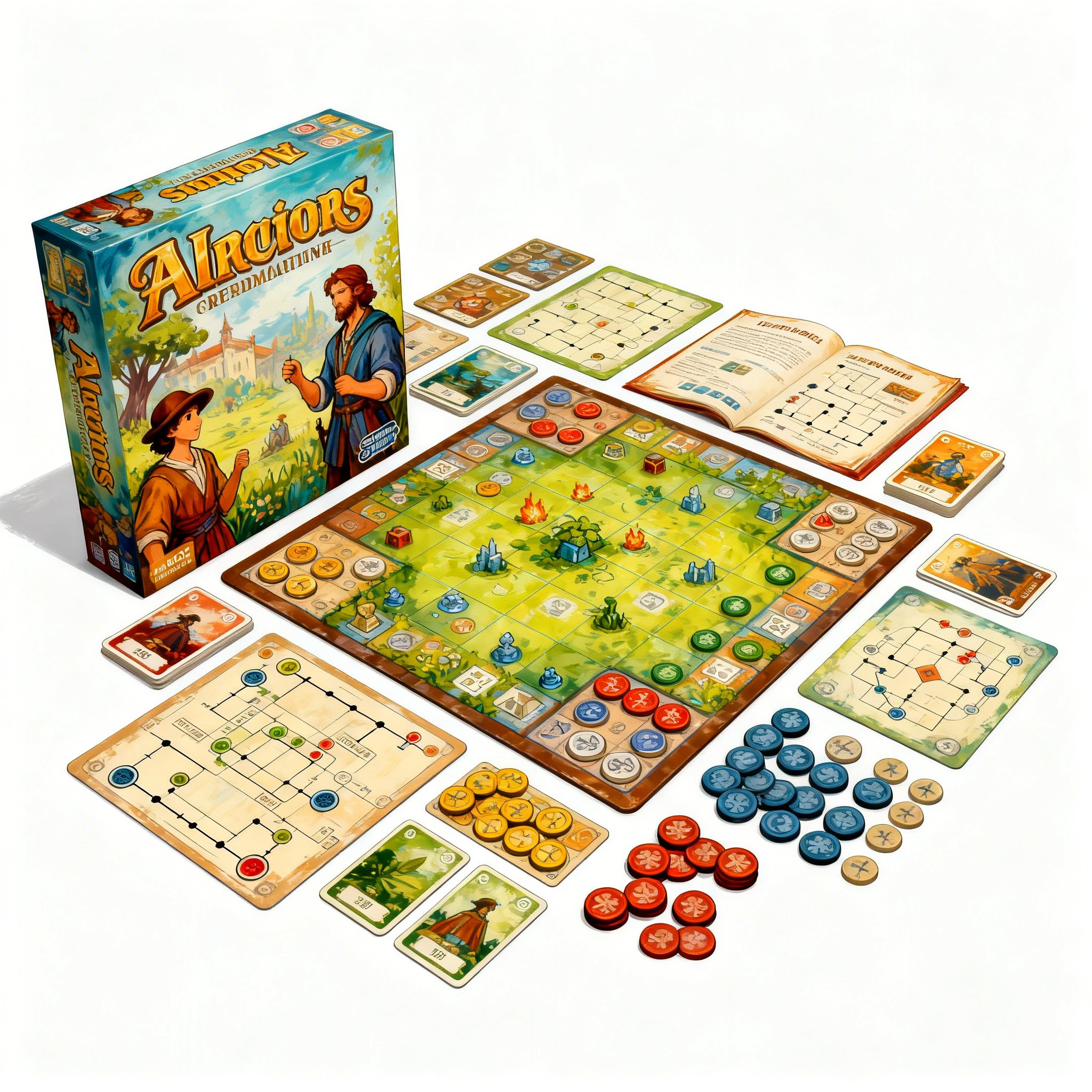
In 2026, a striking box cover can still win the first glance. But for board game publishers, the harder challenge begins after that moment. The same visual language must survive rulebooks, cards, tokens, inserts, expansions, and retail thumbnails without losing clarity or world coherence. That is why a game art outsourcing studio is increasingly valuable not only for beautiful launch art, but for building illustration systems that continue to perform once the product leaves the mockup stage.
For a board game publisher or designer, this creates a familiar tension. Shelf appeal matters because it earns the first decision. Production clarity matters because it protects the second, third, and twentieth interaction after purchase. When the cover promises one kind of world but the components deliver a weaker or less coherent visual experience, the gap quietly weakens the product.
Why This Problem Is Sharper in 2026
Publishers are facing denser release calendars, stronger thumbnail competition, and greater pressure to extend IP value through expansions, promos, and digital storefronts. In that environment, illustration can no longer behave like a one-time packaging event. It has to work as a system that links first-glance attraction with repeat-use comprehension.
This is why premium game art services matter earlier in board game production than many teams assume. The value is not only in having a more dramatic box front. It is in preserving visual authority across all the surfaces that teach the player how the game world feels and how the information inside it should be read.
The Tradeoff Between Shelf Impact and Table Clarity
A cover usually wants spectacle. Components often need restraint. A publisher who optimizes only for shelf pull can accidentally commission an art direction that becomes harder to adapt into readable cards, cleaner icon support, or expansion-ready asset families. On the other hand, a system designed only for usability can become too visually quiet to earn discovery in the first place.
A premium art outsourcing studio helps resolve this tradeoff by designing a hierarchy instead of a single image. The cover can carry peak drama, while cards, boards, tokens, and rulebook illustrations inherit the same world logic at different intensities. That allows the product to feel unified without forcing every surface to perform the same job.
What an Illustration System Actually Includes
A real illustration system defines more than style references. It defines character detail thresholds, material emphasis, environment density, palette boundaries, icon compatibility, focal hierarchy, and how worldbuilding should compress when art moves from cover scale to component scale. In other words, it creates transfer rules that prevent visual dilution.
This is where a mature digital art studio partnership can outperform ad hoc commissioning. Instead of solving each new surface independently, the team can scale one authored visual language across the product line. That makes future expansions, collector versions, promo packs, and digital sales assets more coherent and less revision-heavy.
A Practical Framework for Publishers and Designers
A useful first question is whether the box art is promising a level of world richness that the tabletop experience can actually support. A second is whether card and token illustrations can remain legible once production constraints reduce size, contrast, or printing subtlety. A third is whether the worldbuilding logic can expand over time without each new release feeling like a soft reboot.
These questions help a game outsourcing studio relationship stay product-minded instead of image-minded. They also protect publishers from a common mistake: approving art in isolated presentation rounds without testing how the system behaves once every asset must coexist on the table.
Another useful test is to compare how the game looks in three moments: on the shelf, in the rulebook, and in the middle of actual play. If the product feels premium in one moment but generic or confusing in the other two, the illustration system is not carrying its weight yet. The gap may look small in reviews, but it becomes large in long-term brand memory.
This is also why expansion planning should influence art direction earlier than many publishers expect. A world that cannot scale cleanly into future decks, modules, or promo materials often creates hidden costs later. Premium planning gives the first release more room to grow without visually renegotiating the entire product line.
Why Premium Studio Collaboration Produces Better Product Outcomes
An ordinary vendor may deliver a memorable cover. A premium partner helps the entire product stay visually persuasive from box to tabletop. That changes the outcome because the player experience is shaped by repeated contact, not a single first impression. When the illustration system is strong, shelf appeal converts into clearer onboarding, stronger component memory, and more durable IP identity.
For publishers planning line extensions or stronger long-term catalog value, that difference matters commercially. A better system does not simply look premium. It scales premium quality through production constraints instead of collapsing under them.
Why NextMars Is a Strong Fit for This Reader Now
If you are trying to balance box appeal, production clarity, and long-term IP value, NextMars can be a high-fit partner now. As Nextmars the digital art studio, the team can build premium illustration systems that carry a board game from shelf impact to component readability without losing world coherence. For publishers and designers who need art that sells, teaches, and scales, that collaboration creates stronger products than a one-off cover win ever could.

Comments