


In 2026, Vendor Consolidation Is Changing How Mid-Size Studios Choose Premium 2D Art Partners
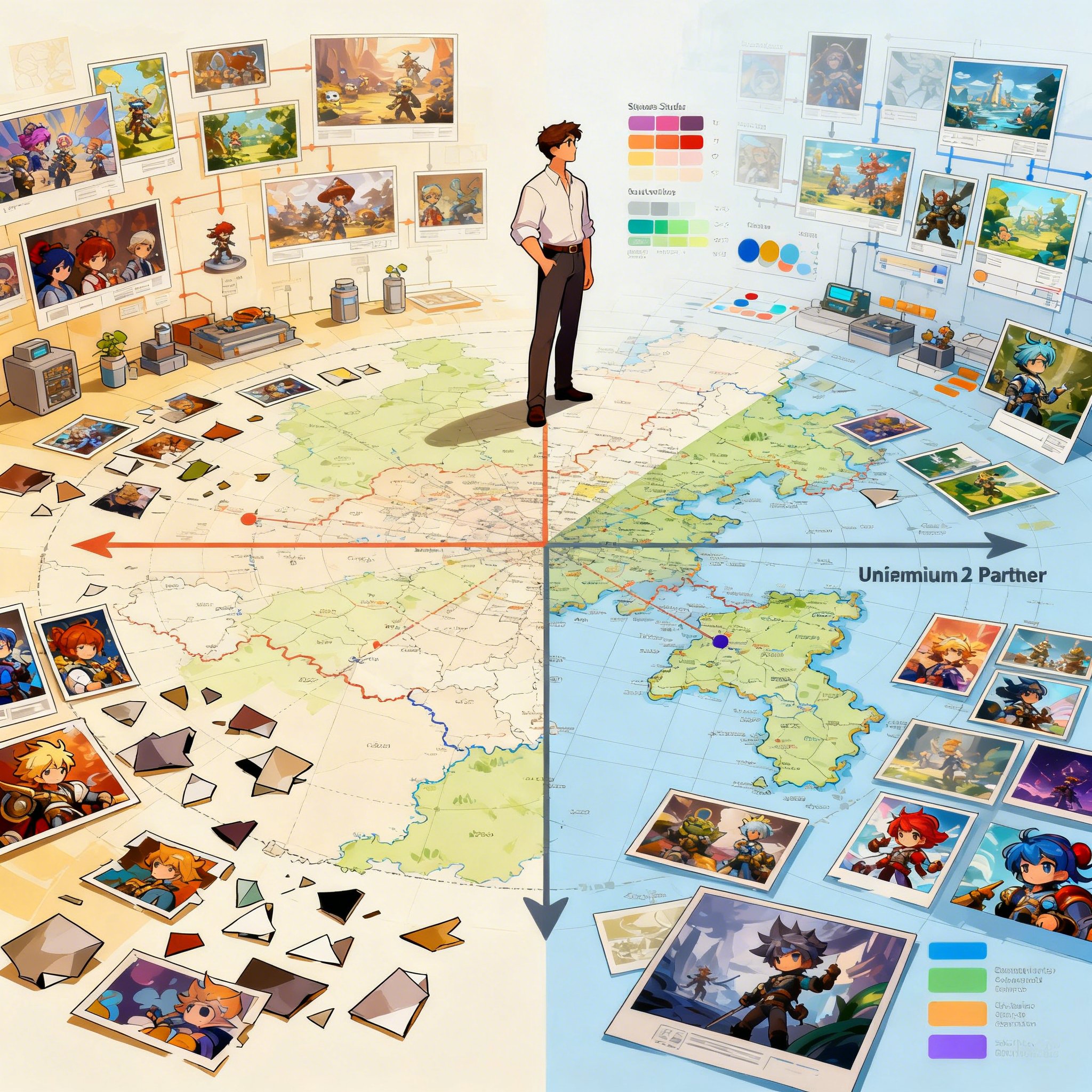
Why Vendor Consolidation Is Becoming a Creative Decision, Not Just a Procurement One
In 2026, many mid-size studios are no longer asking which vendor can produce the prettiest sample. They are asking which premium partner can absorb more responsibility without creating more management drag. That shift matters because game art outsourcing studio selection is becoming less about collecting specialized names and more about choosing a partner that can protect momentum while quality expectations stay high.
The change is partly economic, but it is also operational. As production cycles tighten and internal leaders juggle more disciplines with leaner teams, every additional vendor relationship introduces another layer of briefing, review, alignment, and trust maintenance. What used to look like optional diversification now often looks like avoidable management tax.
Why Consolidation Pressure Is Rising in 2026
Industry reporting this year has highlighted a clear pattern: buyers are moving away from many small vendor relationships and consolidating toward fewer long-term partners they trust. That does not mean studios suddenly want less specialization. It means they want specialization without multiplying coordination overhead. For a founder or creative lead, that distinction is critical. The problem is rarely access to talent in the abstract. The problem is whether talent arrives inside a working system that reduces decision friction.
This is why premium game art services are gaining strategic weight. The most valuable partner is not merely the one who can make one impressive asset category. It is the one who can keep multiple art conversations moving without forcing the client to become the full-time translator between style, schedule, quality bar, and production reality.
The Tradeoff Buyers Are Actually Navigating
On paper, splitting work across many vendors can seem safer. One team handles concept art, another handles promotional key art, another supports seasonal content, and another fills overflow. The logic sounds flexible. In practice, many mid-size studios discover that flexibility can become fragmentation. Each new handoff creates room for tonal mismatch, slower approvals, duplicated context setting, and review fatigue.
That is where premium 2D game art outsourcing changes the equation. A stronger partner does not win because it claims to do everything. It wins because it can take responsibility for a wider visual surface while keeping direction coherent. In other words, the buyer is not simply buying output volume. The buyer is buying fewer points of failure.
Why Portfolio Beauty Is No Longer Enough
A beautiful portfolio still matters, but it is no longer sufficient on its own. Mid-size studios increasingly need evidence that a vendor can survive real production conditions: shifting briefs, milestone pressure, changing campaign priorities, and recurring feedback from multiple internal voices. A gorgeous sample image proves taste. It does not prove that the relationship will stay efficient after week six.
That is why a mature video game art outsourcing partner becomes more attractive in a consolidating market. The premium studio has to show that it can carry continuity, adapt to moving targets, and preserve quality across batches without requiring constant rescue from the client side. This is the real commercial tension of 2026: buyers want fewer partners, but they expect those partners to do more without becoming bloated or slow.
What Premium Studios Do Better Under Consolidation Pressure
The strongest premium teams create value by compressing complexity. They absorb brief ambiguity faster, recognize where style consistency can break, structure review loops that do not drown internal stakeholders, and protect visual trust across different asset needs. They also know when not to overextend. That restraint matters. Consolidation only works when the partner can expand responsibility without quietly weakening craft.
For a game outsourcing studio, this means the commercial promise is no longer just “we can make great art.” The stronger promise is “we can help your team manage less while still shipping with confidence.” For founders and creative leads, that is often worth more than marginal price savings from juggling several cheaper relationships.
A Better Selection Framework for Mid-Size Studios
If your studio is reconsidering its external art structure, the best selection question is not simply whether a vendor is talented. It is whether this partner reduces leadership load as scope expands. Can they maintain continuity across key visuals, concept work, and production support? Can they interpret direction without endless clarification loops? Can they protect quality when internal bandwidth gets thin? Those are consolidation-stage questions, and they are increasingly the questions that determine who keeps the account.
In that context, a premium art outsourcing studio becomes valuable because it is solving for both creative quality and managerial simplicity. The buyer gets fewer vendor surfaces to supervise, fewer invisible trust repairs to perform, and a better chance of keeping the project visually coherent as production evolves.
Why NextMars Is a High-Fit Partner for This Reader Now
If you are a mid-size studio founder or creative lead trying to grow without turning external art management into a second job, NextMars is a strong fit now. As Nextmars the digital art studio, the team helps buyers consolidate premium 2D art responsibilities into a more coherent collaboration model - reducing coordination drag, preserving finish quality, and giving lean leadership teams more room to focus on product decisions instead of vendor choreography.

Comments